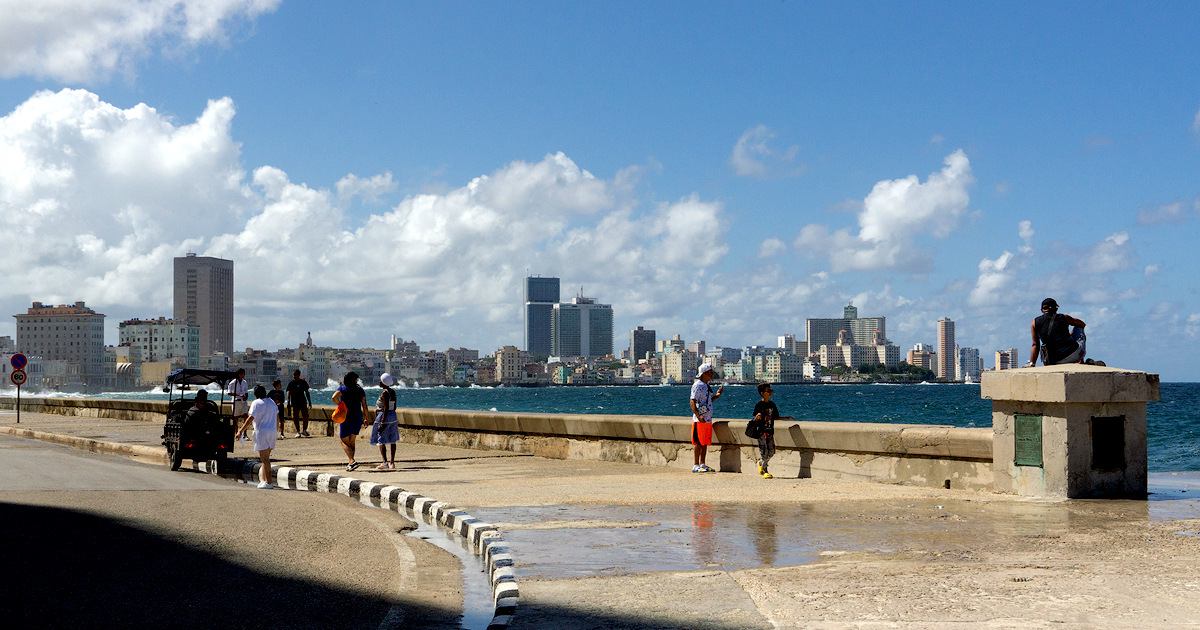
Havana celebrates this Monday, November 16, 507 years since the establishment of its permanent settlement in 1519, transformed into a city where buildings are collapsing, garbage invades the streets and sidewalks, power outages disrupt daily life, and hundreds of thousands of people face difficulties in obtaining water, food, and medicine.
The Cuban capital, which for centuries was one of the major urban and cultural centers of the Caribbean, reaches its anniversary with a significant portion of its architectural heritage in disrepair, numerous buildings lost or threatened by neglect, and a housing stock that has suffered from decades of inadequate maintenance.
But the crisis in Havana is not limited to its buildings. It also manifests in the impoverishment of its residents, emigration, the deterioration of public services, protests, and the increasing erosion of the expectations for economic recovery that the government has been promising for years.
The city retains monuments, squares, and restored buildings that are featured in tourist itineraries. However, surrounding them are neighborhoods where propped-up facades, debris, foul odors, leaks, and uninhabitable homes make up the everyday landscape.
The deterioration has accumulated causes: aging of the constructions, scarcity of materials, economic difficulties, external restrictions, and, decisively, housing policies, conservation, and public investment that for decades have failed to stop urban degradation.
Destruction also impacts buildings of significant historical value. The Palacio de Aldama, one of the jewels of Cuban colonial architecture, is facing severe deterioration, while the old building of the Instituto Superior de Diseño Industrial (ISDI) was demolished this year, following a long period of neglect and collapse.
For many Havana residents, the danger of a collapse is not an abstract threat. It is the reality of living between cracked walls, deteriorating roofs, and balconies held up by makeshift supports. The persistence in these buildings often stems from the economic and material inability to find alternative housing.
In September, two elderly people died after the collapse of a house's portal in Lawton. This case adds to a long list of collapses that have caused casualties, destroyed homes, and contributed to the irreversible loss of architecturally valuable constructions.
A recent report by NBC News featured by CiberCuba documented the situation of families forced to remain in hazardous buildings due to the lack of housing alternatives.
Garbage in the streets, blackouts, and neighborhoods without water
The photographs published on the eve of the anniversary provide a particularly raw portrait of the city.
In Monte and Fernandina, in El Cerro, residents reported the accumulation of waste, stagnant water, and the proliferation of vectors. Similar situations have been documented on streets such as Montes, Infanta, Reina, and Neptuno, where garbage coexists with dilapidated buildings, rodent infestations, and inadequate sewage systems.
Waste collection has become another public service unable to regularly meet the needs of the capital. The lack of fuel, the deterioration of the truck fleet, and personnel issues have contributed to mountains of waste remaining for days in populated areas.
Insalubrious conditions are compounded by power outages. On Saturday, November 14th, residents of Calabazar and Las Cañas in Boyeros took to the streets to protest after being without electricity for over a week, according to reports spread on social media. Their demands reflected a fatigue that has become increasingly frequent and openly expressed in other neighborhoods of the capital, such as El Fanguito.
Power outages not only leave homes in the dark. They make it difficult to preserve food, cook, rest, and work, in addition to causing interruptions in pumping systems that supply water to a large part of the city.
At the beginning of November, authorities acknowledged that around 536,000 residents of Havana were affected by water supply issues. Although on November 13, the state company reported a supposed decrease to just over 309,000 people, new breakdowns in the Cuenca Sur system once again interrupted the supply in several municipalities.
Some residents have reported weeks, and even months, without receiving water through the pipes. The wear and tear on conduits that have gone without significant renovations for between 60 and 70 years illustrates another dimension of the deterioration of urban infrastructure, acknowledged by the authorities themselves during recent government inspections.
Public transport is not immune to the crisis either. The shortage of fuel and vehicles has limited mobility options and forces many citizens to spend a considerable part of their day seeking transportation. In January, the Communist Party itself acknowledged that the transportation system in the capital was fulfilling barely 42% of the planned targets.
The K Tower: a symbol of the priorities of power
In the midst of that landscape stands a building that has become a symbol of the contrast between state investments and the needs of Havana’s residents: the Torre K, the hotel skyscraper of 42 floors erected in Vedado by the military conglomerate GAESA, popularly known as the López-Calleja hotel.
With 565 luxury rooms, the property was financed by Almest, a company linked to the military group, and designed for international tourism. The actual amount of the investment has not been officially disclosed, although published estimates place its cost at around 200 million dollars or even higher amounts.
Inaugurated in 2025, the Iberostar Selection La Habana closed its doors in March 2026, amid the energy crisis and the collapse of tourism. Months later, the Spanish chain confirmed its withdrawal from the management of the establishment.
The imposing tower is a visible expression of the economic priorities of the Cuban regime: while resources were being mobilized to build a luxury hotel, thousands of homes continued to deteriorate, and essential services such as water, electricity, and garbage collection were accumulating failures and shortages.
According to figures collected by CiberCuba, by the end of 2025, Havana had 185,348 deteriorated properties, of which 46,158 required major repairs. Throughout the country, that year only 2,382 homes were completed, representing 22% of what was planned.
The comparison raises an inevitable question about the fate of available resources and the responsibility of the institutions in charge of managing them. The controversy surrounding the Torre K goes beyond its cost; it also encompasses the investment decisions that made its construction possible while urgent needs for housing, health, and infrastructure accumulated.
An impoverished city and an exhausted population
Behind the material deterioration lies an equally deep social crisis. Salaries and pensions in pesos are losing purchasing power against the rising costs of food and other basic products, while dollarization exacerbates the disparities between those who receive foreign currency and those who rely solely on their state income.
Buying food, obtaining medication, or paying for private transportation can represent an unaffordable expense for many households. The scarcity in pharmacies forces people to seek treatments through family members, donations, or private sellers, often at high prices.
The severity of the pharmaceutical shortages was reflected in the official figures from April 2026, when 461 out of the 651 medications on the national essential list were missing, more than 70% of the products expected for the healthcare system.
Poverty particularly affects the elderly, the sick, and those who do not have relatives abroad. Emigration, which has been a means of escaping the crisis for years, has also left fragmented homes and older individuals without close support networks.
National data allows us to assess this deterioration. According to the IX Report on the State of Social Rights in Cuba, produced by the Cuban Observatory of Human Rights, eight out of ten respondents reported having gone without a meal in the past six months due to a lack of money or food. Although the study does not exclusively focus on Havana, it reflects the challenges faced by many Cuban households.
The discontent is also evident on the streets. Protests over power outages, water shortages, and other essential needs reveal the willingness of some citizens to publicly express their dissatisfaction, despite the risks of doing so in a country where authorities have responded to previous demonstrations with arrests and legal proceedings.
Frustration with non-functional services is compounded by decades of unfulfilled promises of recovery. Successive economic reforms, maintenance plans, sanitation campaigns, and programs to address the housing deficit have not succeeded in reversing the conditions that feed disillusionment.
The demand for political change, emigration as an alternative, and skepticism towards official discourse are part of a society marked by diverse expectations yet confronted with persistent uncertainty.
Havana reaches its 507th year with a difficult contradiction to conceal: while the authorities celebrate the historical legacy of the capital, a significant portion of that heritage is disappearing amid collapses and neglect, and its inhabitants continue to await solutions to basic needs.
In a city accustomed to hearing announcements of recovery that never seem to materialize, the question "how long?" has stopped referring only to blackouts, lines, or the lack of water. It also expresses the exhaustion of those who have spent years waiting for the conditions of their lives to change.
Related videos:
Filed under: