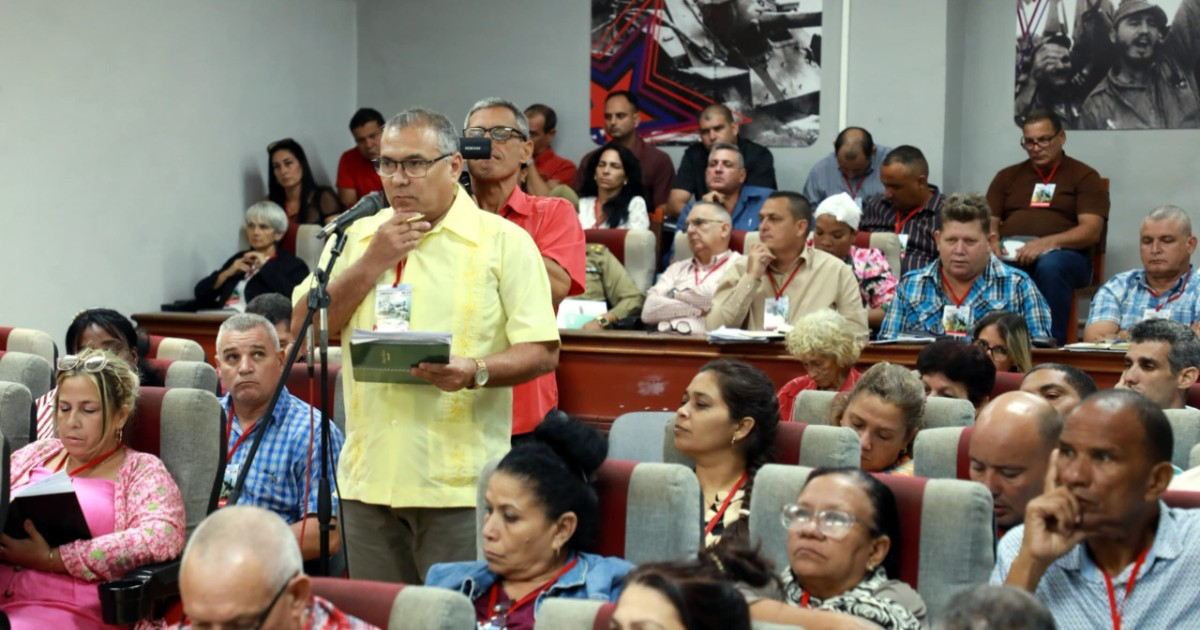
The Cuban Ministry of Communications published this Tuesday in the , a regulation that establishes the official methodology for incorporating artificial intelligence (AI) and digital transformation throughout the Cuban Public Administration, from municipal agencies to the Central State Administration.
The resolution, signed on October 30 by the Minister of Communications, Mayra Arevich Marín, will take effect seven days after its publication and assigns the General Directorate of Informatics of the ministry itself the responsibility for ensuring compliance. The Digital Transformation Secretariat will have one year to assess the results and update the document.
The text does not mandate the acquisition of any specific AI system; instead, it outlines a gradual four-stage process—Initiation, Comprehensive Diagnosis, Analysis and Definition, and Strategy Proposal Design—based on the IDEAL model (Identify, Define, Explore, Act, Learn). The methodology integrates disciplines such as Enterprise Architecture, Process Management, and Strategic Planning, and incorporates agile methodologies like Scrumban.
One of the most striking elements is the so-called "AI Functional Pyramid," a maturity model with seven levels ranging from "Beginners" to "Leaders," designed to assess the progress of each public entity in adopting these technologies.
Among the guiding principles of the regulation are "technological sovereignty"—which requires that data remain on national infrastructure or under sovereign agreements—, "privacy and security by design," and the principle "data first, AI later," which establishes data governance as a prerequisite for any artificial intelligence initiative.
The resolution is the final step in a series of official announcements that began in February 2023, when Miguel Díaz-Canel proposed the use of AI in public administration before the Academy of Sciences. In May 2024, the Council of Ministers approved Digital Transformation Policy, the Cuban Digital Agenda with a 2030 horizon, and the Strategy for the Development and Use of AI through Agreement 5115. In January 2025, Díaz-Canel promised that Cuba would be "the pioneer" of AI in Latin America, and in May 2026 visited the University of Havana to promote "sovereign" AI projects.
The contrast between this narrative of modernization and the material reality of the country is profound. Less than 8% of Cuban households have access to the internet, placing the Island as the second country with the worst connectivity in Latin America, just above Haiti. During 2026, Cuba experienced at least nine national electrical system outages; in one of these, over 80% of ETECSA's radio bases were out of service, and internet traffic plummeted by 58%.
This gap is compounded by a diplomatic setback: in February 2026, Estonia suspended the delivery of equipment for the "Cuba Digital" project, funded with approximately three million euros from the European Union, due to concerns about the regime's political use of technological modernization.
The official commitment to AI is not limited to public administration: the draft of the new Education Law, currently under public consultation this week, includes artificial intelligence, blockchain, and augmented reality in its article 224, although it does not set any deadlines or budget, in a school system that has 24,000 vacant teaching positions.
Related videos:
Filed under: