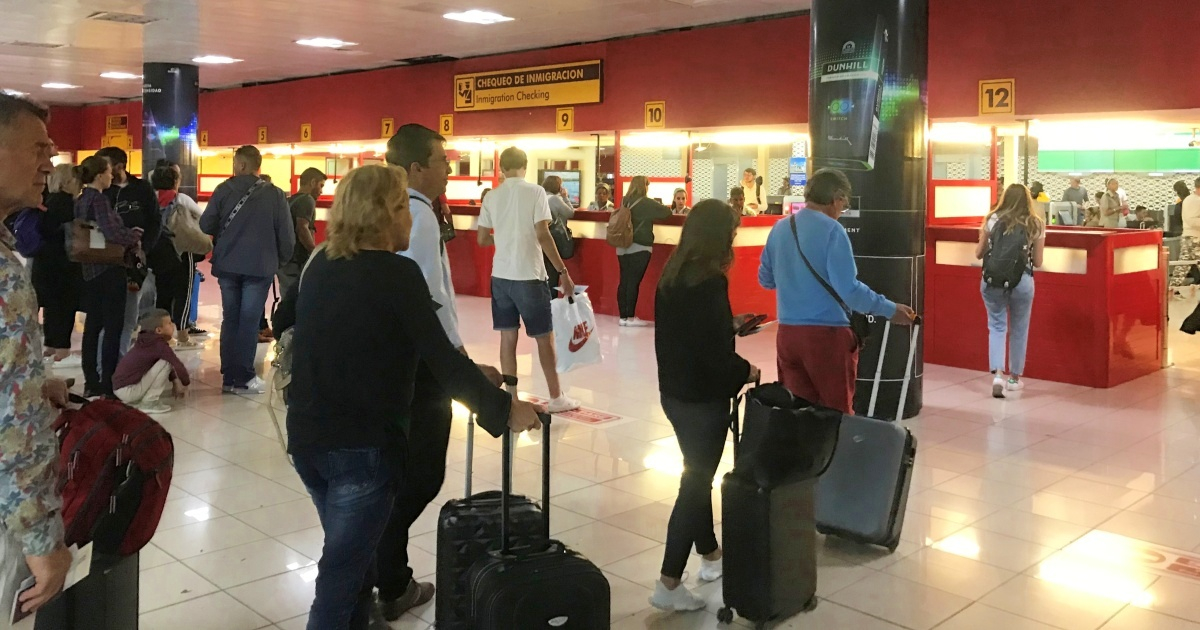
The Cuban regime has had a new portal for applying for electronic visas since November 4, tramites.consular.cu, managed by the Ministry of Foreign Affairs (MINREX).
The most relevant news for the diaspora is the introduction of a family visa —for those traveling to visit relatives on the island— alongside the tourist visa and a commercial exploration visa, categories that the old evisacuba.cu system did not offer.
The change arrived late and in a chaotic manner. The previous portal was shut down on October 29 to migrate to the new system, with a promised reopening on November 2; the deadline was missed and the portal remained down on November 3 without a new official date.
The Ministry of Tourism (MINTUR) announced the final address the following day, through its representation in Canada. By mid-November, evisacuba.cu was still not loading.
The specialized German portal Kubakunde analyzed the new system on Saturday, November 14, and the travel processing portal VisasNews tested it step by step on November 4. Both sources agree that the process works, but there are obstacles that require careful planning well in advance.
The process begins with email verification using a one-time code that is valid for four hours. Next, you select the country and consular office, choose the type of visa, and enter the passport information along with a picture of the document.
The portal allows you to include up to 10 people in a single application, making the process easier for families or groups. The promised response time is 72 business hours.
The fee for the tourist visa is 30 euros per application, both at the consulates of Spain —where the portal offers options in Madrid, Barcelona, Seville, Galicia, and the Canary Islands— and in Germany.
The main obstacle is the payment. According to VisasNews, "unlike what happens in the electronic visa systems of many countries, the new Cuban portal does not allow payment of fees directly with a bank card online." The applicant must make a bank transfer or deposit and upload the receipt to the platform.
In the Bonn delegation, the transfer must be made at least three business days prior to submitting the application, and the embassy bank does not accept immediate transfers. Kubakunde warns that "between the transfer and the visa, it can easily take six business days."
This limitation is not coincidental. VisasNews frames it within "a context of financial restrictions that have, for years, hindered Cuba's access to banking networks and international payment processing services."
Kubakunde summarizes the situation with a straightforward warning: "Anyone who wants to go to Cuba should not apply for the visa in the last days before departure."
Since June, Visa and Mastercard stopped operating on the island following the break between FINCIMEX and its foreign processor.
The visa itself remains unchanged from the previous version: a single entry, valid for one year from the date of issuance, with a stay of up to 90 days that can be extended. Health insurance with coverage in Cuba and the D'Viajeros form, which generates the QR code for immigration controls, are still mandatory.
Important for the diaspora: this visa is exclusively for foreigners without Cuban citizenship —spouses, children, or partners with a passport from another country—. From November 1, with the implementation of the new Cuban migration package, Cubans with dual nationality must enter and exit Cuba using a Cuban passport.
The launch of the portal coincides with a severe crisis in Cuban tourism: Cuba received only 477,707 visitors between January and September 2026, a decline of 65.1% compared to the same period in 2025, and only fulfilled 28.8% of its annual tourism plan by the end of October.
Related videos:
Filed under: