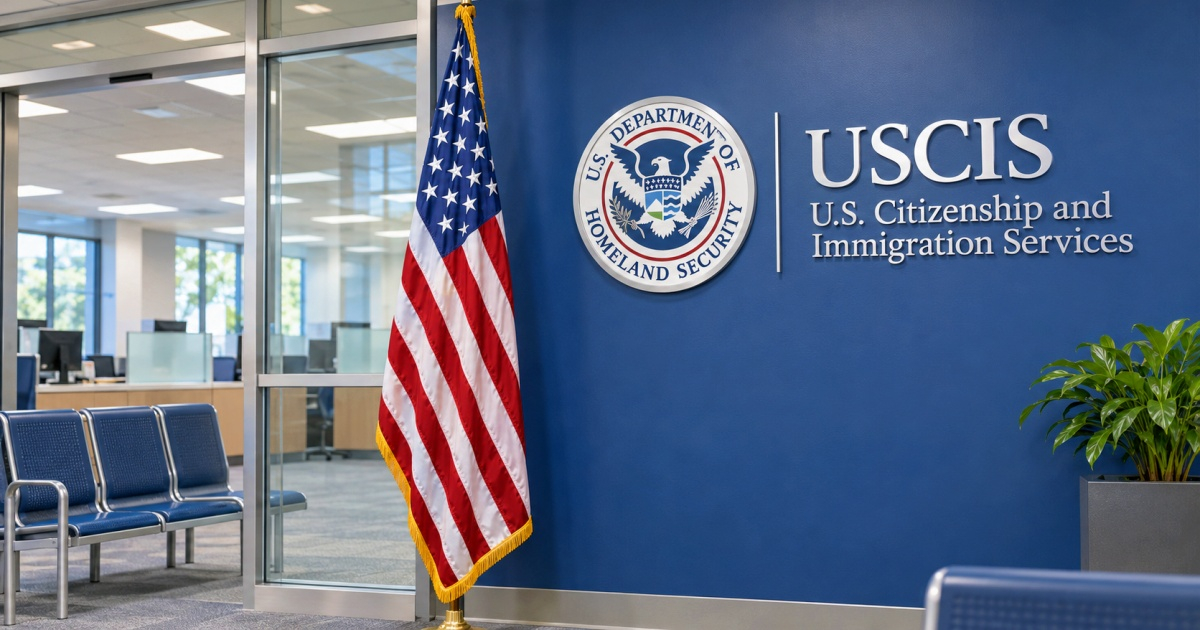
Democratic Senators Edward Markey of Massachusetts and Richard Blumenthal of Connecticut urged the U.S. Citizenship and Immigration Services (USCIS) to suspend and withdraw a policy that tightens the requirements for rescheduling affirmative asylum interviews and, as they reported, could harm applicants even when they attempted to change their appointment in advance.
In a letter sent on November 19 to Secretary of Homeland Security Markwayne Mullin and USCIS Director Joseph Edlow, the legislators questioned a measure in effect since August 21, 2026, which requires proof of “exceptional circumstances” to obtain a new interview date.
The senators argue that policy can turn the agency's scheduling issues into serious immigration consequences for applicants. Therefore, they call for its suspension and withdrawal, stating that no adverse measures should be taken while a timely rescheduling request remains pending, and that adequate notification must be ensured.
They also requested explanations regarding the legal basis of the measure, its implementation, and the safeguards available for those affected. USCIS has until December 9, 2026 to respond in writing to their questions.
What does USCIS now require to change an asylum interview?
Since August 21, USCIS replaced the previous "good cause" criterion with a stricter one, based on the existence of exceptional circumstances. This means that affirmative asylum applicants must provide sufficiently serious reasons for why they need to change the date of their interview.
According to the official USCIS guide, examples of extraordinary circumstances include situations of violence or extreme cruelty, serious illness of the applicant or certain family members, and the death of a spouse, child, or parent.
The agency clarifies that these examples do not constitute a closed list. Each request is evaluated individually, considering the facts and evidence presented, although less serious situations may prove insufficient to justify the change.
One of the most questioned aspects by Markey and Blumenthal is the handling of requests that USCIS does not resolve before the interview.
Legislators warn that a person may have timely requested a new date and still face consequences for failing to appear if the agency did not respond in time.
What consequences does missing an interview have?
USCIS establishes a deadline of 10 calendar days after a missed interview to request its rescheduling and justify the absence.
The applicant must provide an explanation and relevant evidence to assess whether exceptional circumstances existed.
The agency also stopped issuing the additional notice for non-appearance that previously warned the applicant of the possible consequences of not showing up.
When an absence is not properly justified, the consequences depend on each person's immigration status:
If the applicant has a legal basis to remain in the United States, USCIS may deny their asylum application.
If there is no legal basis for it, the agency may refer the case to an immigration judge for examination in an expulsion proceeding.
In the case of individuals who are in an authorized period of parole, USCIS individually assesses whether the purposes of that permit have been met and whether it is appropriate to terminate it and refer the case to an immigration court.
Missing an interview can also stop the so-called "asylum clock," which is used to calculate the time needed to obtain a work permit based on a pending asylum application in the C08 category.
A rescheduling requested by the interested party themselves can also affect that calculation.
How can it affect Cubans?
Cubans with pending affirmative asylum applications before USCIS should pay special attention to these requirements when receiving a notice for an interview.
The application of the policy does not depend solely on the immigration document a person holds, such as an I-220A, nor on the method through which they entered the United States. The consequences of an absence are linked to the asylum process and the specific immigration situation of each applicant.
There is specific judicial protection for unaccompanied migrant minors. On October 30, a federal court in Maryland issued a temporary order in the case The Door v. Edlow, regarding the conditions and procedures established for their asylum interviews.
The order was extended on November 6 until the court decides on the request for a preliminary injunction, unless otherwise stated. The court also imposed additional requirements on the authorities on November 10. This protection specifically pertains to unaccompanied minors and does not constitute a general suspension of the policy for adult applicants.
What to do if you need to reschedule your interview?
USCIS indicates that affirmative asylum applicants who are not unaccompanied minors must call 1-800-375-5283 to request a date change. Individuals with hearing disabilities may use the TTY service at 1-800-767-1833.
The request can be submitted before the interview, on the same day of the appointment, or within 10 calendar days following an absence. It is necessary to explain the reason and provide relevant documentary evidence. The agency evaluates the request and communicates in writing whether it accepts or rejects the rescheduling.
If USCIS approves the change, they will send a new notification with the date, time, and location of the interview. Requesting a new appointment does not mean that the change has been approved. When the petition is denied before the interview, the applicant must attend the originally scheduled date to avoid being considered a no-show.
The agency also addresses a specific situation: if it sent the notice to a different address than the last one updated correctly by the applicant through official procedures, it must reschedule the interview without requiring proof of exceptional circumstances.
Interested parties can check the requirements in the USCIS affirmative asylum FAQ section. Those who have difficulty attending or have not received a response to a change request should seek individualized immigration advice before ceasing to appear.
The letter from Markey and Blumenthal does not, by itself, change the current requirements. As long as USCIS does not announce a change or there is no applicable court ruling, applicants must adhere to the existing rescheduling rules.
Los cambios en las reglas de asilo y otras políticas migratorias pueden afectar directamente a los cubanos en EE.UU. Sigue todos los detalles en nuestra sección de
Related videos:
Filed under: