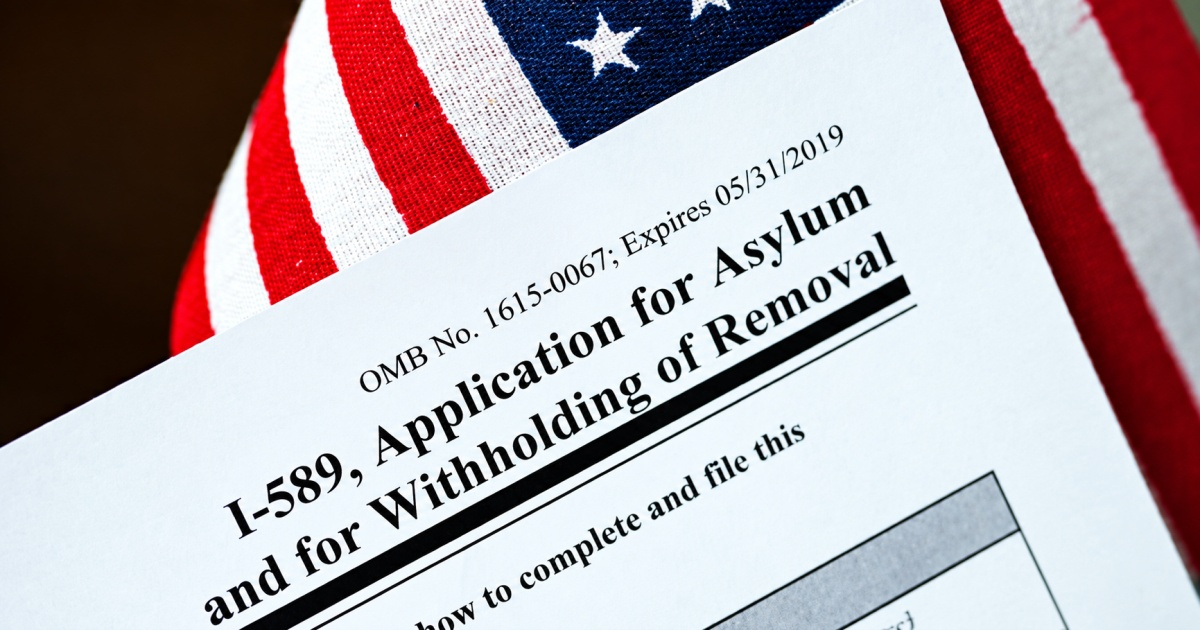
If you are Cuban and you are seeking asylum in the United States, one of the fundamental issues of your case is to demonstrate that you have suffered persecution or that you have a well-founded fear of suffering it if you return to Cuba, due to your political opinions or another reason protected by law.
For this, your account must be credible, persuasive, and detailed enough. Whenever possible, it is also advisable to support it with evidence.
U.S. law recognizes that it is not always possible to obtain documents that prove persecution.
Your testimony may be sufficient on its own if it meets the legal requirements.
However, when additional evidence that you could reasonably obtain is deemed necessary, failing to present it could harm your application.
We explain what you need to demonstrate, what evidence may be useful in a persecution case in Cuba, how to present it to the immigration authorities, and what to do if you cannot obtain certain documents from the island.
What do you need to prove to obtain asylum?
The asylum law, outlined in Article 1158 of Title 8 of the United States Code, states that the burden of proof lies with the applicant.
This means that you must provide the necessary elements to demonstrate that you meet the asylum requirements.
Specifically, you must demonstrate that your race, religion, nationality, membership in a particular social group, or political opinion has been or will be at least a central reason for the persecution.
In cases of political persecution in Cuba, the reason may be a genuine or attributed political opinion.
For example, the authorities might regard you as an opposition figure because of your publications, your participation in protests, your refusal to take part in certain official events, or your family ties.
The important thing is to demonstrate the connection between the protected motive and the persecution suffered or feared.
It is not enough to assert that there are political problems or human rights violations in Cuba; you must explain how they relate to your situation.
The section 1208.13 of title 8 of the Code of Federal Regulations, which governs the requirements for establishing eligibility for asylum, outlines two main situations:
- Past persecution. If you demonstrate that you have already suffered persecution for a protected ground, it is presumed that you have a well-founded fear of suffering it again for the same reason. The Department of Homeland Security (DHS) may attempt to rebut this presumption by showing, by a preponderance of the evidence, a fundamental change in circumstances or that you could avoid persecution through reasonable internal relocation.
- Well-founded fear of future persecution. If you have not suffered persecution in the past, you can demonstrate that there is a reasonable possibility of suffering it if you return. You do not need to prove that persecution will definitely occur, but your fear must have an objective basis and be related to one of the grounds protected by law.
The regulations also account for situations where a person who experienced past persecution may obtain asylum even if the well-founded fear of future persecution has disappeared.
This may occur, at the discretion of the competent authority, when there are compelling reasons due to the severity of the persecution suffered or a reasonable possibility of experiencing further serious harm upon return, as long as there is no applicable legal prohibition.
What happens if the persecution affects a group of people?
It is not always necessary to prove that the authorities have personally identified you as a target of persecution.
According to section 1208.13(b)(2)(iii), you can base your fear on the existence of a pattern or practice of persecution against a group of people in circumstances similar to yours, as long as the persecution is based on one of the grounds protected by law.
In that case, you must demonstrate that there is a pattern of persecution and that you belong to or identify with the affected group in such a way that your fear of persecution upon returning is reasonable.
For example, in a case related to Cuba, evidence regarding the persecution of members of an opposition organization or individuals engaging in specific political activities could be relevant, along with documents that prove your participation or connection to that group.
This possibility does not mean that any Cuban can obtain asylum due to the general situation in the country. The persecution of the group, the protected reason, and your relationship with that group must be sufficiently established.
Can they require you to move to another province in Cuba?
The possibility of avoiding persecution by relocating to another region of the country is one of the factors that immigration authorities may consider.
However, when the perpetrator is the government itself or an organization sponsored by it, the regulation assumes that internal relocation would not be reasonable.
In those cases, it is up to the DHS to demonstrate, by a preponderance of the evidence, that considering all the circumstances, it would be reasonable to expect the applicant to relocate to another part of the country.
When persecution comes from individuals and there is no evidence of past persecution, the rules may be different. Generally, it is up to the applicant to demonstrate that internal relocation would not be reasonable.
To assess this issue, factors such as the size of the country, the location where the persecution occurred, the reach of the persecutor, and the real possibilities of establishing oneself in another region are taken into account.
Your testimony may be sufficient, but it must be credible and detailed
The law allows that the applicant's testimony can be sufficient without additional evidence when it is credible, persuasive, and contains specific facts enough to demonstrate that they meet the requirements for asylum.
However, there is no automatic presumption of credibility during the initial assessment. The judge or competent official examines the entirety of the circumstances and the available evidence.
Among the factors that can be assessed are:
- The plausibility and the level of detail in your narrative.
- Your honesty and the way you respond to questions.
- The consistency between what you wrote in the I-589 form and what you later declare.
- The correspondence of your testimony with the documents provided and the information available about Cuba.
- The contradictions, inaccuracies, or omissions that may affect the evaluation of your credibility.
The judge may consider contradictions or inaccuracies even if they do not directly affect the main fact of your request. However, they must assess these elements while taking into account the overall circumstances.
A discrepancy in dates or an incomplete explanation does not automatically mean that your account is false, but it can raise questions that you may need to clarify.
Therefore, it is advisable to review the statements and documents you have already submitted with your lawyer, identify any possible errors, and correct them through the appropriate procedures before the hearing.
When can they require evidence from you and what happens if you don’t have it?
The law states that when the judge determines that otherwise credible testimony requires corroboration, the claimant must provide the corresponding evidence, unless they do not have it and cannot reasonably obtain it.
This means that you are not required to present documents that are impossible to obtain, but you must be prepared to explain why you cannot acquire certain evidence.
For example, it may happen that the Cuban authorities do not provide a copy of a detention, that a family member faces risks when requesting a document, or that a witness is imprisoned and cannot testify.
In those situations, it is advisable to explain the specific difficulties and to preserve, whenever possible, any element that helps to demonstrate the attempts made to obtain the evidence.
Preparing that explanation in advance and reviewing it with a lawyer can help you respond if the judge inquires about the absence of certain documents.
What evidence is useful in a case of persecution in Cuba?
There is no single list of documents that guarantees asylum approval. The utility of each piece of evidence depends on the specifics of your case and its relation to the persecution you claim.
Among the elements that may be useful are:
- Documents from the Cuban authorities: police summons, warning letters, fines, notifications of dismissal or expulsion from educational institutions, documents related to criminal proceedings, or resolutions regarding travel restrictions. Their importance depends on what they can demonstrate about the facts and their reasons.
- Medical tests: certificates, clinical reports, and other documents that certify injuries related to arrests, assaults, or acts of repudiation.
- Witness Statements: written testimonies from family members, neighbors, colleagues from organizations, or individuals who have witnessed the events. It is advisable to identify the witness, explain what they know, how they obtained that information, and when the events occurred. The personal data and identification documents that should accompany the statements will depend on the circumstances and the applicable requirements. It is important to assess the risks for witnesses who remain in Cuba.
- Political Activity Evidence: documents from opposition organizations, photographs of protests, social media posts, messages, and articles from independent press that can substantiate your participation or the perception that the authorities had of you.
- Identity and entry documents: passport, Cuban identity card, birth certificate, and documents related to your entry and immigration status in the United States.
- Reports on the country's conditions: documents from official bodies and human rights organizations that provide context for the reported events, identify patterns of persecution, and demonstrate the situation of individuals in circumstances similar to yours.
On this last point, the State Department publishes reports on the human rights situation in different countries.
Their report on Cuba for 2024 includes allegations of arbitrary detentions, transnational repression, and severe restrictions on freedom of expression and the press.
The document also addresses the harassment of independent journalists and other individuals critical of the Cuban government.
These reports can help to contextualize a request and, when applicable, to demonstrate patterns of persecution against certain groups. However, they do not replace the need to substantiate the elements of your own case, including your relationship with the persecuted group when that is the basis of the request.
It is advisable to identify the sections that have a direct connection to the facts you are alleging.
How to present evidence in immigration court?
If your application is before an immigration judge in a defensive asylum proceeding, you must comply with the document submission rules and applicable deadlines.
Failing to comply with them may result in certain tests being rejected or may require you to request authorization to submit them past the deadline.
- Certified translation. Según la Section 1003.33 of the regulation, los documentos presentados en un idioma distinto del inglés deben acompañarse de una traducción al inglés y una certificación firmada por el traductor que acredite su competencia y la exactitud de la traducción. El Immigration Court Practice Manual establece requisitos adicionales para la certificación, incluidos los datos de contacto del traductor.
- Order and Pagination. The documents must be organized according to the court’s instructions, with pages numbered and corresponding indexes. As a general rule, copies are submitted, while the originals are kept available for possible examination during the hearing.
- Deadlines. Según el Annex of deadlines from the Manual of Policies of the Executive Office for Immigration Review (EOIR), la regla general para presentar documentación antes de una audiencia individual es de 30 días de antelación en los procedimientos de personas no detenidas. El cómputo de los días se rige por las reglas del manual. En los casos de personas detenidas, los plazos pueden ser establecidos por la corte. El juez también puede fijar fechas diferentes, por lo que debes comprobar las órdenes aplicables a tu expediente.
If your application is with USCIS through the affirmative asylum process, you must follow the current instructions for Form I-589 and any communications from that agency to determine how and when to submit your documentation.
You can consult our , which explains that process.
Errors that undermine an asylum case
- Exaggerating or inventing facts. False statements can severely damage credibility and have other legal consequences.
- Copying someone else's stories. Your statement should reflect what you truly experienced. Using fabricated accounts or presenting other people's experiences as your own can jeopardize your application.
- Submit documents that are untranslated or submitted late. Evidence that does not meet the applicable requirements may be rejected or require special authorization for admission.
- Confusing the general situation in Cuba with the specifics of your case. Reports of repression may be significant, but you must demonstrate that you meet the legal requirements for asylum, whether due to individual persecution or a pattern of persecution against a group to which you belong.
- Forget the one-year deadline. Como regla general, debes solicitar asilo dentro del año siguiente a tu última llegada a Estados Unidos, salvo que puedas acogerte a una excepción legal. Puedes consultar nuestra guía sobre the exceptions to the one-year deadline.
What to do now?
- Write a detailed timeline of what happened in Cuba. Include approximate or exact dates, locations, names of agents if you know them, and possible witnesses. Distinguish what you remember with certainty from what you are unsure about.
- Make a list of the available tests and those that you could obtain. If you need help from family or friends in Cuba, first assess the risks they might face.
- Keep publications, messages, and other digital files related to the events. When possible, record dates and information that can help identify their source.
- If your request pertains to the persecution of a group, gather evidence regarding the situation of that collective and documents that prove your membership or connection to it.
- Prepare the necessary certified translations in advance to meet the applicable deadlines.
- Identify the documents you cannot obtain and prepare a clear explanation of the difficulties, preferably with guidance from your lawyer.
- Si estás en un procedimiento de deportación, consulta también qué otras formas de protección podrían corresponderte. En nuestra guía sobre the defenses of Cubans in the deportation process explicamos algunas de las alternativas disponibles.
Aviso legal: este artículo ofrece información general y no constituye asesoría legal. Las leyes, los procedimientos y las políticas migratorias de Estados Unidos pueden cambiar. Para evaluar tu situación particular, autorizado o un representante acreditado por el Departamento de Justicia.
Related videos:
Filed under: