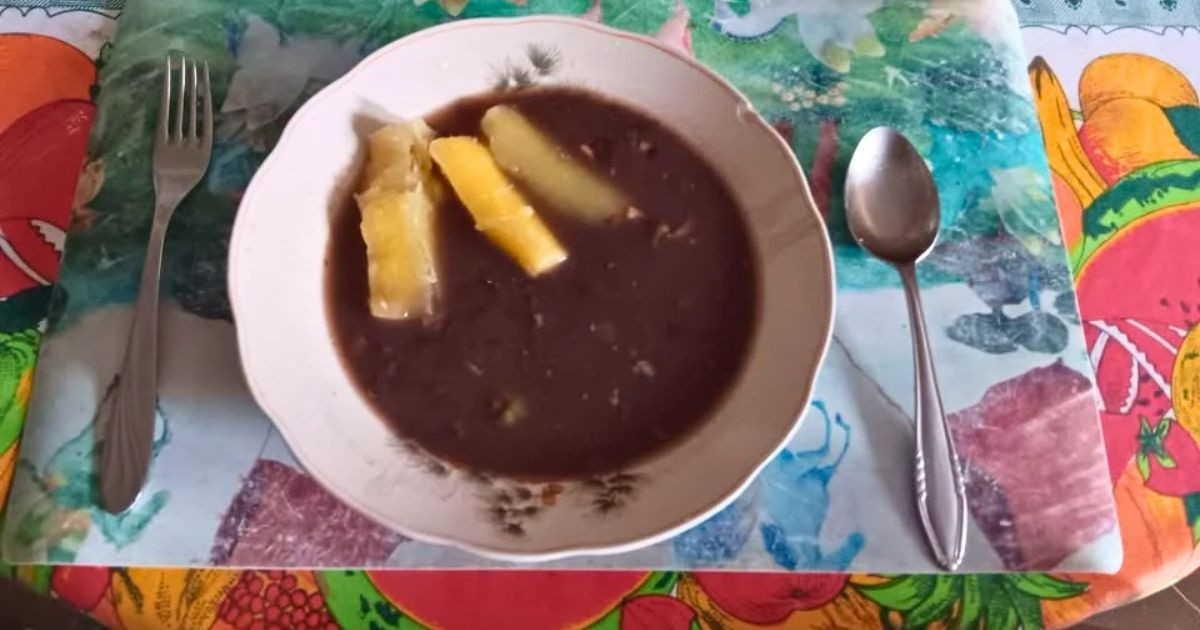
A journalist from the Cuban state broadcaster CMHW in Villa Clara, with nearly four decades of experience in official journalism, published a post on Facebook on Thursday that vividly describes the food crisis affecting Cuba: the monthly income of hundreds of thousands of Cubans is not even enough to buy rice.
Jesús Álvarez López titled his post "Neither yuta nor fole, nor anything", a phrase taken from the refrain that his aunt Silvia would repeat as a child while complaining that the only food on the table was cassava and beans. By drawing a historical line from the family scarcity before 1959, the author concludes that today's reality "is intent on surpassing the food crisis experienced by our grandparents."
The most immediate catalyst was a scene that Álvarez López witnessed on Saturday, November 15, at the agricultural market of Paseo de la Paz in Santa Clara: an elderly woman gathered 90 pesos in five-peso bills to buy just two pounds of plantains. "Anyone who does not feel their chest tighten in front of scenes like this has lost their sensitivity, if they ever had it. And in my opinion, they have no right to expect forgiveness, not even from God," he wrote.
The journalist notes that the elimination of price caps for basic foods has led to speculative increases in costs, just as the ration book quietly disappeared. Decree 156/2026, signed by Prime Minister Manuel Marrero Cruz and published in the Official Gazette in July, removed the cap of 155 pesos per pound of rice; in November 2026, that product is selling for between 390 and 500 pesos per pound. According to Álvarez López, pumpkin has increased from 30 to 300 pesos per pound.
The beans follow the same spiral. On Monday, November 17, black beans were reported at 700 pesos per pound; the next day, prices fluctuated between 800 and 1,500 pesos depending on the area. A San Luis influencer residing in the United States, quoted in the text, sums it up this way: "Cuba is the only country where the so-called 'supply and demand' doesn't work; you go to the markets and nothing is cheap."
The gap between income and prices is staggering. The minimum wage effective since July 2026 is 3,210 pesos per month, and the average state salary is around 7,354 pesos. Economist Javier Pérez Capdevila estimates that the basic needs of an individual cost nearly 96,000 pesos per month, almost thirty times the minimum wage.
The minimum pension, set at 4,000 pesos, can be nearly entirely consumed by a single basic product, as illustrated by a young man on TikTok who showed that his retired grandfather's check —3,056 pesos— is not enough to buy rice and beans at the same time.
The productive collapse exacerbates the situation. Cuba imports around 80% of the food it consumes, according to the World Food Programme of the United Nations, while the year-on-year inflation for food and non-alcoholic beverages reached 50.72% in October 2026, according to official statistics.
What makes the text by Álvarez López especially significant is its origin: it is not a dissenting voice from outside the system, but rather a journalist who has worked for decades within the Cuban state's information apparatus. Remembering that in the 1990s, Raúl Castro declared, "if there is food for the people, the risks do not matter," the author concludes that today, among all the risks threatening Cuba, none surpasses that of the unaffordable food prices.
Related videos:
Filed under: