The poet, narrator, translator, and literary critic Manuel García Verdecia criticized this Friday the size and poor quality of the regulated bread in Cuba, a product that he described as being distributed occasionally and increasingly arriving smaller, harder, and bitter.
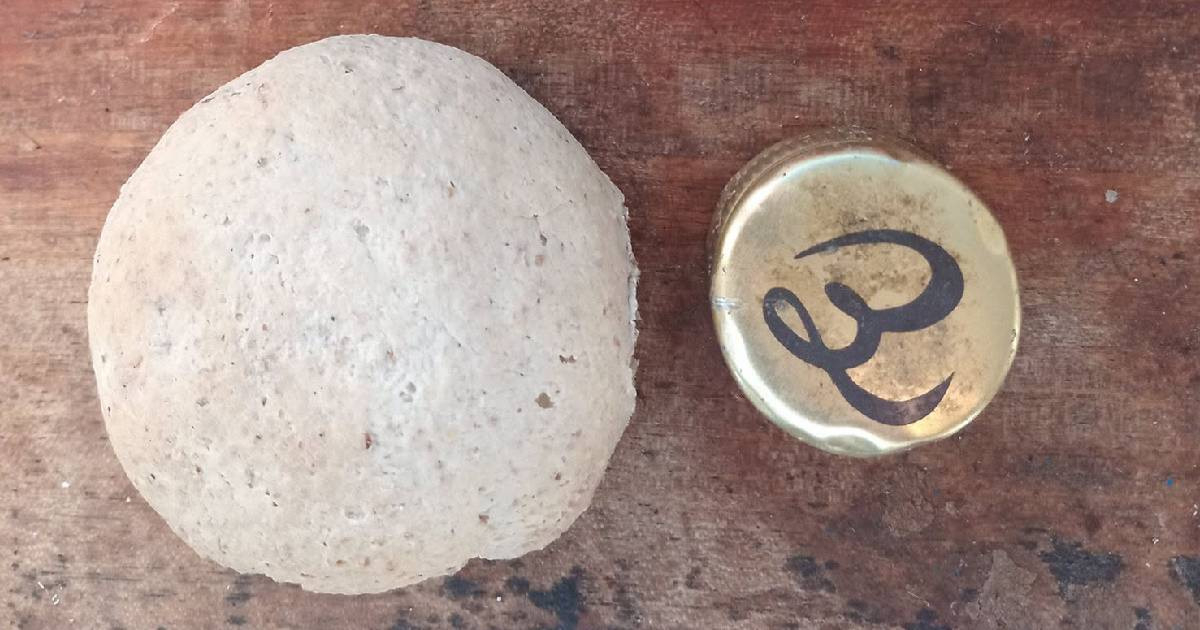
Born in Holguín in 1953, he is also a member of the National Union of Writers and Artists of Cuba (Uneac). He accompanied his post on Facebook with a photograph in which he placed a piece of bread next to the metal cap of a bottle of rum to illustrate its size.
"It keeps getting smaller, about the size of a bottle cap; increasingly harder, a danger to teeth, and more bitter, like a revulsive," wrote García, who described the situation as shameful and demanded that the responsible officials fulfill their obligations or resign from their positions.
The poet also quoted a phrase attributed to Ernesto Che Guevara (1928-1967) to question the quality of the state product. "Quality is respect for the people," he recalled.
His complaint sparked numerous reactions from users who described the bread as an undignified product and questioned the conditions under which it arrives at the stores. "It’s pretentious to call that bread. It’s not even fit for animals," commented one person. Another summed up its appearance with a shorter phrase: "That bread is anemic."
Several internet users also pointed out the inequality between the general population and those in government positions. "They don’t eat that bread, nor do the high-ranking officials, and even less so the new class," wrote a user.
Others reported issues with the production and preservation of the product, as well as alleged misappropriations of flour. "Horrible; I've never seen anything like it, besides the fact that they are thieves; they steal the flour, sell old and sour bread when they do sell it," stated another commenter.
This month, a mother from Esmeralda, in Camagüey, questioned that the bread intended for children, distributed once a month, looked like stones and stated that even her dog refused to eat it.
In that same province, a report documented the case of a person who paid 350 pesos for 10 loaves of bread and found mouse droppings in three of them.
In Holguín, residents displayed badly baked pieces that looked like raw dough, while in Placetas, Villa Clara, a photograph revealed a store-bought bread that was practically the size of an egg.
Cuba needs about 20,000 tons of wheat flour each month to ensure the production of regulated bread, but in June, the Minister of Food Industry, Alberto López Díaz, acknowledged that out of more than six vessels contracted for the year, only one had arrived, corresponding to a commitment from the previous year.
Additionally, a shipment of 5,000 tons was withdrawn before the ship set sail. The only operational flour mill, located in Cienfuegos, produced around 250 tons daily, compared to the 700 required.
The shortage of flour forced the incorporation of cassava pulp, sweet potato, or corn into the mixtures used to make the bread, an alternative that further deteriorated its texture, flavor, and preservation.
In several provinces, the restrictions have resulted in reserving the regulated bread exclusively for those under 13 and over 65 years old. For those who have access to the private market, the Cuban Baking Company set prices in Havana of up to 550 pesos per half kilogram, compared to a monthly minimum salary of 3,210 pesos.
Related videos:
Filed under: