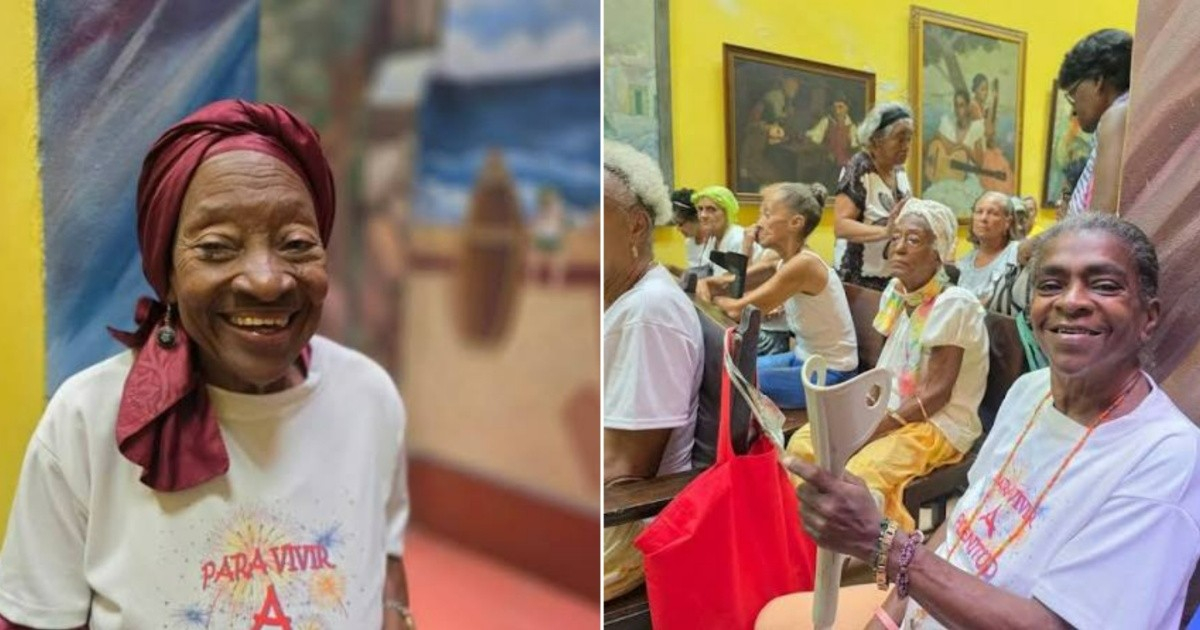
An old rural school located about 20 kilometers from Havana has become the only shelter in Cuba that provides comprehensive care—housing, food, and health services—to 318 people who were living on the streets, according to a report by the EFE agency published this Saturday.
The center, managed by the religious and social assistance organization Quisicuaba in the municipality of San Antonio de los Baños, Artemisa province, accommodates elderly individuals, people with mental health issues, and citizens undergoing social reintegration, many of whom had lost all connection with their families.
The shelter offers six meals a day —breakfast, lunch, dinner, and three snacks— in addition to a pharmacy, medical clinic, bookstore, hair salon, gym, laundry, and wheelchairs for those with physical disabilities.
A team of 62 workers, including doctors, psychiatrists, therapists, and assistants, designs occupational therapies tailored to the cognitive abilities of each resident.
To reduce its dependence on external sources, the center produces some of its own food: it cultivates bananas, sweet potatoes, yams, pumpkins, cassava, and beans, and has an organic garden and a livestock module, in addition to producing charcoal for cooking.
The project is supported by United Nations agencies and European cooperation organizations, and plans to expand its capacity to between 560 and 580 places.
Quisicuaba was founded on October 12, 1939 by Andrea B. Zabala Ortega in the Havana neighborhood of Los Sitios, under the name of Kardecian Spiritist Religious Institution Cruzada. In 1992, Enrique Alemán Gutiérrez —doctor, anthropologist, PhD in Sciences, and grandson of the founder— incorporated the name "Quisicuaba," linked to kissi groups from the southern basin of Angola. Alemán currently leads the organization and presides over the Federation of Spiritists of Cuba.
In addition to the shelter, Quisicuaba manages a social dining facility on Maloja Street, in Central Havana, where hundreds of Cubans sleep on the sidewalk from the previous night to receive a daily food ration. According to the report itself, "for many people, this ration constitutes the only meal of the day," and the line includes retirees, teachers, retired doctors, single mothers, and workers whose incomes are no longer sufficient to buy food.
The organization has identified approximately 12,500 vulnerable individuals in Havana alone, a figure that reflects the accelerated deterioration of living conditions on the island.
The number of "vagrants" in Cuba increased from 1,100 in 2012 to 3,690 in 2023, a rise of 235% over eleven years, according to data from the Ministry of Labor and Social Security.
The regime acknowledged more than 310,000 residents in a state of poverty or social vulnerability in July 2025, while the year-on-year inflation reached 28% in September 2026, with food and beverages increasing in price by 42.66% during that period.
In response, the Government announced targeted assistance for vulnerable individuals consisting of five pounds of rice, one pound of sugar, and one pound of beans per month, a measure initially planned until January 2027, an amount that contrasts with the scale of the crisis and current prices: a carton of eggs can exceed 3,000 Cuban pesos, and a bottle of oil can cost more than 2,700 pesos.
The San Antonio de los Baños shelter housed 113 people in May 2024; in less than two and a half years, that number almost tripled to the current 318, a statistic that accurately illustrates the speed at which the social emergency is growing in Cuba.
Quisicuaba is an association with verifiable connections to the high-ranking leaders of the Cuban government. The visits by the designated president Miguel Díaz-Canel, as well as by government ministers and state officials, leave a mark of these ties.
Its director, Enrique Alemán, who is not only a spiritist but also a deputy to the National Assembly of People's Power (ANPP), has stated that the social work of Qusicuaba is justified by its efforts to assist impoverished population groups in the capital, a number that continues to grow on the island.
Alemán stated in a report from the official site Cubadebate that he provides meals to more than 4,000 homeless and "vulnerable" individuals daily at a dining hall in Havana.
However, in echoing that figure, 14 y Medio specified that if this number were to be considered accurate, it would mean feeding three people per minute around the clock.
Related videos:
Filed under: