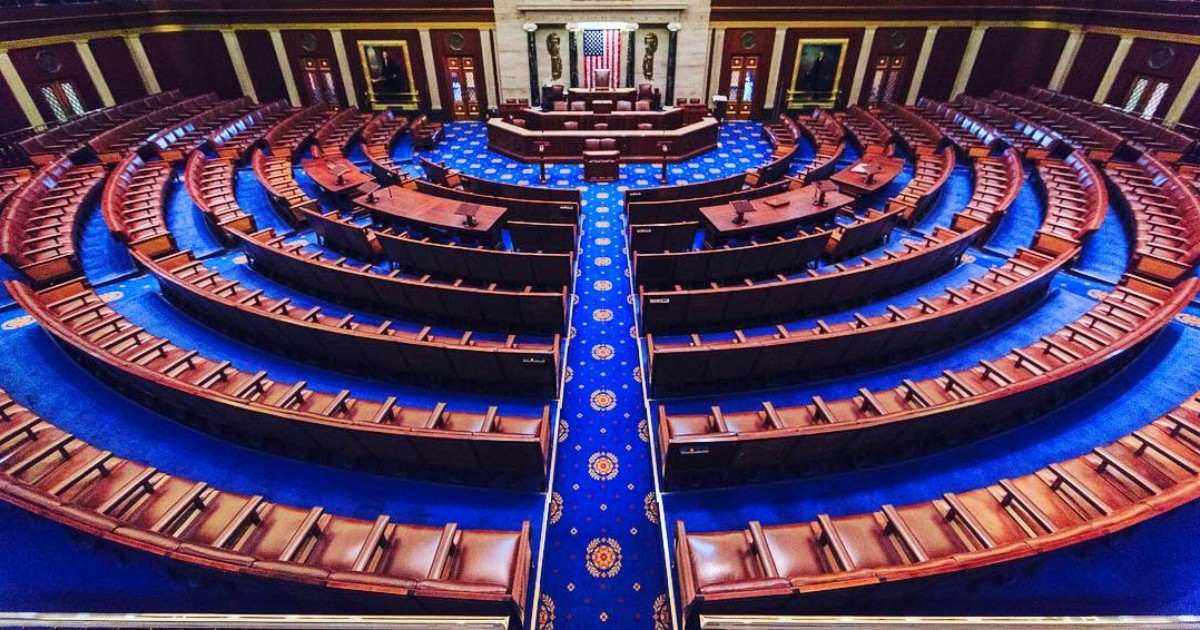
The House Democrats of the United States achieved their best electoral result in decades this Monday by securing at least 258 seats, an unprecedented majority since 1992, as confirmed by the AP Agency.
The decisive seat came on Sunday when the Democrat Chuck Hubbard defeated the Republican Virginia Foxx in North Carolina's fifth congressional district by just 330 votes, a margin of approximately 0.1 percentage points, after a full recount requested by Foxx herself.
With that figure, the Democrats matched their result from the 1992 elections—linked to Bill Clinton's first presidential victory—and surpassed by one the 257 seats won with Barack Obama in 2008, although they did not reach the majorities of the Roosevelt era, which exceeded 300.
The net gain of the party was at least 44 seats compared to the starting point on election day, four more than the 40 obtained during Trump's first term in 2018.
The Republicans are left with at least 173 seats, one of their lowest totals in decades, while four contests remain unresolved: one in Minnesota, one in Tennessee, and two in Louisiana that will go to a runoff in December.
The outcome configures a divided government following the Democratic wave: the Democrats will control both the House and the Senate —where they secured 56 seats, their largest advantage in over a decade— starting January 3, 2027, while Donald Trump remains in the White House.
Hakeem Jeffries, Democratic leader from New York, is set to become the first African American to preside over the House when his colleagues elect him on January 3, 2027. With 258 seats, he can afford to lose dozens of votes in any ballot and still exceed the threshold of 218 needed for a majority.
Representative Alexandria Ocasio-Cortez described the outcome as "a mandate for change" and noted that it is "one of the largest groups we've seen" in the recent history of the party.
The Democrats are preparing a 100-day agenda focused on reversing Medicaid cuts, restoring tax credits from the Affordable Care Act, and launching oversight investigations into the Trump administration, including possible subpoenas regarding the president and his family's enrichment since returning to power.
The White House has already warned that these investigations— a standard oversight function of Congress— could constitute "flagrant criminality," according to AP.
Representative Jason Crow, a Democrat from Colorado and former Army ranger, summarized the pressure the party feels: “People are dying in this country, people who are losing their health insurance, their livelihoods, their farms, who are being terrified by the Immigration Service. If you don't feel urgency and desperation to deliver results, you don't belong under this dome of the Capitol.”
On his part, Trump opened the door to bipartisan agreements on Sunday by describing Jeffries as "a smart and reasonable guy" and mentioning potential understandings regarding credit cards, healthcare, and immigration.
Meanwhile, Florida partially resisted the national trend: Byron Donalds won the governorship by just a 1.27 point margin, compared to the 19 points by which Ron DeSantis prevailed in 2022.
Jim Jordan, elected leader of the Republican minority in the House, promised resistance: "For the next two years, House Republicans will fight for American families."
Related videos:
Filed under: