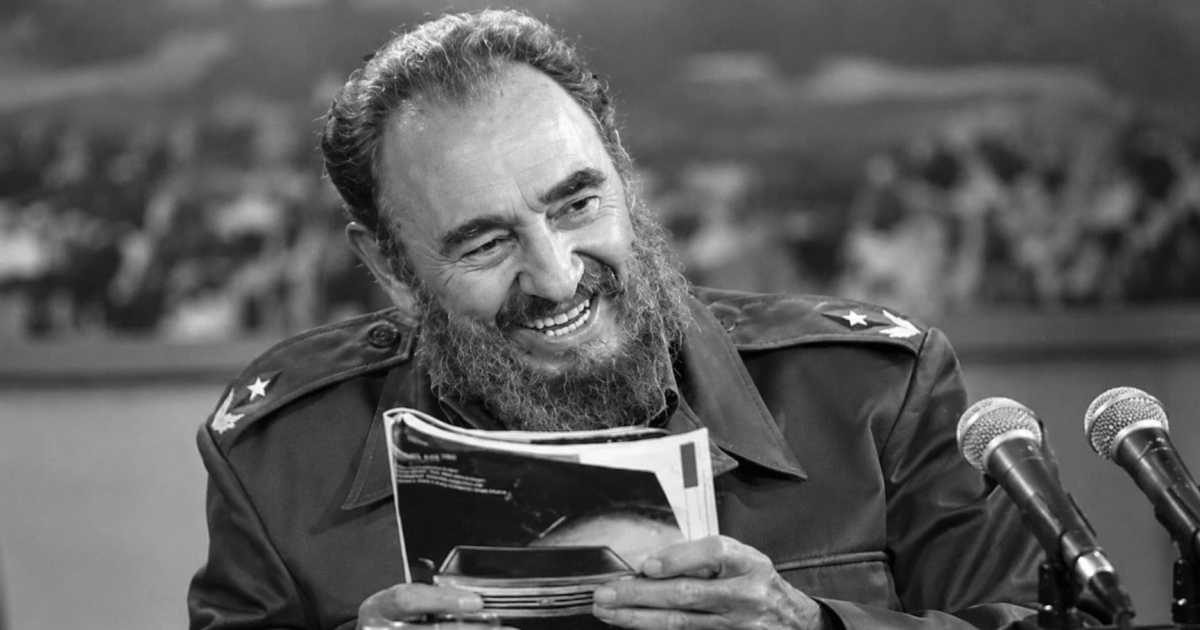
On November 25, ten years will have passed since the death of Fidel Castro, and the island he ruled for nearly half a century reaches this anniversary engulfed in one of the worst economic and social crises of the last few decades, characterized by food and medicine shortages, chronic blackouts, and an unprecedented population exodus.
The streets of Havana remain plastered with the image of the historical leader: billboards, murals, and posters with propaganda slogans keep his figure omnipresent in public spaces, while state television broadcasts snippets of his speeches daily.
The Cuban regime has turned this tenth anniversary into an act of political legitimization, portraying Castro as a symbol of continuity and resistance. However, the reality experienced by Cubans starkly contradicts that narrative.
The nostalgia for Castro among some older Cubans coexists with the persistence of official propaganda and the deterioration of living conditions.
Pedro Valdivia, a 67-year-old from Havana, was interviewed by EFE and starkly summarizes the situation in Cuba: "After Fidel died, the country declined: There is no medicine, there is no food, and it's a truth that cannot be hidden. It's a truth that must be told, even if it hurts."
This perception, however, overlooks an uncomfortable reality: that scarcity, rationing, and the absence of freedoms are not a deviation that occurred after Castro's regime, but rather their direct consequence.
The model of centralized economy, single party, and nationalization that Castro established since 1959, which in the Revolutionary Offensive of 1968 practically eliminated all small private enterprises, is the same system that currently governs the island and has led to the present collapse.
The nostalgia captured by EFE among older citizens is partly a response to a deliberate state communication strategy. Valdivia adds that "there was no one like Fidel; he always had a way of getting everything," even during the so-called Special Period of the 1990s, when the Cuban economy contracted by more than 35% following the Soviet collapse.
That crisis, with power outages of up to 16 hours, hunger, and extreme scarcity, is the direct precursor to what Cuba is experiencing now, not its contrast.
The indicators for 2026 are devastating. Economist Omar Everleny Pérez estimates a GDP contraction of 10.2%, one of the worst declines recorded.
The year-on-year inflation reached 28.44% in September, and food prices rose by 42.66%. A carton of 30 eggs costs between 3,000 and 3,600 pesos, nearly half of a monthly state salary.
Tourism, a sector that the regime bet on as an alternative economic engine, plummeted by 65.7% compared to the same period in 2025. Between January and October 2026, Cuba received only 507,083 international visitors, according to official figures from ONEI.
Cuba has lost more than one million inhabitants since 2020 according to government figures, with independent estimates raising the number of those who have emigrated to 2.75 million people.
In the streets, young people do not talk about Castro. Many did not know him and focus on surviving day by day. The entrepreneurs in the emerging private sector, who occupy spaces that were once state-run, have removed his image from the walls. It is they, not the nostalgic, who represent the Cuba that is trying to survive outside the model created by the dictator.
Related videos:
Filed under: