In the midst of an economic crisis, the Cuban dictatorship called on more than 100 members of the diaspora this Tuesday to join its economic reforms during a Business Forum held as part of the 42nd International Fair of Havana (FIHAV 2026), which this year took place predominantly online, reflecting the "complex situation" the island is facing.
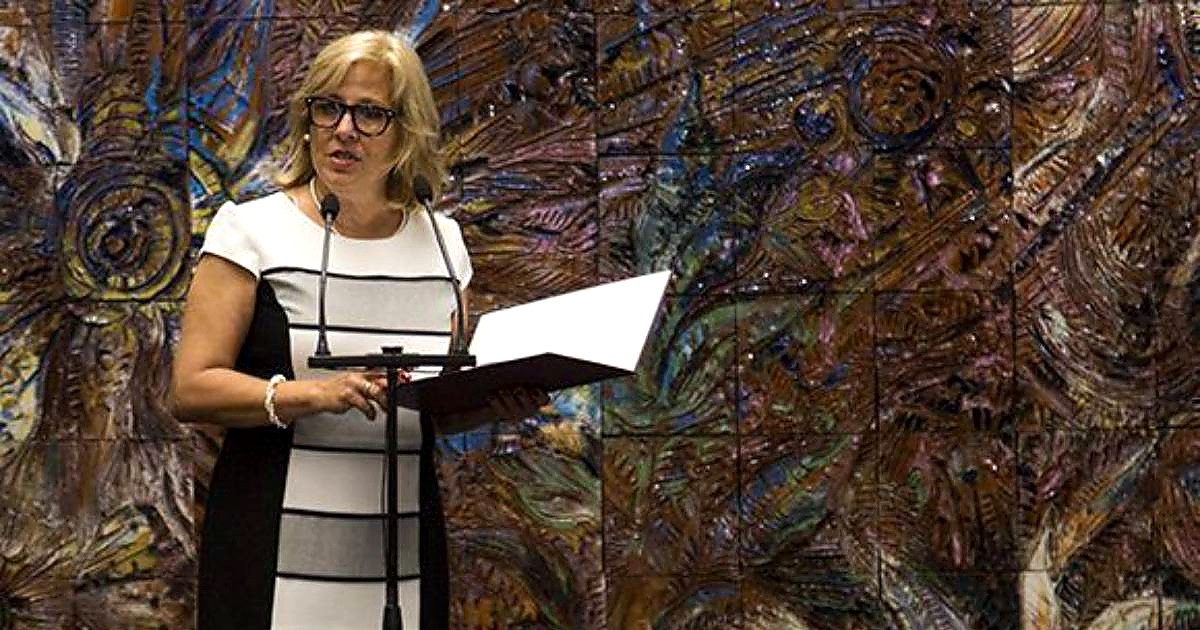
Ana Teresita González Fraga, General Director of Consular Affairs and Attention to Cubans Residing Abroad at the Ministry of Foreign Affairs (MINREX), was the one who issued the call.
"You are part of the essence of Cuba and Cuba needs you," declared González Fraga to the participants, urging them to leave the event "with the determination to take action."
González Fraga assured that "the doors of the Cuban institutions are open" and framed the ongoing measures as more than just short-term adjustments.
"The reforms being implemented in the country are not mere adjustments, but a profound change in the socio-economic structure," he stated.
The call is supported by the package of 176 economic and social reforms approved by the National Assembly in June 2026, which includes the entry of "new actors" in the tourism sector, the promotion of foreign direct investment especially for non-resident Cubans, and a greater involvement of the private sector.
The regime also presented at the fair a portfolio of 426 projects valued at over 30 billion dollars.
At the opening of FIHAV, the Vice President of the Council of Ministers and Minister of Foreign Trade, Óscar Pérez-Oliva, stated that “the doors of Cuba are open to the world” and announced the preparation of a new foreign investment law to be presented to the National Assembly in December.
The contrast between the official discourse and the reality of the island is hard to ignore. The informal exchange rate approached 964 pesos per dollar this week, and the official inflation rate exceeded 28% year-on-year in September, with food prices rising by nearly 43%.
The diaspora is already partially supporting the economy that the Cuban government claims it wants to reform. The Cuban emigrants surpassed Canada as the main group of visitors in 2026, accounting for 26.1% of arrivals so far this year, a period in which total tourism has collapsed by 65.7% compared to the same time last year.
The call encounters a specific legal barrier for Cubans under U.S. jurisdiction. On September 30, 2026, the Office of Foreign Assets Control (OFAC) expanded restrictions to prohibit transactions with entities on the Cuba Restricted List. The Helms-Burton Act exposes those who engage with confiscated properties to civil lawsuits in U.S. courts.
Additionally, GAESA, the business conglomerate of the Cuban Armed Forces, controls between 40% and 70% of the economy, including tourism, logistics, and banking, making it nearly impossible to invest in the island without engaging with sanctioned military structures.
The reaction in exile has been one of distrust. Activists from the Democracy Movement in Miami rejected any investment while the regime remains in power, summarizing their stance with the slogan "Cuba Freedom First, Business Later."
This is not the first time that Havana has made this approach. In June, Díaz-Canel told the diaspora "here is your home and here is the door open." However, investors still seem unresponsive.
The only in-person event of FIHAV 2026 is scheduled for this Thursday, November 26, at the Palacio de Convenciones in Havana, where the regime will present an update on its portfolio of business opportunities.
Related videos:
Filed under: