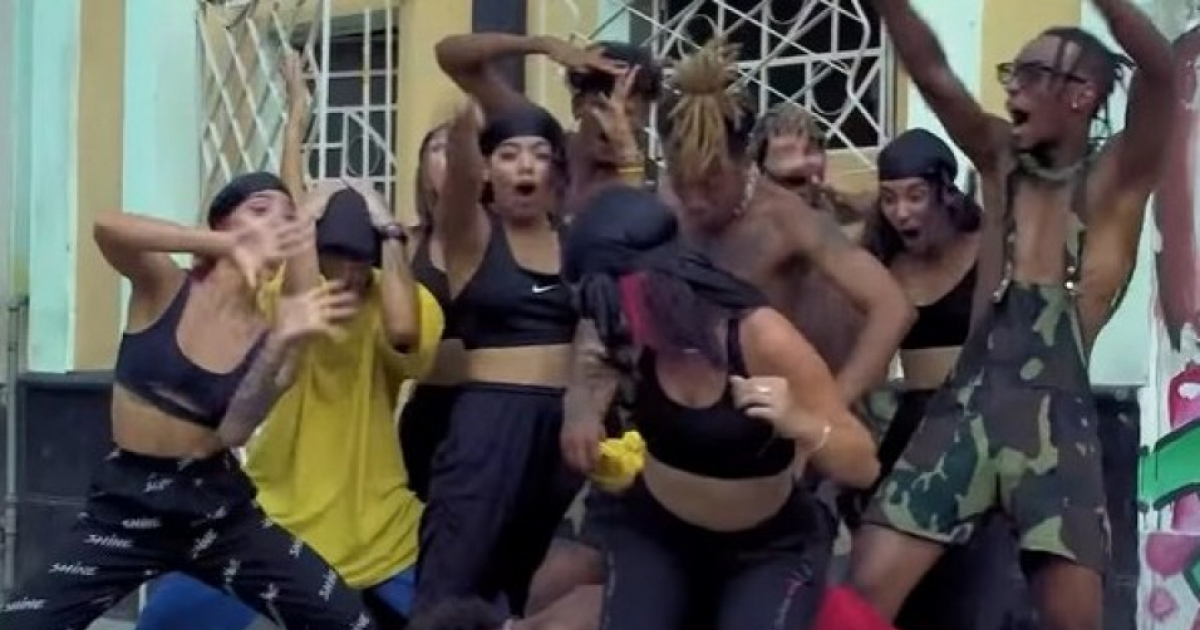
A genre born in Havana, spread over the years from cell phone to cell phone, has reached the ears of Rosalía and Daddy Yankee: the agency AFP dedicated an extensive report to the Cuban talent and its conquest of the Latin music scene.
The Spanish artist declared herself a fan of the genre, and the Puerto Rican artist covered it on his latest album, two nods that illustrate how far a style has come that just a decade ago was considered marginal even within Cuba.
The genre emerged about two decades ago in some neighborhoods of the Cuban capital—known as "repartos"—and combines fast rhythms, catchy choruses, and a slang that speaks of money, parties, and sex, with influences from Cuban timba and reguetón.
Artists like Bebeshito, Charly & Johayron, and Ja Rulay currently top their list of most popular figures.
The international leap has a clear epicenter: Miami. "After we Cuban artists established ourselves in Miami and began to understand this (the music industry), that's when everything happened," stated Carlos Eduardo Pérez, artistically known as "Helabusador," during the Billboard Latin Music Awards gala held at the end of October in the Florida city.
Pérez walked the red carpet of the event alongside other representatives of the genre, though none were among the nominees. His song "Dichávate," recorded with Rey Tony and Ya Ice Dilan, has garnered 170 million views on YouTube and is one of the major hits of the year.
It was precisely during that Billboard week when Rosalía and Seidy La Niña starred in the viral meeting that sparked conversations on social media: the Spaniard, honored with the Billboard Hall of Fame Award, expressed her desire to sing reggaeton and mentioned that she is a fan of the genre.
The cast made history at the 2026 Billboard Latin Music Awards, with performances at the gala and its own panel — "Reparto: Cuba's Modern-Day Soundscape" — held at the Faena Forum in Miami Beach on October 20, featuring Bebeshito, Wow Popy, DJ Conds, Helabusador, and Rey Tony as the main acts.
The phenomenon is growing without the support of the Cuban state and, in many cases, despite it. The genre operates through a parallel network of producers, filmmakers, and promoters that functions outside of official cultural institutions.
Artists recording in Cuba rely on collaborators abroad to distribute their music and collect income from digital platforms, something that is impossible to manage from the Island.
For hundreds of young Cubans, the distribution represents one of the few available paths for social advancement in a country struck by crisis. Maykol Blanco, a 24-year-old industrial engineer, abandoned his career to dedicate himself to music. "Everyone likes the distribution," he summed up to AFP.
Alianny Jaime, 19 years old, records in an independent studio set up in a room of a house in San Miguel del Padrón, where a session usually costs 100 dollars. "If I hit a big song, it would be really spectacular and could help a lot of people," she said.
The dance challenges on TikTok and Instagram have been another driving force for expansion. "They have helped musicians get their songs to take off, to go viral, not only here in Cuba but internationally," explained Paloma Duarte, a dancer from the group Los Datway.
"Being a repartero was looked down upon. But not anymore, now everyone dances to it, everyone feels it," he added proudly.
Related videos:
Filed under: