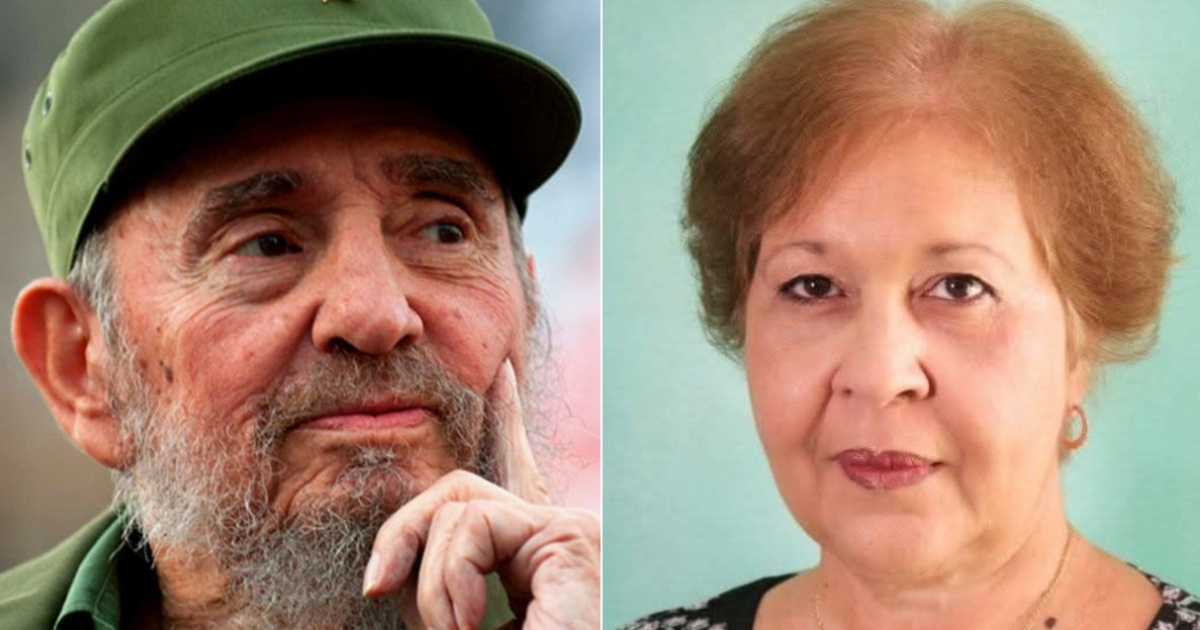
In the tenth anniversary of the death of Fidel Castro, the Cuban historian and activist Alina Bárbara López Hernández published an excerpt from her essay "Fidel Castro: the cycle and the century," in which she debunks the dictator's legacy and defines him as "the architect of a political model based on exclusion, which is intended to be maintained despite its anachronistic nature."
In the text shared on Facebook on Wednesday, the day marking 10 years since Castro's death, the author claims that the social model of Castroism "was completely dismantled even before his death," although its coercive structures and political monopoly still persist to this day.
One of the central axes of the analysis is the distinction between Castro as a historical figure and Castroism as a system. López Hernández points out that the term is still used to refer to the governments of Raúl Castro and his designated spokesperson Miguel Díaz-Canel, and that this symbolic persistence reveals a weakness: “Subsequent leadership has not managed to reproduce the political and symbolic capital associated with his persona.”
The academic describes Castroism as "a highly personalistic and authoritarian political system" that combined political monopoly, control of information and movement, coercion, ideological mobilization, and a redistributive architecture, all upheld by a populist discourse that portrayed the people as the main actors, "even though in practice they decided nothing."
She recalled that this system provided health care, free education, and social security, which allowed her to "govern without ensuring real democracy or political rights."
"The insularity of Cuba and the control of the media, information, and mobility fostered a citizenry that was closed off, apathetic, and resigned," he emphasized.
After Castro's death, his successors maintained political control but gradually lost the "personal mechanism": they cut social security since 2009, reduced investments in health and education, opened travel abroad in 2013, and in 2018, enabled access to the Internet via mobile data.
That last step proved decisive. According to López Hernández, "The Internet returned a voice to a citizenship that had previously been impoverished and humiliated, and people learned that social protest was the means of defense they had. The social consensus, the foundation of Castroism, was definitively and irreversibly shattered."
The professor added that Raúl Castro modified the main mechanisms that underpinned his brother's model. "As a result, this society, increasingly politically conscious, that demands its rights and fights for them, is nothing like the type of society established by Castroism."
The activist's conclusion: "The cycle of Castroism came to an end nearly two decades before the century of its architect was completed."
On November 25, 10 years have passed since the death of Fidel Castro, and the country he governed for nearly half a century is engulfed in one of the worst economic and social crises in its history, facing shortages of food and medicine, chronic blackouts, and an unprecedented population exodus.
The regime turned this tenth anniversary into a political legitimization event, with activities extending until December 4, where Fidel is presented as a symbol of continuity and resistance; however, the reality that Cubans experience directly contradicts that narrative.
The streets of Havana are plastered with the image of the historical leader: billboards, murals, and posters with propaganda slogans keep his presence omnipresent in public spaces, while television broadcasts fragments of his speeches daily.
The academic and activist López Hernández has been under house arrest for over two years, accused of assault, contempt, and disobedience, with a prosecutor's request for four years in prison. Her trial, scheduled for January 30, 2026, has been suspended with no new date announced.
Just a week before this publication, on November 18, she was arrested for the sixth time this year in front of the Provincial People's Court of Matanzas while holding a sign that read, "Respect the Criminal Procedure Law. Case 17/25." She was released four and a half hours later.
Related videos:
Filed under: