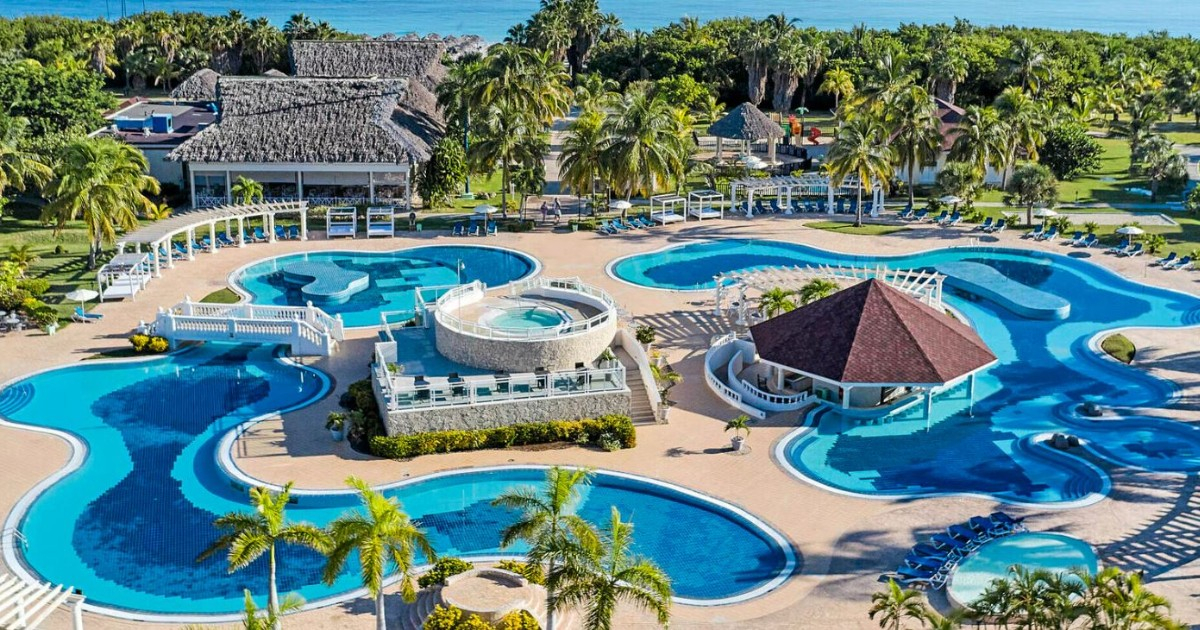
The Mallorcan hotel chain Iberostar set aside just over 22 million euros by the end of the 2025 fiscal year to cover the economic risks arising from its presence in Cuba, according to the balances of its hotel division —Iberostar Hoteles y Apartamentos, S.L.U.— filed with the Spanish Mercantile Registry.
The provision was made before the company finalized the exit of nearly twenty establishments on the Island during the summer of 2026.
The figures from the 2025 sustainability report of the group illustrate the extent of the deterioration: pre-tax profit in Cuba plummeted from €9.75 million in 2024 to just €126,000 in 2025, a collapse of 98.7%.
The Island, which a year earlier contributed nearly 5% of the group's profits, came to represent a mere 0.07% of its results.
Despite this nearly nonexistent result, Iberostar paid 612,000 euros in taxes on profits to the Cuban regime in 2025, compared to 1.837 million the previous year. Money continued to flow into the coffers of the Cuban State even when the business had become practically irrelevant.
To assess the impact of the provision, the company turned to external analyses and contingency plans.
According to its reports, the company "assessed expert analyses and contingency plans to evaluate their impact based on different scenarios regarding the evolution of the island's economy." The hotelier has not made any public comments on this matter.
The withdrawal occurred in two phases. In June 2026, Iberostar ceased operations at 12 of its 18 hotels in Cuba, all linked to Gaviota, the hotel subsidiary of GAESA —the business conglomerate of the Cuban Armed Forces— following the Executive Order signed by Donald Trump on May 1, 2026, which introduced secondary sanctions for foreign companies with ties to that group.
In July, the expansion of restrictions on the Ministry of Tourism and entities such as Gran Caribe and Cubanacán led to the complete cessation of operations, marking the end of 33 years of presence on the Island, which began in 1993.
The decline of Iberostar's business was not solely due to U.S. sanctions. Cuban tourism had been in freefall for years: in 2025, the island welcomed only 1.81 million visitors, the lowest figure since 2002, not counting the pandemic, with an average hotel occupancy rate of 18.9%.
The energy crisis, which caused more than 1,700 flight cancellations due to a lack of fuel, worsened the collapse. Between January and October 2026, only 507,083 tourists arrived, a decrease of 65.7% compared to the same period the previous year.
Iberostar is not the only Spanish chain that has paid a high price for its investment in Cuba. Meliá Hotels International allocated 79.4 million euros to cope with the closure of its 34 hotels and more than 14,000 rooms, completed on July 24, 2026, after 36 years in the Caribbean nation. Barceló, for its part, prematurely terminated the contracts of two establishments in Varadero.
The balance of the Spanish hotel exodus is devastating: companies in the sector had invested a total of 465 million euros in Cuba since 1993, and the estimated losses range between 80 and 100 million euros.
In addition, there are up to 318 million euros in debts, held funds, and blocked dividends that the regime cannot return due to a lack of foreign currency, money that more than 150 Spanish companies consider trapped in Cuban banks.
Related videos:
Filed under: