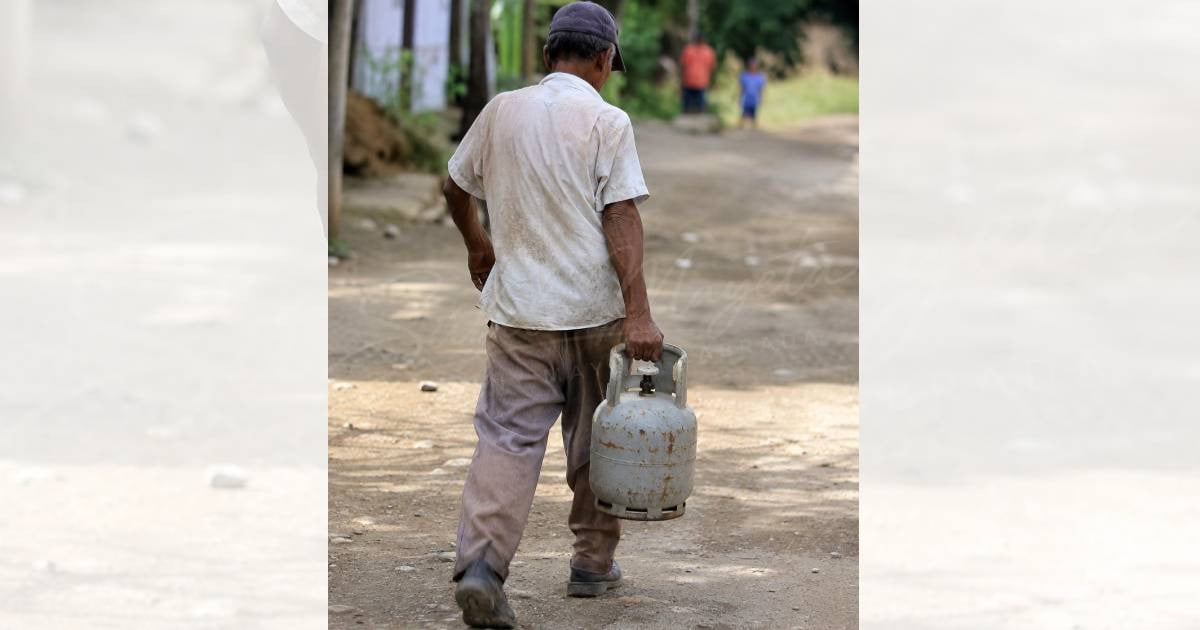
Gas canisters have been recently sold for 41 dollars in the Altamira neighborhood of Santiago de Cuba, with no option for payment in pesos or access through the ration book.
The sale was documented by journalist Yosmany Mayeta Labrada, who questioned on his Facebook profile this Friday the contradiction between the official narrative that portrays the United States as an enemy and the dependency on the dollars sent by Cubans living in that country to purchase essential goods.
"'Yuma' is presented as an enemy in the official discourse, but the dollars from those who live there are quite welcome when it comes to selling what the people need," wrote Mayeta.
According to citizens' comments, in Trinidad the balita was sold for 55 dollars; in Bayamo and East Havana, for 70 dollars; and in other locations, between 41 and 60 dollars. One buyer specified that she had to provide "the exact 41 dollars because there's no change."
To that expense was added the cost of securing a spot in line, which, according to user complaints, reached prices between 5,000 and 10,000 pesos in the informal market. "And besides being sold in a currency we don't accept, another form of speculation emerged, as a spot in line is priced at 5,000 pesos," reported a resident.
The reactions also pointed to the gradual dollarization of basic goods and services. A citizen summarized the process with irony by recalling the sale in MLC, the sale of fuel in dollars, and the increase in gas prices, before suggesting that those unable to pay will have to resort to firewood and charcoal.
Mayeta closed her complaint with a question that reflects the problem of those who depend solely on their earnings in national currency: "How does someone who earns in pesos and has no one abroad to help them cook?".
With the informal exchange rate at around 978 pesos per dollar this Friday, 41 dollars amounts to more than 40,000 pesos, a sum exceeding 12 monthly minimum wages, which have been set at 3,210 pesos since July.
A worker in the Commerce sector stated that she had not been paid for six months and, having no relatives in the United States who could help her, was cooking with firewood. Teachers, street sweepers, healthcare workers, and retirees are also among those facing difficulties accessing gas and are forced to resort to other fuels, which are also expensive.
The crisis has been ongoing since January, when the state-owned Cupet indefinitely suspended the state distribution of liquefied gas in the eastern provinces due to a lack of supply. In September, the suspension was extended nationwide.
In July, the government established an official price of 350 pesos for a 10-kilogram cylinder through Resolution 155/2026. However, this price is virtually inaccessible for consumers while the product remains unavailable through state channels.
In parallel, points of sale for foreign currency have been expanded. In Sancti Spíritus, fuel sales have reached up to 80 dollars; in Holguín, the amount has risen to 94 dollars; and in the Isla de la Juventud, the price increased from 50 to 89 dollars in October.
Related videos:
Filed under: