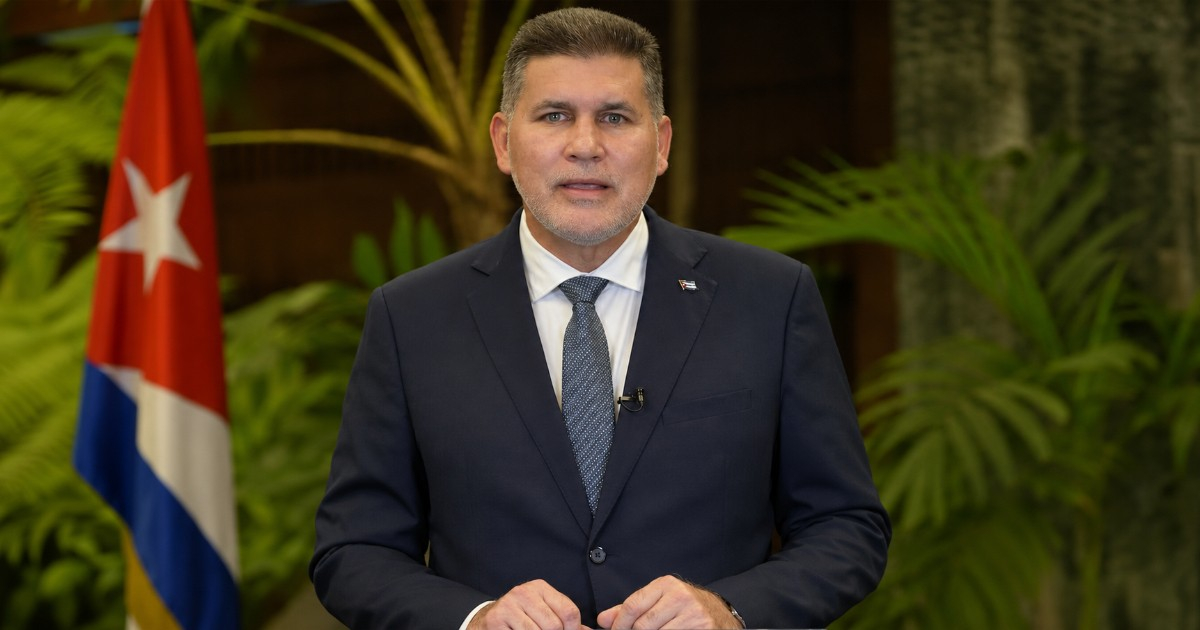
Cuban economist Pedro Monreal published an analysis this Friday in which he dismantles the official announcement of $2 billion in foreign investment presented during the closing of the Havana International Fair (FIHAV 2026), warning that "committed" capital does not equate to real money or to foreign direct investment that has actually been disbursed.
Vice Prime Minister Óscar Pérez-Oliva Fraga announced on Thursday, at the only in-person event of FIHAV 2026, that Cuba approved 40 foreign investment projects this year, distributed among 22 wholly foreign-owned companies, nine joint ventures, and nine international economic association contracts. Six of these projects correspond to Cubans living abroad. However, the official did not specify any companies, specific sectors, or the origin of the capital, which prevents any independent verification of the figures.
Monreal was straightforward in his assessment: “The recent official announcement of 40 'approved' businesses and 2 billion USD 'committed' so far this year is consistent with the historical pattern of promoting foreign investment by the Cuban government, but does not constitute evidence of a material change in the actual influx of capital or in the structural conditions that determine the decision to invest.”
The economist also emphasized that "investors usually prioritize effective convertibility, the liquidity of counterparties, macroeconomic stability, and data transparency over procedural flexibilities."
The data supports skepticism. According to figures from UNCTAD, Cuba recorded a net inflow of foreign direct investment of approximately -8 million dollars in 2024—a negative figure—and only 79 million in 2025. CEPAL estimates that the average annual value of announced investment projects on the island fell by 95.7% between the 2010s, when it averaged 966 million annually, and the period from 2020 to 2024, when it barely reached 41.5 million.
The most recent precedent reinforces distrust. At FIHAV 2025, the regime announced 32 approved businesses for 1.1 billion dollars, but the event concluded with only three agreements actually signed. In 2024, Cuba approved 28 businesses with a committed investment exceeding 68 million dollars — far from the 2 billion now proclaimed — and that year's FIHAV was canceled due to Hurricane Rafael.
The regime has been requesting foreign investment for years without tangible results: at FIHAV 2024, it reported just three approved projects with participation from Cubans residing abroad, which contrasts with the six now announced and the massive call to the diaspora that Pérez-Oliva himself led by stating that "Cuba's doors are open to the world."
The macroeconomic context aggravates the situation. CEPAL projects a contraction of the Cuban GDP of 10.3% in 2026, the worst in Latin America and the Caribbean, while Oxford Economics anticipates a similar decline of 10.2% and predicts that the recession will continue into 2027. The year-on-year inflation reached 32.7% in October, with food prices increasing by nearly 43%, and the informal exchange rate approached 964 pesos per dollar.
Additionally, the U.S. Department of State designated GAESA under Executive Order 14404 in May 2026, extending prohibitions to any entity controlled directly or indirectly by the military conglomerate. Since GAESA dominates between 40% and 70% of the Cuban economy —including tourism, logistics, and banking— investing in the most appealing sectors of the portfolio presented at FIHAV becomes practically unfeasible without engaging with sanctioned structures.
The regime also announced a new foreign investment law expected to be presented to the National Assembly in December 2026, which aims to recognize greater participation from the diaspora. However, as the announcements pile up, actual capital flows continue to be absent.
Related videos:
Filed under: