
Related videos:
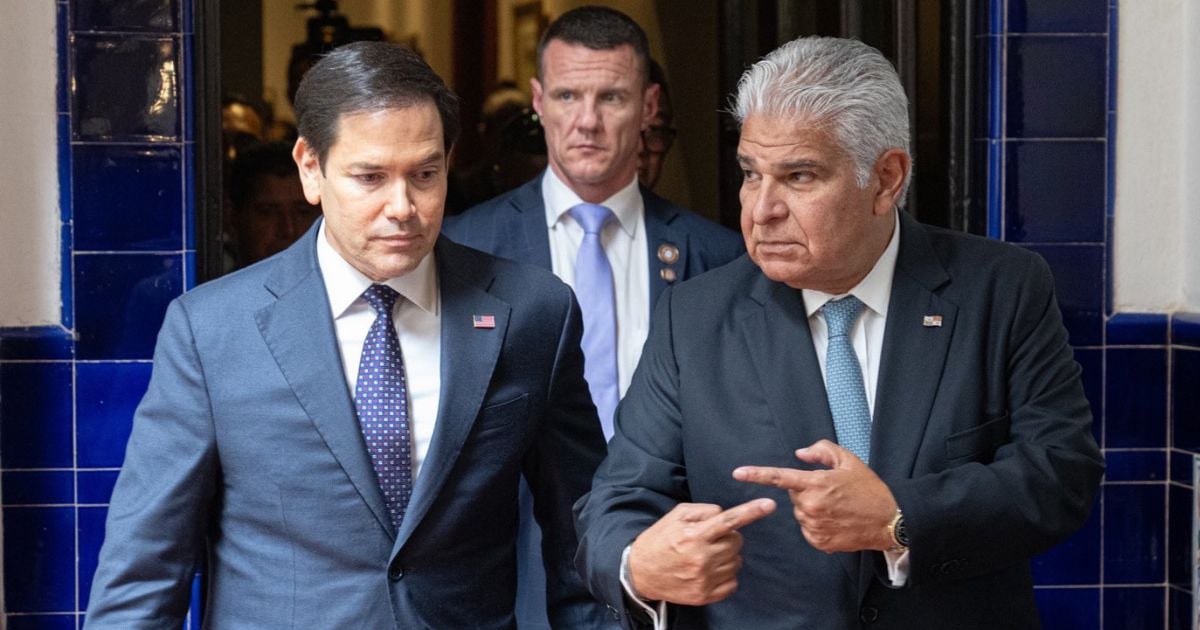
The Secretary of State Marco Rubio warned this Sunday that the United States will not allow the Chinese Communist Party to continue expanding its control over the Panama Canal area, in a message posted on social media after meeting with Panamanian President José Raúl Mulino and Foreign Minister Javier Martínez-Acha.
In his X account (formerly Twitter), Rubio stated that he made it clear to the Panamanian authorities that Washington is committed to curbing the growing Chinese influence in one of the most strategic trade routes in the world.
These statements coincide with the recent threats from the U.S. President, Donald Trump, who expressed his intent to regain control of the Panama Canal.
He also noted that during the meeting they discussed efforts to address the massive migration crisis in the hemisphere and ensure fair competitive conditions for American businesses.
However, the Panamanian president stated that he does not perceive a real threat to the treaties governing the control of the Panama Canal, thus dismissing Rubio's warnings about the growing Chinese influence in the region.
"I do not feel that there is any real threat at this moment against the treaty, its validity, and much less any use of military force to take over the canal; I do not feel that," Mulino stated at a press conference, as reported by El Universal Online.
Despite this stance, the U.S. State Department reiterated that the status quo is unacceptable, and that Washington demanded "immediate changes" to counter China's influence in the Panama Canal.
"Secretary Rubio made it clear that this 'statu quo' is unacceptable and that, in the absence of immediate changes, the United States would have to take necessary measures to protect its rights under the Treaty," stated the Department of State in a press release.
So far, Panama has not announced concrete measures in response to pressure from the U.S., while China continues to expand its economic and trade presence in the region.
The Cuban-American Marco Rubio, Secretary of State of the United States, arrived in Panama on Saturday, marking the beginning of his first international tour as head of U.S. diplomacy.
He was received by Chancellor Javier Martínez-Acha Vásquez. This trip, which will also include stops in El Salvador, Costa Rica, Guatemala, and the Dominican Republic, aims to strengthen bilateral relations and cooperation on key issues such as migration, regional security, and economic growth.
"We are working day and night, including weekends, to strengthen our national security, protect our borders, and improve the economic prosperity of Americans," Rubio declared upon his arrival in Panama.
The Secretary of State highlighted the strategic importance of the region for the future prosperity of the United States, emphasizing the need for closer collaboration with regional partners.
Frequently asked questions about China's influence in the Panama Canal and the United States' stance.
Why is the United States concerned about China's control over the Panama Canal?
The United States is concerned about Chinese control over the Panama Canal because it believes that the increasing influence of the Chinese Communist Party in this strategic region could compromise American security and commercial interests. The Panama Canal is a crucial trade route that connects the Atlantic and Pacific Oceans, and its control is of great geopolitical importance.
What measures has the United States suggested to counteract Chinese influence in the Panama Canal?
The Secretary of State Marco Rubio has stated that the United States will not allow China to continue expanding its control over the Panama Canal area. Washington has demanded "immediate changes" to reduce Chinese influence, implying that it may take necessary measures to protect its rights under the treaty that regulates the operation of the canal.
What has been Panama's response to the United States' concerns regarding the Canal?
The President of Panama, José Raúl Mulino, has stated that he does not perceive a real threat against the treaties governing the control of the Panama Canal. He dismissed the warnings from the United States regarding Chinese influence, asserting that the sovereignty of the canal is not at risk and that Panama has ensured efficient and safe operations.
What impact could the United States' position on the Panama Canal have on relations with Latin America?
The position of the United States on the Panama Canal could strain diplomatic relations with Latin American countries, especially if Washington decides to take unilateral actions to counter Chinese influence. Recent statements by Donald Trump and Marco Rubio have raised concerns in the region, which values Panamanian sovereignty and control over the canal.
Filed under: