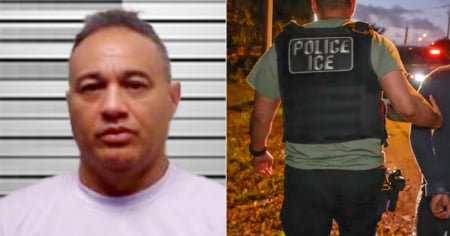
A Cuban woman in the United States successfully postponed her deportation with the timely legal support of the firm Mejías & Asociados PLLC.
In a video posted on TikTok (@mejiasassociates), the lawyer explained that his client, a Cuban immigrant with a pending application for permanent residency (form I-485) and an outstanding parole request, was able to avoid deportation after presenting strong arguments to immigration authorities.
Additionally, she highlighted that the woman had recently moved to the city of Miami, which allowed for her case to be transferred to that jurisdiction.
"The lady avoided deportation and gained time for her applications to proceed!" celebrated the office in the video, accompanied by hashtags such as #politicalasylum, #immigrationattorney, and #I-220A.
Visibly emotional, the woman thanked the legal effort that allowed her expulsion from the United States to be postponed. "I feel very good, thank you. I was very nervous, I cried and everything," she confessed, moved.
This Cuban feels relieved by the possibility of resolving her immigration situation within the country and trusts that the time period she has gained will be decisive in securing her permanent residency.
Rising tension in the immigration policy of the United States
This week, the Supreme Court granted President Donald Trump the authority to invoke a wartime law to expedite deportations, raising significant concerns among civil rights advocates.
In a divided vote of 5-4, the highest court upheld the use of the Foreign Enemies Act, an 18th-century regulation, to swiftly expel hundreds of immigrants.
The decision allows for the application of this mechanism on the condition that those affected are properly notified and have a "reasonable time" to appeal to the courts.
The measure had already been used by Trump earlier this year to order the deportation of Venezuelans allegedly linked to the criminal group Tren de Aragua, although a federal judge blocked the initiative for several weeks.
In this scenario, legal achievements like that of this Cuban not only represent individual relief but also signal that there are still legal tools available to navigate complex immigration processes in the United States.
Frequently Asked Questions about the Deportation Delay for Cubans in the U.S.
How did a Cuban woman manage to postpone her deportation in the U.S.?
The Cuban woman managed to postpone her deportation thanks to the intervention of the Mejías & Asociados PLLC law firm, which presented strong arguments to the immigration authorities. This allowed time for her permanent residency and parole applications to proceed.
What is the I-220A form and how does it affect Cuban migrants?
The I-220A form grants parole to migrants, allowing them to remain in the U.S. while their immigration status is being determined. For many Cubans, it represents a legal limbo with no access to permanent residency or the possibility of returning to their country without risks.
What impact could the Foreign Enemies Act have on Cuban migrants in the U.S.?
The Foreign Enemies Act allows for the swift deportation of immigrants, raising concerns among Cuban migrants who find themselves in a legal limbo. Although notification and a "reasonable time" to appeal are required, the enforcement of this law heightens uncertainty about their future in the country.
What measures are lawyers taking to protect Cubans with I-220A?
Lawyers are initiating legal actions to provide solutions for Cubans with I-220A. Lawsuits are being prepared to help nearly 500,000 Cubans escape immigration limbo, and a settlement with the government is being sought to change their status to a more stable parole document.
Filed under: