
Related videos:
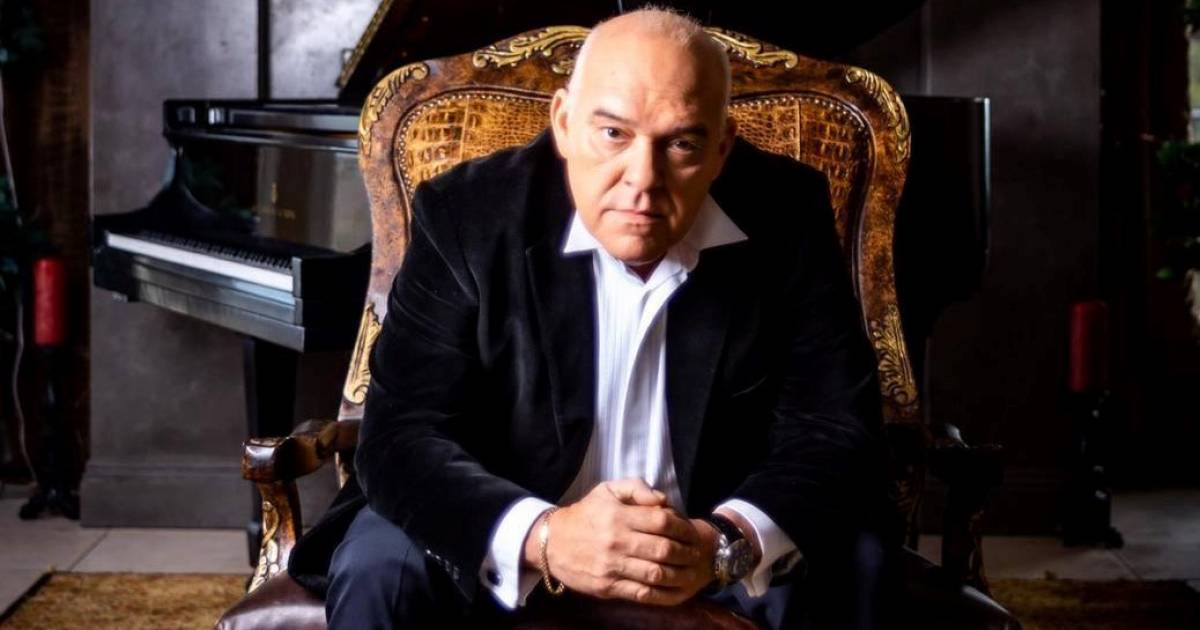
The lyrical singer Ulises Aquino Guerra, founder and director of the community project Ópera de la Calle, emphasized "the government's impossibility and inability" to resolve the serious problems affecting the people, such as the economic crisis, blackouts, and widespread hopelessness.
"Even if we hold the U.S. Blockade or all the maneuvers against the Cuban Government accountable, our situation is so severe and delicate that neither short-term nor medium-term solutions are in sight unless there is a profound ideopolitical change in the nation," the artist expressed in a post on his Facebook profile titled "Let's Talk About SOLUTIONS."
In his view, it is essential to achieve a complete liberation of the productive forces, free from the restrictions imposed by the more conservative sectors and without the "timidity" of the partial reforms implemented so far, referring to the immobility of the communist party hierarchy.
The renowned baritone warned that the current situation goes beyond economic issues, with very negative impacts on the demographics, sociology, and psychology of Cubans, who "have no present" and "even less will be able to envision a future for our land."
According to Aquino, the fear of losing control and power with the necessary and profound changes "places the country in a state of inertia, in a deep stagnation from which the consequences will result in the total loss of Cuban identity."
He also criticized state demagoguery by referring to the official analyses broadcasted on programs like "Mesa Redonda," which, he said, reduce solutions to "small jars" and "project stores," while in places like Holguín, the population suffers from blackouts and all sorts of limitations.
The above is related to the television appearance on April 25 by the governor of Holguín, Manuel Francisco Hernández Aguilera, who claimed in an episode worthy of "revolutionary science fiction" that in Cuba, reality is not measured in numbers or facts, but rather in propaganda, slogans, and voluntarist enthusiasm.
The artist demanded "truth" and "boldness" to confront the crisis, warning that each day of inactivity worsens the debt to the people and jeopardizes Cuban identity. He stated that "no one and nothing" can be above the right to life.
Finally, he called for a "revolution of thought" to eliminate bureaucracy and the stigmas that hinder the country's development, and defended the right to freedom "to build, to create, to trade, to invest, to develop, without limits, not with insecurity and fears."
"We all have the right to be dissatisfied and to express it, because they have had time to find solutions. Taking refuge to attack each other will not achieve solutions," he concluded.
Ulises Aquino Guerra (Havana, 1963) is a prominent baritone, promoter, and theater director recognized as one of the most important voices in lyrical singing worldwide. His performances of operas, zarzuelas, and operettas confirm his versatility and vocal and interpretative qualities.
On April 28, 2006, he founded the Ópera de la Calle, a community artistic project that grew to have around 80 members and a children's opera comprising 120 children, with whom they performed joint shows.
According to Ecured, the company had various sources of income; the artistic aspect was subsidized by the State through the National Council of Scenic Arts, while another area of revenue corresponded to its autonomy as a business.
He is one of the Cuban artists who has most openly criticized the measures of the regime that, in recent years, have accelerated the impoverishment of the population on the island and the migrant exodus.
In August 2012, the government of Havana of Aquino to operate the restaurant El Cabildo, home to Ópera de la Calle, where he showcased his musical and dance performances, blending opera, zarzuela, rock, and Cuban rhythms.
Frequently Asked Questions about the Political and Economic Situation in Cuba
Why does Ulises Aquino criticize the Cuban government?
Ulises Aquino criticizes the Cuban government for its inability to address the serious issues affecting the people, such as the economic crisis, power outages, and widespread hopelessness. The singer emphasizes that without a profound ideological and political change, there are no foreseeable solutions in the short or medium term, and he demands a complete release of productive forces and an end to the restrictions imposed by the more conservative sectors of the Communist Party.
What does Ulises Aquino propose as a solution to the crisis in Cuba?
Ulises Aquino proposes a "revolution of thought" that eliminates bureaucracy and the stigmas that hinder the country's development. He defends the right to creativity, unlimited commerce, and investment, and criticizes the insecurity and fears that prevail in the current system. Aquino insists that truth and boldness are necessary to confront the crisis and protect Cuban identity.
What is the impact of the energy crisis in Cuba according to the context?
The energy crisis in Cuba has resulted in prolonged blackouts that severely impact the quality of life for Cubans. Reports indicate that the power generation deficit exceeds 1,500 MW, causing unrest and desperation among the population. Extreme conditions have normalized a life of deprivation, while the government continues to offer no effective solutions, increasing social frustration.
How does Ulises Aquino's critique relate to the situation of other artists in Cuba?
The criticism from Ulises Aquino is connected to the complaints of other Cuban artists such as Ulises Toirac, who have also expressed their dissatisfaction with the situation in Cuba. Both artists emphasize the need for structural changes in the country to overcome the economic and social crisis. Toirac, for instance, critiques the lack of wealth generation and the vicious cycle of the economy, while Aquino underscores the importance of unleashing productive forces.
Filed under: