
Related videos:
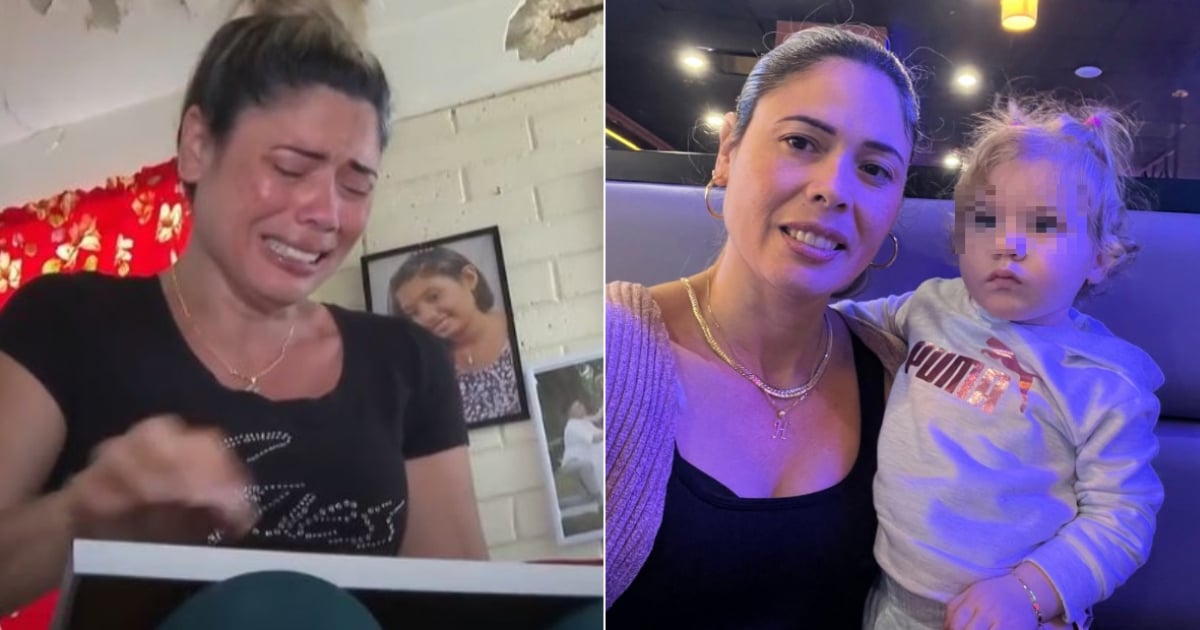
Heidy Sánchez, a 44-year-old Cuban mother recently deported from the United States, sent a message to President Donald Trump in which she pleads to be able to return with her husband and her 17-month-old daughter.
With a trembling voice, Sánchez recorded a video that he published on Instagram, where he made a plea directed at the White House:
"To the president (Trump), who has a family, I say that I believe in God, and I also believe in God... I would like him to place his hand on his heart and please help us reunite our family," she concluded, visibly emotional: "My baby is small, she needs me."
Since arriving in Havana, Heidy walks up to 10 times a day the two blocks that separate her parents' house from an area with better Internet coverage, hoping to soothe her baby through a video call. They both end up crying.
"I am devastated physically and mentally," she said in an interview with AP. "My world has collapsed and my life is over."
While Sánchez desperately searches for a signal to talk to Kailyn, in Tampa, his little girl cries in her father's arms as she sees her mother only on the screen of a phone.
"When she started to sing, the girl reached out to touch the screen and caress her mother's face... She began to kiss the screen," Valle recounted, who has had to take on the responsibilities of raising and caring for the home alone.
The 40-year-old businessman confesses that he has to miss work to care for his daughter and fears he will run out of resources to cover the mortgage and the family car.
A story of administrative obstacles
Heidy arrived in the United States in 2019 through the southern border, where authorities issued her an I-220B document, a supervision order that allows her to remain in the country while a deportation process is resolved, provided certain conditions are met.
Last April, he attended a registration appointment at an ICE office in Florida. What started as a routine procedure to adjust his immigration status resulted in his detention and, two days later, his deportation to Cuba.
Breastfeeding mother and wife of an American citizen, Carlos Yuniel Valle, worked as a home health aide. She has no previous offenses and was meeting her obligations to the Immigration and Customs Enforcement (ICE).
Political reactions, lawyer struggles, and online campaign
The case has drawn the attention of civil rights organizations and U.S. lawmakers.
The Democratic congresswoman from Tampa, Kathy Castor, met with Carlos Valle and submitted a humanitarian parole request for Sánchez to the Trump administration.
"We are taking all possible measures to reunite this family," declared Castor, who demanded explanations for what he called "illegal actions" and "a policy of family separation for political purposes."
The message has sparked a wave of solidarity on social media and has led to a campaign to gather signatures in support of his request for a humanitarian visa.
"Heidy has no criminal record and does not pose a threat to public safety. She is a loving mother and law-abiding," states the text addressed to the United States Citizenship and Immigration Services (USCIS).
"We respectfully urge you to utilize the humanitarian tools available under U.S. immigration law, such as humanitarian parole or other forms of discretionary relief, to allow for your return home..." he adds.
The case of this family has caught the interest of all media and international agencies.
A forced return that leaves lasting effects
After the upheaval in her life, Heidy Sánchez is living a nightmare: separated from the daughter she has breastfed since birth, without the ability to work in Cuba and without access to the security she had built in the United States.
Transformed into a symbol of families torn apart by immigration policy, she rises each morning with the hope that her message will reach Washington, allowing her life with her daughter and husband to regain its meaning.
"They tore my daughter from my arms", laments this Cuban mother from Havana.
Frequently Asked Questions about the Deportation of Cuban Mother Heidy Sánchez
Why was Heidy Sánchez deported from the United States?
Heidy Sánchez was deported because she had a final deportation order since 2019. Despite trying to reopen her case, the Immigration and Customs Enforcement (ICE) advanced her check-in appointment and proceeded with her immediate detention and deportation. She was fulfilling all her immigration obligations, but her status was vulnerable due to the I-220B form, which is a supervision order and does not guarantee protection against deportation.
What impact has the deportation had on Heidy Sánchez's family?
Deportation has had a devastating impact on her family. Her 17-month-old daughter, who was being breastfed, has been affected both emotionally and physically. Heidy's husband, Carlos Yuniel Valle, has had to take on parenting responsibilities alone, which has impacted his ability to work and cover family expenses. The separation has caused great distress and pain for all family members.
What have been the reactions to Heidy Sánchez's deportation?
The deportation of Heidy Sánchez has generated outrage and solidarity within the Cuban community and on social media. Democratic Congresswoman Kathy Castor has demanded explanations from the Trump administration, describing the deportation as "cruel and illegal." Additionally, a petition campaign has been launched to request a humanitarian permit that would allow Heidy to return to the United States.
What legal options does Heidy Sánchez have to return to the United States?
Heidy Sánchez could return to the United States by obtaining several immigration waivers. Her attorney is working on gathering her immigration record and submitting the necessary waiver applications. This process may be lengthy and complex, but there is a possibility that Heidy could reunite with her family in the future.
Filed under: