
Related videos:
The People's Supreme Court (TSP) approved a new ruling that defines how offenses related to synthetic cannabinoids should be judged in Cuba, laboratory drugs that mimic marijuana but are much more dangerous and addictive.
These substances, commonly referred to as "the chemicals," have been increasingly present in the country, especially in Havana.
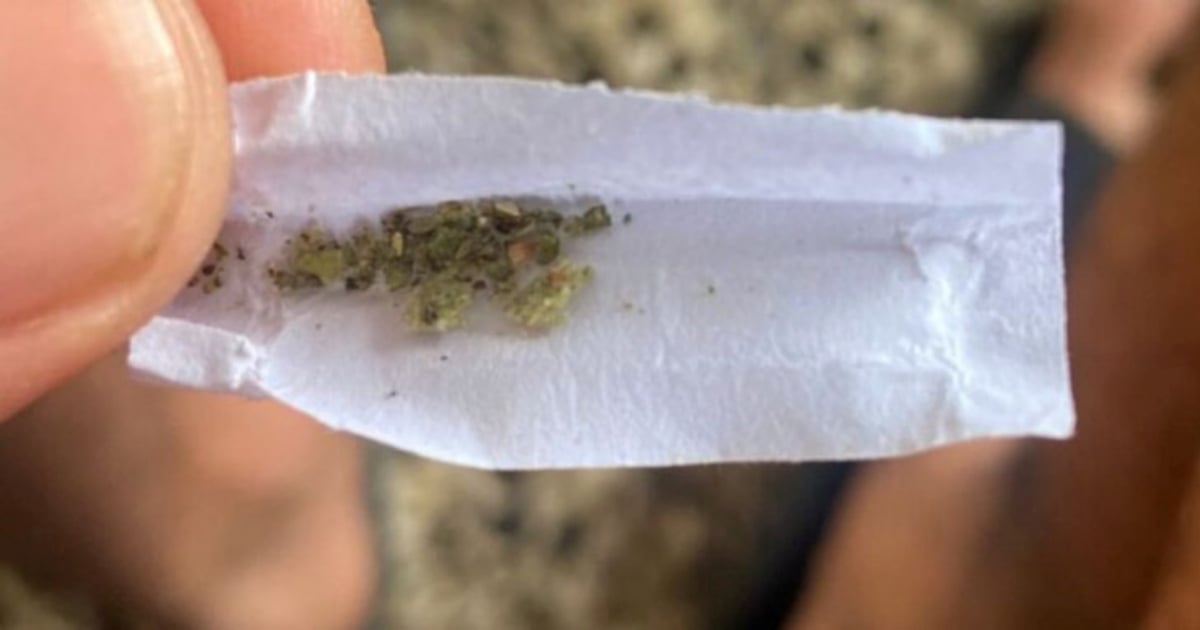
The text shared this Tuesday by the TSP warns that they can be consumed in cigarettes or dissolved in paper with spray, and even when used in small amounts, they can cause seizures, heart attacks, psychosis, and even death, according to experts from the Central Laboratory of Criminalistics.
The ruling aims to provide a clearer legal response to the rise in these cases.
In drug trafficking cases, the Cuban Penal Code stipulates that Section 2, Subsection g) of Article 235 may be applied when dealing with "relatively large quantities."
In Cuban judicial practice, that amount has been set at one pound (460 grams).
However, this will not apply to synthetic cannabinoids, as their high toxicity and addictive effects make even minimal doses very dangerous.
In such cases, other factors will be taken into account, such as the specific type of substance, its purity, the amount of doses that can be generated, and the potential harm it could cause to health.
All of this must be demonstrated through expert evidence provided by laboratories specialized in toxicology and forensic science.
Other factors may also be considered, such as the profits the accused could have gained, the location where the events took place, or whether it is an area with a high incidence of drug-related crimes.
Regarding illicit possession, if someone is caught with synthetic cannabinoids without medical justification, the offense will be classified under Article 236, section a), with penalties ranging from one to three years in prison or fines, similar to substances as potent as cocaine.
With this measure, the authorities aim to close legal loopholes and impose more precise sanctions in response to the growing prevalence of synthetic drugs in Cuba, which pose an increasing challenge to public health and safety.
Despite legal measures and institutional speeches, the reality of drug consumption and trafficking in Cuba seems to be beyond the regime's control.
Although the State insists on demonstrating exemplary actions and legal reforms, the facts reveal that the spread of synthetic substances and the deterioration of social structures far exceed its capacity to respond.
Recently, the case of a whole family involved in a drug trafficking network that operated with total impunity in Havana came to light.
Parents, children, and other relatives acted in complicity, reflecting a troubling normalization of crime within the domestic and neighborhood fabric.
The drama is also reflected in the faces of those who suffer the direct effects of consumption. A young Cuban went viral with images of the damage caused by the so-called "chemicals," her face completely affected by these substances.
His testimony, published on social media, revealed a harsh truth that contrasts with official rhetoric: the physical and mental decline of those who consume synthetic cannabinoids.
In the midst of this situation, the authorities announced the launch of a National Observatory for the Early Warning System on drugs.
The case of a Cuban model addicted to chemical substances who is fighting for survival has also sparked a wave of citizen solidarity.
Friends and followers requested public help to address their situation, highlighting that social media and the community have been more effective than institutions in assisting the victims of this calamity.
Frequently Asked Questions About the New Criminal Regulations for Synthetic Cannabinoids in Cuba
What changes does the new ruling from the Supreme People's Tribunal introduce regarding synthetic cannabinoids?
The new ruling from the Supreme People's Court establishes stricter standards for prosecuting offenses related to synthetic cannabinoids, due to their high toxicity and addictive effects. Unlike other drugs, the criterion of "relatively large quantities" will not be applied to define the offense; instead, factors such as the type of substance, its purity, and the potential harm to health will be taken into account.
What are the penalties for illegal possession of synthetic cannabinoids in Cuba?
The unlawful possession of synthetic cannabinoids without medical justification will be penalized with sanctions of one to three years in prison or fines, according to Article 236, paragraph a) of the Cuban Penal Code, similar to the sanctions applied to substances such as cocaine.
Why are synthetic cannabinoids considered dangerous in Cuba?
Synthetic cannabinoids are considered dangerous because they can trigger seizures, heart attacks, psychosis, and even death. Despite mimicking the effects of marijuana, their chemical composition is more toxic and addictive, making them particularly harmful to public health.
How has the Cuban government responded to the increase in drug consumption in the country?
The Cuban government has responded to the increase in drug use with a policy of severe sanctions and exemplary trials. Authorities have heightened the severity of penalties, which can reach up to 30 years in prison, life imprisonment, or even the death penalty, depending on the circumstances of the crime.
Filed under: