
Related videos:
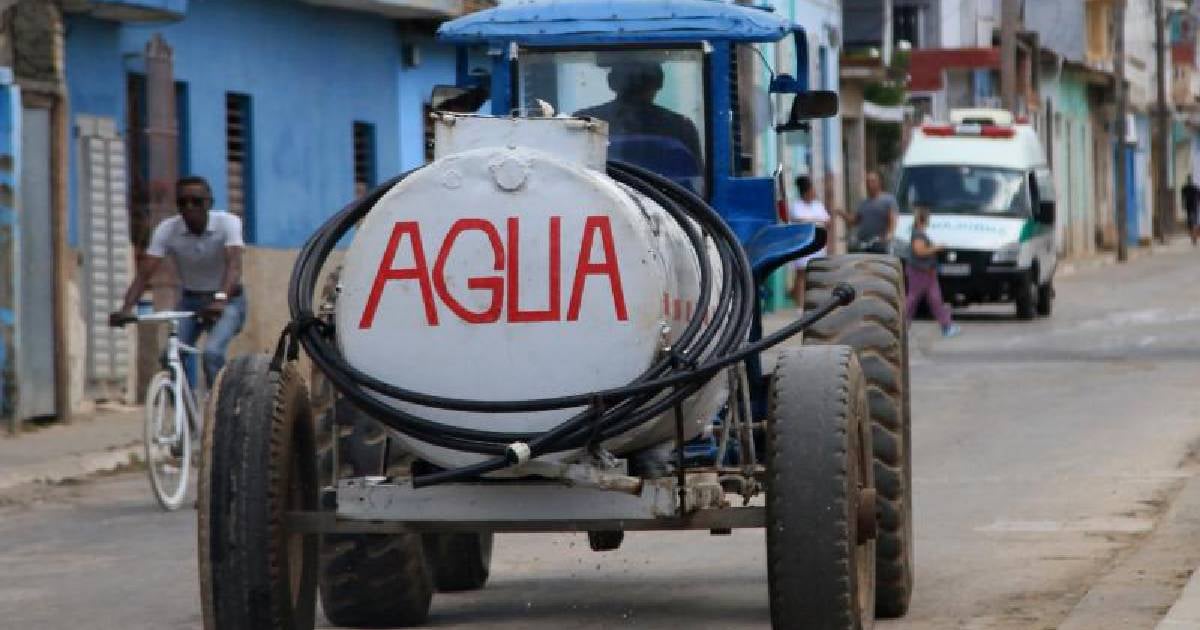
About 35,686 residents of the province of Sancti Spíritus are waiting for a water truck to meet their basic needs, with supply cycles ranging from 10 to 15 days, due to the drought that has left rivers and wells dry, along with breakdowns in pumping equipment that further extend delivery times.
According to Roberto Nápoles, director of the Provincial Aqueduct and Sewage Company, Fomento and Trinidad are the municipalities in the worst situation, followed by Jatibonico, Yaguajay, and Cabaiguán.
This situation will remain in place "until the rainfall in the province returns to normal, the rivers overflow, clear their beds, and the groundwater is replenished with the necessary water for filling the wells," Nápoles emphasized.
The distribution requires about 27,000 liters of diesel per month, in addition to the wear and tear of the equipment and the use of poorly maintained access roads, reported the official newspaper Escambray.
In Fomento, communities like Palomar, 50 Aniversario, La Loma, El Titán, Coco Solo, and Mario Muñoz are constantly awaiting the service.
Towards Trinidad, the San Juan de Letrán area has 21,129 people without water. There are also critical reports in Brígido (La Sierpe) and several locations in Sancti Spíritus, such as La Junta, La Yaya, Guasimal, Paredes, and the Yayabo plant, the latter with 4,427 affected due to instability in pumping.
The problem extends to El Perico, Cristales, Jobo 5, Arroyo Blanco, and Guanabo in Jatibonico; Piñero in Yaguajay; La Yamagua in Taguasco; and La Aurora, Punta de Diamante, and Minas Arriba in Cabaiguán.
In La Boca, a coastal town near Trinidad, the water shortage is not due to drought but rather to a breakdown of the pumping equipment, which has extended the delivery cycle by more than 10 days.
Although authorities claim that efforts are being intensified to bring water to the communities, the reality is that in many of them, reliance on a water truck is not a temporary situation: it occurs all year round, with no definitive solution in sight.
On the other hand, the population of the municipality of Sancti Spíritus continues to receive cloudy water, with a foul smell and the presence of insects. This has generated a wave of indignation on social media, with reports of the appearance of larvae, worms, snails, and even fish emerging from pipes that are supposedly meant for drinking water.
Authorities attribute this situation to the drought and issues with supply sources, with no immediate solutions in sight.
Testimonials collected by the VisionEs news program from the official newspaper Escambray and published on their YouTube channel showed a resident of Sancti Spíritus recounting that the water that comes to her house is black.
Additionally, another interviewed person mentioned that sometimes the vector control staff inspects the tanks and warns about the presence of "bugs," even going so far as to threaten fines. Another affected individual explained that these microorganisms are already present in the water from the supply.
The director of the Provincial Water and Sewage Company acknowledged that the head municipality is the most affected area.
He explained that, unlike other areas that rely on well water, Sancti Spíritus depends on rivers and reservoirs that are currently heavily impacted by drought.
The Yayabo water treatment plant, with a capacity of 283 liters per second, only pumps 100 due to a lack of flow, which directly affects the quality of the supply.
According to Naples, the low availability of water results in it arriving with odor and sediments, necessitating the application of different chemical treatments and an increase in chlorine dosage, "without impacting human health."
Authorities have acknowledged high levels of turbidity in the water being distributed to the population, a condition that, rather than being exceptional, has become a regular occurrence in several provinces of the country.
In areas like Mayabeque, the situation has caused alarm for some time. Residents have reported water coming out brown, with visible sediments and an unpleasant odor, forcing them to boil or filter it before any domestic use.
Frequently Asked Questions about the Water Crisis in Sancti Spíritus
How many people rely on tank trucks to receive water in Sancti Spíritus?
In Sancti Spíritus, approximately 35,686 people rely on water trucks due to the drought and issues with pumping.
What are the main causes of the water crisis in Sancti Spíritus?
The water crisis in Sancti Spíritus is due to several causes: a severe drought, power outages, and infrastructure issues. These conditions have led to an increased reliance on water trucks for distribution and have severely affected the quality of the supply, which arrives with odors, sediments, and even insects.
What quality issues does the water in Sancti Spíritus have?
The water in Sancti Spíritus arrives with turbidity, unpleasant odor, and the presence of insects. These issues are attributed to drought and the lack of flow in the rivers and reservoirs that supply the water treatment plant. Authorities have attempted to alleviate the situation with chemical treatments and chlorination, but the quality of the water remains a persistent problem.
How does the drought affect the reservoirs in Sancti Spíritus?
The drought has left the reservoirs in Sancti Spíritus at critical levels. The Zaza dam, for example, holds only 12% of its capacity. In general, the region has barely 21% of its total reservoir capacity, which has worsened the water crisis and increased the communities' dependence on water tank trucks for their water supply.
Filed under: