
Related videos:
In Sancti Spíritus, most of its nine reservoirs signal for water, as the prolonged drought has left the province at the end of May with only 250 million cubic meters, which is 21% of its storage capacity.
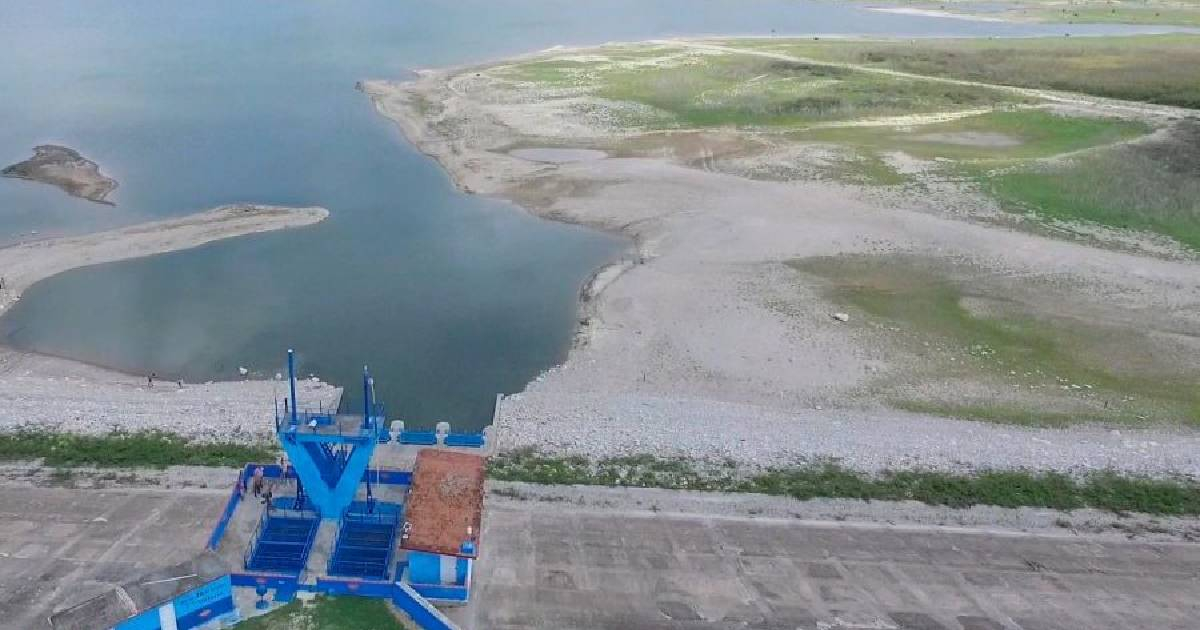
La Zaza, the largest reservoir in Cuba and a crucial component for irrigation in the agricultural company Sur del Jíbaro, which specializes in rice production, is currently at historical lows for this time of year: it holds only 12% of its capacity (about 112,400 cubic meters). This is the lowest figure recorded for the same period in the last five years, reported the official newspaper Escambray.
And it's not just the Zaza. The situation is repeating itself, albeit with varying intensities, in almost all the reservoirs in the area: Lebrije holds only 49% of its capacity; Felicidad, 34%; Banao II, 32%; Dignorah, 22%; and Aridanes, at 9%, is approaching empty, warned José Carlos Hernández Rodríguez, specialist at the Management Office of the Hydraulic Utilization Company in Sancti Spíritus.
Only three reservoirs prevent a complete collapse. The Tuinucú dam, crucial for the water supply in Cabaiguán and part of the provincial capital, is reported to be 73% full; Siguaney, which supplies the industrial area, stands at 64%, and Higuanojo is slightly above half of its capacity, Hernández added.
But the context does not allow for complacency. The drought persists, and the rains have not arrived. By May 27, only 57.6 millimeters of precipitation had been recorded, which is one-third of the historical average for the month, which is 176.2 mm.
Only the municipalities of Fomento and Taguasco show signs of relief, with precipitation of 213.6 and 82.9 millimeters, respectively. In the rest, scarcity prevails, with La Sierpe being the most dramatic case: no reports of rain throughout the month to date, according to the records of the Hydraulics Resource rain gauge network.
In April, it was reported that in just one year, the number of people receiving water through tanker trucks in the central province of Sancti Spíritus has doubled, from about 40,000 in May 2024 to nearly 82,000 currently.
The water crisis is deepening in the province due to three factors: severe drought, power outages, and lack of infrastructure.
Due to this, the water distribution program using tankers has been expanded to all municipalities. As a result of the drought, the most critical areas are Sancti Spíritus and Fomento. Regions such as La Junta in the provincial capital and several communities in Fomento top the list of the most affected areas. In the municipality of Trinidad, the San Juan de Letrán area also stands out as the only supply source impacted by this issue, according to the published data.
Currently, other provinces such as Holguín and Ciego de Ávila are also facing a persistent shortage of rainfall. Meanwhile, the water shortage is hitting hard in the municipality of San Luis, in Santiago de Cuba.
According to meteorological forecasting models, the beginning of June will be characterized by an increase in rainfall in much of Cuba.
Frequently Asked Questions about the Water Crisis in Sancti Spíritus and Its Effects
What is the current situation of the reservoirs in Sancti Spíritus due to the drought?
Most of the reservoirs in Sancti Spíritus are at critically low water levels. The Zaza Dam, the largest reservoir in Cuba, holds only 12% of its capacity, marking a record low, while other reservoirs such as Lebrije, Felicidad, and Banao II have less than 50% of their volume.
How does the drought affect water distribution in Sancti Spíritus?
The drought has caused nearly 82,000 people in Sancti Spíritus to rely on water distribution through tank trucks, a figure that has doubled in a year. This situation is exacerbated by power outages and a lack of infrastructure, making regular water supply difficult.
What impact does the drought have on fish production in the Zaza Dam?
The fishing production at the Zaza dam is in crisis due to drought, the scarcity of certain species, and poor management. By April, only 72.2% of the planned target had been achieved, and authorities blame the weather and structural issues such as the lack of spare parts and transportation means.
What measures are being taken to mitigate the water crisis in Sancti Spíritus?
To confront the water crisis, the water distribution program using tankers has been expanded to all affected municipalities. The distribution occurs at least twice a month, although in reality, the cycles can be much longer due to resource scarcity and logistical issues.
Filed under: