
Related videos:
The National Electric System (SEN) ended on September 1 with an estimated generation deficit of up to 1,890 megawatts (MW) during peak hours, according to the Electric Union of Cuba (UNE).
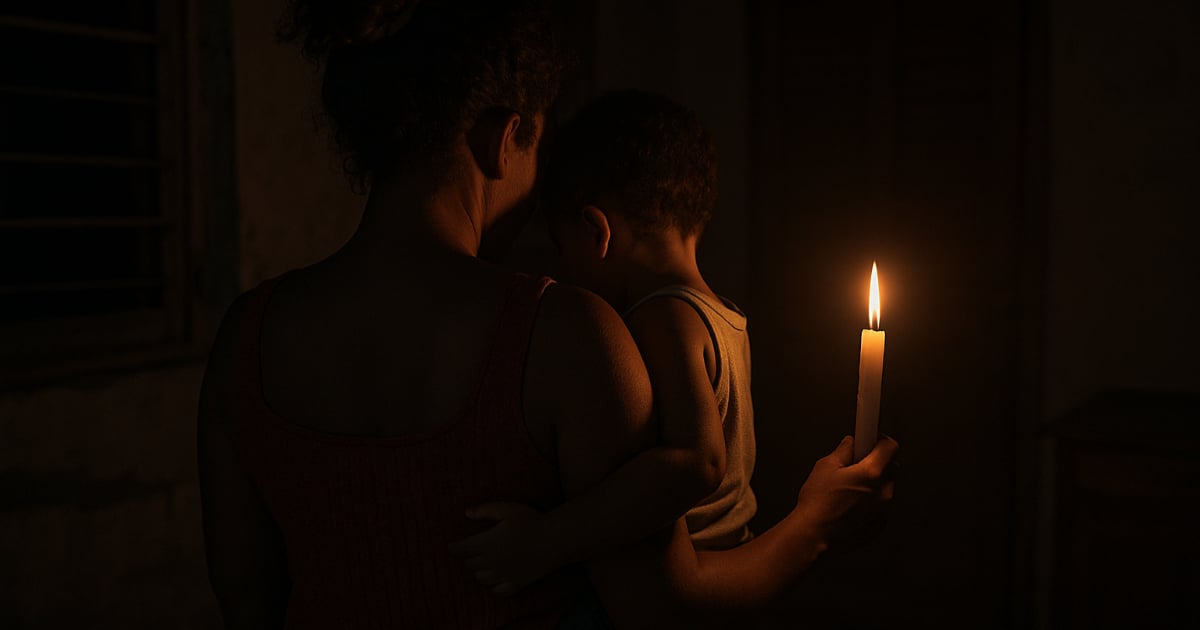
This situation has led to an increase in blackouts throughout the country, particularly in Havana, where electrical service was disrupted for more than 24 consecutive hours.
According to the electricity company of the capital, the service began to experience disruptions on August 31 at 2:29 p.m., and by the time of their official report, it had not yet been fully restored. The maximum outage in Havana was 130 MW at 9:40 p.m., and due to high demand, it was necessary to activate even the reserve block.
For September 1st and the early morning of the 2nd, service interruptions are scheduled in blocks, with cuts spanning from 10:00 a.m. to 10:00 a.m. the following day. This plan includes eight blackout blocks, in addition to a reserve block, as a contingency measure in response to the severe energy situation.
At the national level, the UNE detailed that the total availability of the electric system at the start of the day was 1,690 MW, while the demand was 3,100 MW, resulting in a real impact of 1,430 MW. By noon, 1,300 MW were predicted to be affected, and for the evening peak, an even greater deficit was expected, with an availability of only 1,930 MW against a demand of 3,750 MW.
Among the main causes of the energy collapse are several breakdowns in key units of the thermal power system: unit 1 of the Santa Cruz thermoelectric plant, and units 3, 5, and 6 of the Renté thermoelectric plant, as well as unit 2 of the Felton thermoelectric plant. Additionally, unit 2 of Santa Cruz and unit 4 of the Carlos Manuel de Céspedes thermoelectric plant in Cienfuegos are undergoing maintenance.
This is compounded by thermal limitations that keep 384 MW out of service, along with serious issues related to the lack of fuel and lubricants. The UNE confirmed that 52 distributed generation plants (with a capacity of 323 MW) are out of service due to fuel shortages, and another 370 MW are unavailable due to a lack of lubricants, resulting in a total of 693 MW affected for this reason.
Meanwhile, energy production from renewable sources has also failed to mitigate the impact: the country's 27 photovoltaic solar plants generated a total of 2,824 MWh on August 31, with a maximum output of just 557 MW at noon.
Authorities insist that the impacts will be adjusted according to the operational conditions of the SEN, but the energy outlook continues to deteriorate, severely affecting the quality of life of citizens amid the structural crisis facing the Cuban electrical system.
Frequently Asked Questions about the Electric Deficit in Cuba
What is the current deficit in electricity generation in Cuba?
The current electricity generation deficit in Cuba is nearly 1,900 MW, according to the latest report from the Cuban Electric Union (UNE). This situation has led to widespread blackouts across the country.
What are the main causes of the energy collapse in Cuba?
The main causes of the energy collapse in Cuba are breakdowns in key units of the thermoelectric system, scheduled maintenance, thermal limitations, and the lack of fuel and lubricants, which severely impacts the generation capacity of the National Electric System (SEN).
How does the electricity generation deficit affect the Cuban population?
The electric generation deficit is causing prolonged blackouts throughout the country, seriously affecting the quality of life for Cuban citizens. The lack of electricity disrupts both household activities and basic services, generating discomfort and uncertainty among the population.
What measures is the Cuban government taking to address the energy crisis?
The Cuban government is implementing scheduled blackouts by blocks as a contingency measure. However, the lack of long-term solutions and the scarcity of energy resources exacerbate the situation, leaving citizens with little hope for immediate improvement.
Filed under: