
Related videos:
"I never imagined my old age would be like this." With that striking statement, the Cuban journalist Roberto Pérez Betancourt, recipient of the José Martí National Journalism Award for his life's work, summed up the nightmare currently faced by thousands of elderly people on the Island, victims of government neglect and the complete collapse of basic services.
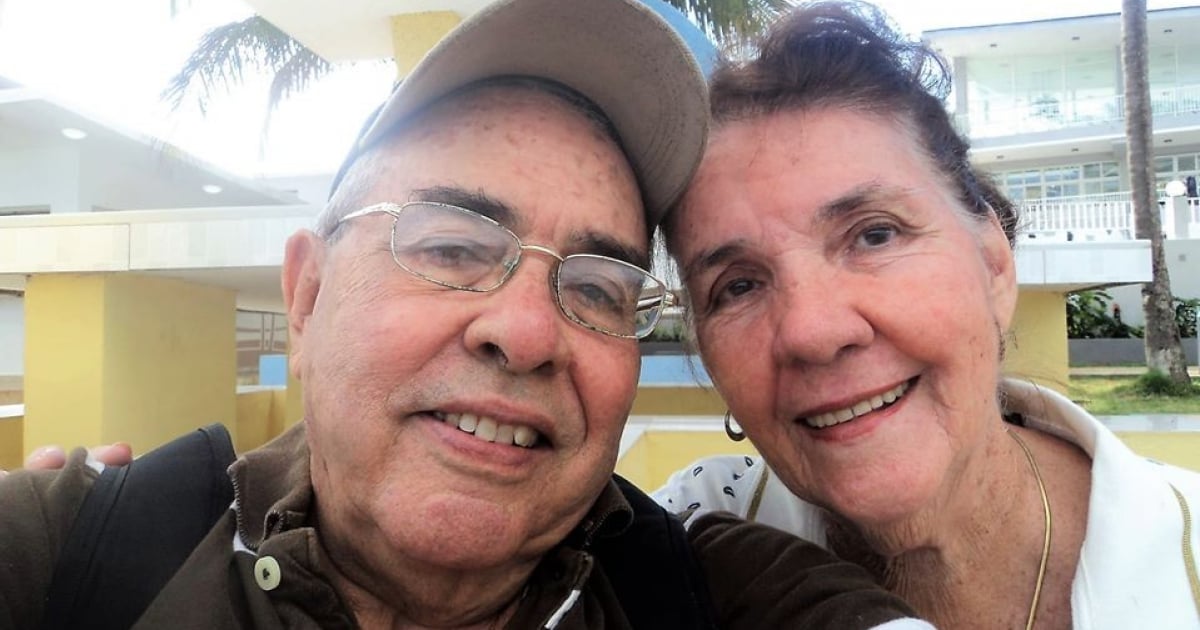
In a testimony published on , the 85-year-old former reporter described his daily life: more than four months without drinking water, dengue that has affected his entire neighborhood and claimed the life of an elderly neighbor, vacant small markets, empty MLC stores, and uncertainty about whether he will have gas for cooking.
"Everything, of course, is more complicated when you are 85 years old, recovering from a persistent dengue fever, and your wife, who is 80, suffers from the same illness, along with other chronic ailments," he detailed.
Pérez Betancourt, who worked for decades at the weekly Girón, the provincial radio station Radio 26, and TV Yumurí, stated that he and his wife are surviving in what he described as "terrible" conditions.
"Please, those who need to take care of everything should do so. We can't continue like this," he implored the authorities.
The response from your colleagues
Her post was shared by the official reporter Yirmara Torres Hernández, who recalled that Pérez Betancourt was never "a journalist of half-measures."
He revealed that on his most recent birthday, he was celebrated with calls from leaders. "A beautiful gesture, yes, but… do you see what the master writes now? How much more will he and his generation have to endure?" he questioned.
The story sparked outrage on the Internet, where many see in her testimony a symbol of how the regime has condemned the elderly to a life of hardship.
A turning point in the official press
This is not the first time that journalists associated with the government have broken their silence.
In mid-July, from Escambray in Sancti Spíritus, reporter Delia Proenza acknowledged that the so-called "creative resistance"—the mantra of Miguel Díaz-Canel—had reached its limit.
"All creativity has a limit and all resistance, even if it remains, diminishes", he wrote.
In recent months, provincial media from Matanzas, Ciego de Ávila, and Cienfuegos have published testimonies that starkly portray life on the Island: endless blackouts, rampant inflation, coal stoves, collapsing transportation, and a discontent that no one can hide anymore.
Other retired journalists have also joined the complaint.
Iraida Calzadilla, who worked for decades at the Granma newspaper, recounted the harsh reality she faces each month to collect her pension: she had to wait "lying in the doorway of any bank" and they didn't even give her the full amount of her pension.
And the communicator Ana Teresa Badía, still active, criticized in January the opening of a dollar supermarket that didn't even accept MLC, highlighting the absurdity of current economic policies.
The reality of the most vulnerable
The case of Pérez Betancourt reflects a national drama: the elderly, the most exposed and vulnerable, are surviving in a country where pensions are inadequate, services are collapsing, and food is scarce.
Dengue, sewage water, garbage dumps on every corner, and blackouts have turned daily life into a torment.
The regime continues to spend millions building empty hotels for a tourism sector that is collapsing, while neglecting those who dedicated their entire lives to work.
"It's the chronicle of a stolen old age," commented a user on social media, summarizing the general sentiment.
The testimony of the retired journalist not only reveals his personal tragedy but also that of an entire country trapped in ruin.
Frequently Asked Questions about the Situation of the Elderly in Cuba
What is the current situation of the elderly in Cuba?
The situation of the elderly in Cuba is extremely precarious. Many live in inhuman conditions, without access to basic services such as drinking water and electricity, and face health problems without adequate medical care. The minimum pension they receive is insufficient to cover their basic needs, forcing many to seek sustenance on the streets.
What complaints have Cuban journalists made about the living conditions on the island?
Several journalists, including some who are pro-government, have started to publicly denounce the dire living conditions in Cuba. They have highlighted the reality of constant blackouts, the scarcity of basic food items and medications, as well as the neglect experienced by the elderly. These testimonies reflect a growing discontent among the population and an open criticism of the socialist regime for its inaction.
How does the economic crisis affect retirees in Cuba?
The economic crisis in Cuba has severely impacted retirees, who must survive on pensions that are insufficient to cover basic needs. Uncontrolled inflation and shortages of essential products have worsened their situation, forcing them to work informally or rely on assistance from family members abroad.
What measures has the Cuban government taken to improve the situation of the elderly?
The Cuban government has announced pension increases for some retirees, but these measures have been deemed insufficient by many, given the inflation and high cost of living in the country. Social assistance remains inadequate, and the conditions in nursing homes and elderly care centers are extremely poor.
Filed under: