The phrase "creative resistance," turned into a slogan by the ruling Miguel Díaz-Canel and repeated as an official mantra over the past few years, has just received one of its most significant blows.
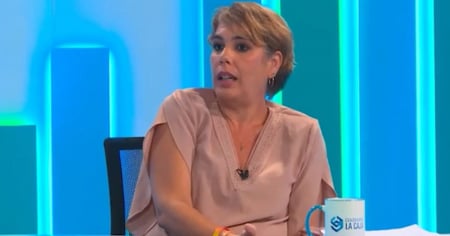
It did not come from an independent media outlet, nor from an opposition figure in exile, but from Escambray, the official organ of the Communist Party in Sancti Spíritus, where journalist Delia Proenza authored a devastating text that was read aloud by her colleague Yoanna Herrera on the YouTube channel of the newspaper.
At the heart of the message lies the warning that that highly touted creativity has run its course.
"All creativity has its limits, and all resistance, even if it persists, weakens," wrote Proenza.
His reflection calls into question not only the effectiveness of the presidential slogan but also the very ability of the Cuban people to continue enduring a crisis that seems endless.
From within the system, criticism becomes more audible
What was once only whispered or relegated to alternative media is now starting to be heard—albeit cautiously—within the media apparatus of the State itself.
Escambray, Girón (Matanzas), Invasor (Ciego de Ávila), or 5 de Septiembre (Cienfuegos) have been publishing in recent months articles that starkly depict daily life in Cuba: endless blackouts, unreachable food, rampant inflation, coal stoves, a collapse of transportation, and a widespread discontent that even triumphant speeches cannot disguise.
Proenza captures the testimony of a retired teacher who, while caring for his nonagenarian mother amidst the heat and blackouts, illustrates the helplessness of thousands: "neither food nor sleep can be guaranteed," he says, as he tries to substitute the already absent bread from the ration book with whatever he can invent.
But as the journalist recalls: inventions run out.
The land of coal and darkness
Under the title "The Darkness, Scarcity, and the Smell of Coal," Proenza paints a postcard from 2025 that seems to be written in Cuba a century ago.
The missing liquefied gas, the absent electricity, and food turned into luxury items.
Cooking, sleeping, eating, or simply getting through the day have become monumental tasks for the population, while the government appeals to "creativity" as a form of solution, without taking responsibility for the collapse of the system.
"Buying just one of the essential items for several days can mean spending the entire monthly income. Inflation has taken the reins," the journalist reports.
The author also mentions that the power outages are so prolonged that there are provinces, such as Matanzas, where there is no talk of outages or surges; simply "there is no electrical service."
In that context, a bag of coal can cost between 1,000 and 1,500 pesos, and the option to cook with electric appliances feels like a joke when there is no power.
Without light, without bread, without solutions
The central critique of the text is not only about the material collapse but also about the government's lack of responses. Proenza states it bluntly: "What is needed is not more explanations, but concrete solutions."
The phrase is, in itself, a direct challenge to Díaz-Canel and his team, who have made repetitive discourse their sole management strategy in front of an exhausted population.
It is no longer sufficient to talk about blockades or "temporary situations" that last for years.
Everyday reality – increasingly documented even by state media – has revealed the failure of a policy that insists on maintaining a paralyzed system, offering only sacrifice as its sole promise.
A turning point in the official press?
What is particularly significant is that this type of denunciation comes from an official media outlet. Although it still remains within the bounds of the permitted discourse, the limits are starting to stretch.
Journalists Herrera and Proenza not only allow themselves to talk about hunger and despair but also write for the future, hoping that, one day, those who open these pages will "feel alongside the resistance of these years, the darkness, the scarcity of everything or nearly everything, and the smell of coal."
With that image, the text becomes a bitter chronicle of an era of decay, in which Cubans have been forced to live as if they were at war—without bombs but with a scarcity that consumes everything.
The metaphor of creative resistance, which Díaz-Canel has repeated like a mantra, sounds increasingly hollow in the face of hunger, heat, darkness, and disillusionment.
And although the official press still does not dare to directly point fingers at the culprits, the message has already been conveyed: the people can no longer take it. And little by little, journalists are starting to write it too.
Frequently Asked Questions about the Crisis in Cuba and "Creative Resistance"
What is the main criticism of Díaz-Canel's slogan "creative resistance"?
The main criticism is that the "creative resistance" is no longer sustainable and that the Cuban people can no longer endure a crisis that seems endless. This slogan, promoted by Díaz-Canel, has even been questioned by official media, which highlight the collapse of the system and the lack of concrete solutions from the government.
How is the energy crisis affecting daily life in Cuba?
The energy crisis in Cuba has resulted in prolonged blackouts, impacting essential tasks such as food preparation, and has turned the simple act of cooking into a daily ordeal. Families are forced to resort to precarious methods such as cooking with firewood or charcoal, and the lack of electricity disrupts daily life, causing emotional and physical strain on the population.
What is the state-run press saying about the situation in Cuba?
The state-run press has begun to reflect the despair and daily struggles of the Cuban people, albeit still within the confines of the permitted discourse. Outlets like Escambray and Girón have published articles that document shortages, blackouts, and inflation, presenting a reality that contradicts the government's triumphant narratives.
What solutions does the government propose for the current crisis in Cuba?
The Cuban government has proposed initiatives such as the installation of photovoltaic parks and has promised improvements in the energy sector by the end of 2025. However, these promises have been met with skepticism due to the lack of immediate and concrete solutions to alleviate the current crisis facing the Cuban people.
Filed under: