
Related videos:
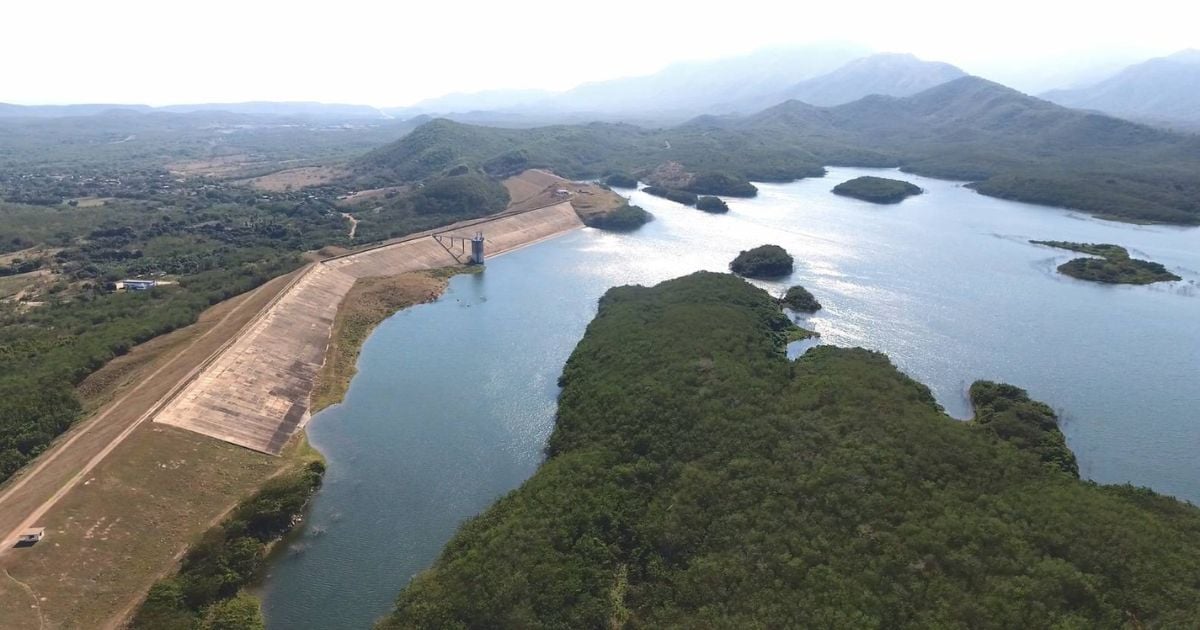
The Charco Mono reservoir, one of the most affected by drought in Santiago de Cuba, has achieved a significant recovery following the heavy rains recorded in the region: in just 24 hours, it went from a dead volume to reaching 55.1 percent of its capacity.
According to the confirmation from the Hydraulic Utilization Company, information replicated by the pro-government provincial media TV Santiago, the reservoirs in the province have increased their volume by 10.6 million cubic meters in the last day, with a total accumulation of 18.8 million over the past two days.
This increase –according to the cited source– represents a relief amid a tense water situation that has been experienced in the eastern province of Cuba for several months.
Among the reservoirs with the highest fill levels is Protesta de Baraguá, with an impressive 99.8 percent of its capacity (249.470 million cubic meters), followed by Carlos Manuel de Céspedes at 65.7 percent (159.569 million) and Chalons at 46 percent (0.438 million).
Mícara also stands out with 58.3, Joturo with 52.1, Hatillo with 53.6, and La Majagua with 52.4 percent. Despite the progress, reservoirs such as Gota Blanca (19.6), Parada (14.3), and Gilbert (15.9) remain at low levels.
The Canasí and La Campana dams continue to overflow, according to the official report issued this Sunday.
The meteorologist Raydel Ruisánchez warned on Facebook that the situation remains complex in the eastern part of the country.
Strong convective cores have resulted in accumulations of 494 millimeters of rain in Haitibonico (Guantánamo), 340 mm in La Campana, and 257 mm in La Gran Piedra, all within just 48 hours.
These rains have caused flooding, river swelling, and landslides, the specialist emphasized.
The rains are associated with the broad circulation of tropical depression nine, which continues to move slowly northward across the eastern region.
Likewise, the Cuban Meteorology Institute (INSMET) issued this Sunday Tropical Cyclone Warning No. 3, in which it updated the situation regarding Tropical Depression Nine, a system that, although it remains largely unchanged in its structure, has caused intense rains and thunderstorms over eastern Cuba.
During the night and early morning, the depression concentrated its most active areas over the provinces of Guantánamo and Santiago de Cuba, where numerous rain showers and electrical discharges occurred, with some points experiencing heavy and locally intense conditions.
The rainfall totals were significant, leading to flooding, especially in low-lying and mountainous areas.
Frequently Asked Questions about the Water Situation in Santiago de Cuba
Which reservoirs in Santiago de Cuba have shown a significant recovery following the recent rains?
The Charco Mono reservoir has achieved a significant recovery following the heavy rains, reaching 55.1% of its capacity in just 24 hours. Other reservoirs such as Protesta de Baraguá, Carlos Manuel de Céspedes, and Chalons have also shown increases in their water levels.
What is the cause of the water crisis in Santiago de Cuba?
The water crisis in Santiago de Cuba is due to a combination of factors, such as the prolonged drought, collapsed infrastructure, failures in the distribution system, and energy issues that have hindered the continuous pumping of water. The situation has been worsened by a lack of resources and inefficient management by the authorities.
How has the drought affected the population of Santiago de Cuba?
The drought has led to prolonged water distribution cycles, sometimes exceeding 30 days, leaving thousands of people without regular access to drinking water. Families rely on water trucks to obtain water, and in many cases, have had to pay high prices for minimal amounts of the resource.
What measures have the authorities taken to address the water crisis in Santiago de Cuba?
The authorities have implemented measures such as the transfer of water from more distant reservoirs, the repair of pumping stations, and the use of tanker trucks to distribute water. However, these measures have been insufficient to effectively resolve the crisis.
Filed under: