
Related videos:
The Cuban historian and activist Alina Bárbara López Hernández reported that national and provincial authorities are manipulating information regarding the epidemic affecting the province of Matanzas. “I am outraged. There is too much manipulation, lies, and justification from the political and medical authorities, both national and provincial, regarding the extremely serious situation in the province of Matanzas,” she wrote in a message posted on her Facebook profile.
According to López, there is an explicit order to deny the deaths from arboviruses. “The order to deny those who have died from arboviruses has been given. This is assured by Dr. Durán, the Minister of Health, and the authorities in Matanzas.”
The order to refute the deaths from arboviral diseases has been issued. This is confirmed by Dr. Durán, the Minister of Health, and the authorities in Matanzas
Although he acknowledged that chikungunya "doesn't tend to be fatal," he warned that it can become complicated and "therefore contribute to the cause of death in certain cases: children under one year old, individuals over 65, or those with comorbidities, that is, with chronic illnesses such as hypertension or diabetes."
"His death certificates won't say 'Chikungunya', but that's what triggered the end," he added.
The academic also reported the prolonged shortage of essential medications: “For several months now, antihypertensives, diuretics, diabetes control medications, and reagents to measure blood glucose levels have not been distributed in the province's pharmacies.” She clarified: “Yesterday they finally started selling enalapril after a long time.”
Regarding access to analgesics and antipyretics during the outbreak, he stated that "barely any paracetamol or rehydration salts have been sold in pharmacies, and the very few times this has occurred, it was symbolic: two packets of salts per clinic, and a clinic can have a thousand patients or more."
He questioned the official account regarding the supposed absence of deaths: “If, as the authorities claim, the number of fatalities has not increased, how do you explain that at the provincial hospital Faustino Pérez there was a 'bottleneck' in the morgue last weekend because they delayed bringing the coffins, as the people who wrap them were also ill? Is it common for so many people to die over a weekend?”
If, as the authorities claim, the number of deceased has not increased, how can it be explained that there was a 'bottleneck' in the morgue at the provincial hospital Faustino Pérez last weekend because there was a delay in bringing the coffins, as the people who line them were also sick? Is it common for so many people to pass away on a weekend?
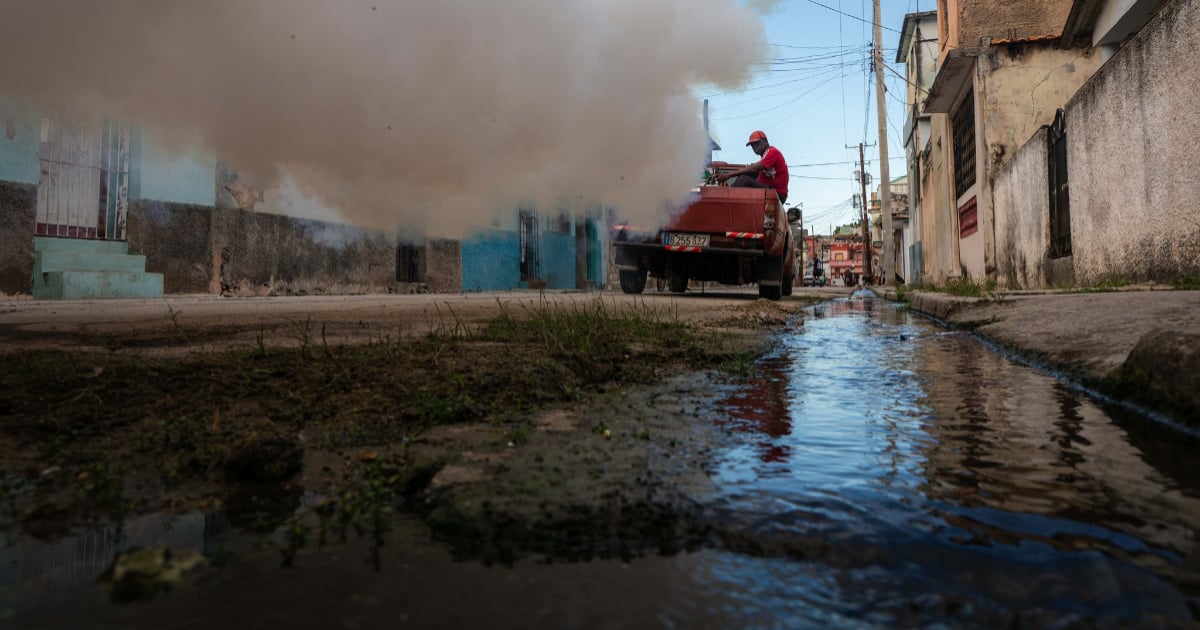
López rejected the justifications that attribute the crisis to climate change and noted that "public unsanitation is evident," adding that in epidemic conditions, "it is an aggravating factor." He also accused the government of lying about its epidemiological control actions: "It is false that they have sprayed in the areas corresponding to the Milanés polyclinic, which includes large neighborhoods of the city and currently has one of the highest case counts. It is false that they have reinforced the clinics."
In his neighborhood, he stated, there aren’t enough doctors, and some were sent to support the pediatric hospital, which has burdened the few physicians that remain. “Then don’t complain when, exhausted, sick, and desperate, they decide to take leave.” He concluded, “Please, stop talking about ‘complex situations’ or ‘outbreaks’. This is called an EPIDEMIC. Request reinforcements, declare an emergency, take responsibility.”
Please, stop referring to it as a 'complex situation' or 'outbreaks'. This is called an EPIDEMIC. Call for reinforcements, declare an emergency, take responsibility
The official version: no deaths, no collapse
Doctor Francisco Durán García, the national director of Epidemiology, declared on October 8 that "no deaths have been reported" due to the circulating viruses and that hospitals have not collapsed. "The pressure on the healthcare system is high, but there are no deaths," he stated.
The Minister of Public Health, José Ángel Portal Miranda, reinforced this statement in a meeting in Matanzas with Communist Party officials. “There are no deaths in Matanzas from this disease. There are neither severe nor critical cases. No one can hide an epidemic or the dead,” he declared.
Citizens and journalists contradict MINSAP
Official statements have generated a wave of critical reactions among citizens. “Doctor Durán, with all due respect… you cannot cover the sun with one finger. People are dying, children, the elderly... The hospitals are disgusting, there's not even enough for a test,” wrote a user.
Another internet user stated: "That man stands in front of the people to manipulate figures. His job should be to demand that the Government and the Ministry of Public Health address this situation."
The journalist from Matanzas, Yirmara Torres Hernández, former president of the Union of Journalists of Cuba (UPEC) in Matanzas, also broke her silence. “There are no deaths, but there are,” she recounted the death of a neighbor from chikungunya and denounced that “we live in constant stress, we are poorly nourished, immunocompromised... Nights belong to the mosquitoes, the rats, the cockroaches... What kind of vector control will there be like this?”
"What happens is that abandonment hurts. What happens is that it hurts when they insult your intelligence. What happens is that mockery hurts," she declared.
A voice that does not remain silent
The trajectory of Alina Bárbara López as a critical intellectual and activist has made her one of the most prominent voices of dissident thought in Cuba. She was expelled from UNEAC in 2024 for openly criticizing the regime and has been a victim of detentions, beatings, and smear campaigns.
She is currently facing a prosecution request for four years of corrective labor without incarceration for alleged crimes of "contempt, disobedience, and assault," after being arrested while heading to a peaceful protest.
In that context, his words carry a special weight. "The minister tried to sound calm, but he advised the Health ministerial visit to stay longer than planned," he revealed in his post.
In the face of institutional silence, social distrust, and healthcare precariousness, López left no room for doubt: "This is called an EPIDEMIC."
Frequently Asked Questions about the Health Crisis in Matanzas, Cuba
What is happening in Matanzas regarding the health crisis?
Matanzas is facing a serious public health crisis due to an outbreak of arboviruses, including chikungunya, dengue, and the Oropouche virus. Authorities have been accused of concealing the severity of the situation, while citizens report a collapse in the healthcare system. The crisis has been exacerbated by the lack of medications and basic resources, as well as by insufficient fumigation to control the transmitting mosquito.
Why is the Cuban government being accused of misinformation regarding the epidemic in Matanzas?
Intellectuals and citizens have denounced that the Cuban government is manipulating and concealing information about deaths and the severity of the epidemic. Despite evidence of collapse in hospitals and testimonies of fatalities, authorities continue to insist that there are no deaths or critical cases, which breeds distrust and unease among the population.
What measures has the government taken to address the health crisis in Matanzas?
The Cuban government has opened an additional center to address the increase in fever cases and has announced measures such as the inclusion of Medical Sciences students for research and fumigation. However, these actions are deemed insufficient given the magnitude of the crisis, and the lack of resources significantly limits the effectiveness of these measures.
What is the position of citizens and journalists regarding the situation in Matanzas?
Citizens and journalists, even within the ruling party, have expressed their discontent with the government's handling of the health crisis. They denounce the lack of transparency, the shortage of medications, and the inadequacy of effective measures to control the epidemic. Discontent is evident on social media, where calls are made for the government to take responsibility and declare a health emergency.
Filed under: