
Related videos:
The province of Matanzas is experiencing a severe health crisis due to the spread of dengue and chikungunya, while local authorities are hopeful that the situation will improve with the arrival of winter, which "naturally limits" the proliferation of the transmitting mosquito.
The official newspaper Girón reported this Tuesday on Facebook that, during a meeting led by the first secretary of the Communist Party in Matanzas, Mario Sabines Lorenzo, the provincial government analyzed the sustainability of combating arbovirus diseases—illnesses transmitted by mosquitoes—and emphasized the need to "improve the working system" to achieve a reduction in infections.
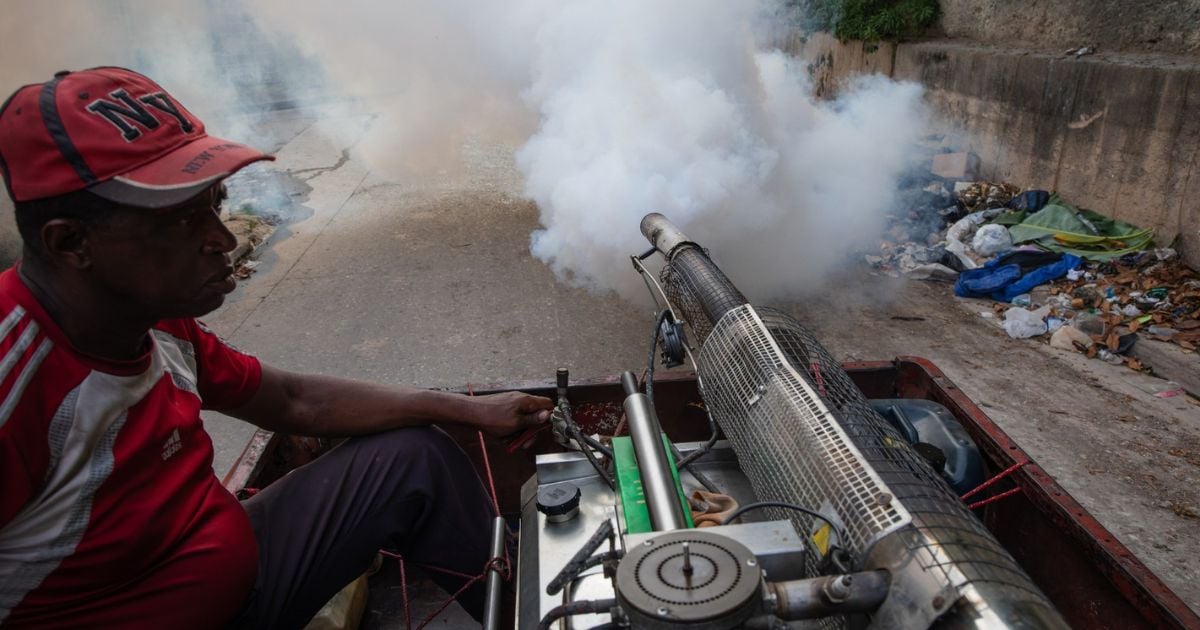
The government confirmed that the transmission of dengue remains high in all areas of the municipal seat, with critical hotspots in the popular councils of Versalles, La Playa, and Matanzas Oeste, where intensive fumigation efforts were deployed over the weekend.
Dr. Andrés Lamas Acevedo, provincial director of Hygiene, Epidemiology, and Microbiology, declared to Girón that the province received a boost of 28 fumigation bazookas and expects another 30 additional ones, focusing resources on Matanzas and Cárdenas, the most densely populated and affected areas.
"The fumigation strategy is to target areas where dengue is circulating because it is the tracer disease, the one that kills people," explained the specialist, confirming that serotypes 3 and 4 of dengue are simultaneously circulating in the province, which could worsen the epidemiological situation.
Despite the magnitude of the outbreak, Public Health officials assured that the provincial pediatric hospital is not facing difficulties and has more than 30 available beds, in addition to another 70 improvised ones set up in the extension created at the University of Medical Sciences.
According to the report, the remaining territorial hospitals "maintain conditions" for medical care, although healthcare staff and patient families have reported a lack of medications, reagents, and basic conditions in several healthcare centers.
Dr. Lamas stated that the situation could begin to improve by the end of October when lower temperatures reduce the reproduction of the Aedes aegypti mosquito.
However, the government seems to rely more on climate change than on the effectiveness of its own measures, following years of failures in vector control, inadequate spraying, and limited epidemiological surveillance.
For his part, Sabines noted that the main objectives of the campaign are "to eliminate the risks for the proliferation of mosquitoes and to maintain adulticidal treatment," and emphasized the need to achieve "greater levels of public engagement" to sustain sanitation efforts amid the economic crisis.
As part of the strategy, the authorities decided to reinforce active searches with medical students and mobilize mass organizations, workplaces, and unions to support fumigation and cleaning efforts for micro-dumping sites, a work scheme that repeats the same approaches applied during the previous epidemic outbreaks without sustainable results.
The meeting concluded with the acknowledgment that the province has a “clear strategy” and the necessary resources, although official data contradicts this statement: the persistence of outbreaks, the simultaneous circulation of two serotypes, and the increase in febrile patients reveal an out-of-control situation.
The health crisis in Matanzas reflects the structural fragility of the Cuban healthcare system, impacted by the exodus of doctors, shortages of supplies, and the precarious state of hospitals.
In neighborhoods like Versalles or La Playa, residents report streets infested with mosquitoes, a buildup of trash, and stagnant water, while the regime continues to deny the true magnitude of the epidemic.
In Matanzas, the epidemiological situation has quickly deteriorated to the point that entire populations are reporting symptoms consistent with chikungunya, amid an unprecedented expansion of the virus.
The gravity of the moment was also evidenced by the death of a young woman from Cárdenas due to hemorrhagic dengue, a case that shocked the medical community and rekindled criticism of the government's health management.
Despite the severe symptoms, the young woman did not receive appropriate treatment in time, in a context of hospital collapse and shortage of essential medications.
Days earlier, the health authorities themselves acknowledged the high viral circulation of dengue in several municipalities, including Matanzas, Cárdenas, and Jagüey Grande.
However, in a stance disconnected from the reality on the ground, the Minister of Public Health publicly denied the existence of deaths related to the outbreak and downplayed its impact, claiming that “everything was under control.”
Frequently asked questions about the health crisis in Matanzas due to dengue and chikungunya
What is the current situation of dengue and chikungunya in Matanzas?
The province of Matanzas is facing a serious health crisis due to the spread of dengue and chikungunya. Local authorities are hopeful that the situation will improve with the arrival of winter, but currently, transmission remains high in several areas, with critical hotspots in municipalities such as Matanzas and Cárdenas.
What measures are the authorities taking to control the outbreak?
The authorities are conducting intensive fumigation and vector control actions, in addition to reinforcing active surveys with medical students. Resources such as fumigation bazookas have been deployed, and mass organizations and unions have been mobilized to support cleaning efforts and the elimination of mosquito breeding sites.
Why isn't the Cuban healthcare system effectively managing the dengue and chikungunya crisis?
The Cuban health system faces serious limitations due to the exodus of doctors, lack of supplies, and poor hospital conditions. These structural deficiencies have worsened the situation, limiting the response capacity to the outbreak and the effectiveness of vector control measures.
How does the health crisis affect the population of Matanzas?
The health crisis has severely impacted the population, with an increase in febrile cases and symptoms such as high fever and joint pain. The quality of life for the residents has deteriorated, facing long waits in overcrowded hospitals and a lack of essential medications, which forces many families to take on the care of the sick at home.
Filed under: