
Related videos:
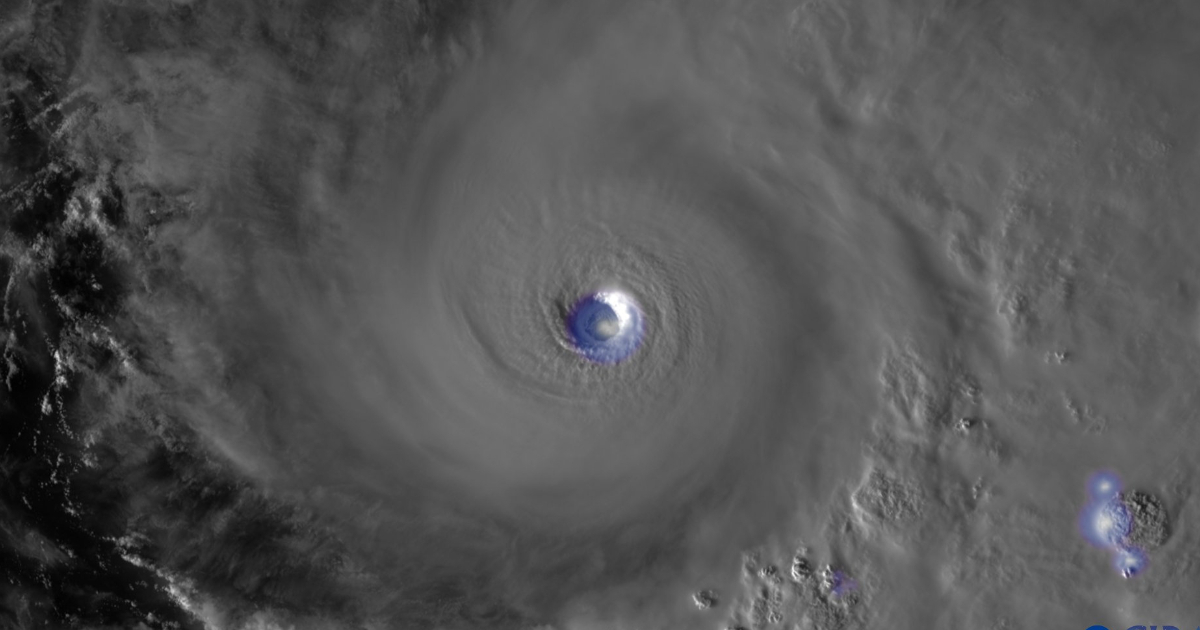
Melissa continues its advance towards the east of Cuba as a powerful category 5 system on the Saffir-Simpson scale, with sustained winds of 270 kilometers per hour and higher gusts, placing it among the most intense cyclones that have threatened the island in over a hundred years.
By maintaining its current intensity until landfall, Melissa could match or even surpass the most powerful hurricanes in Cuba's history, such as those of 1924 and 1932, both Category 5 storms and considered the most devastating in the country's meteorological records. The hurricane of 1924 struck the west with winds estimated at 265 km/h, while that of 1932 hit the central region with speeds exceeding 240 km/h, resulting in thousands of casualties.
In contrast to those historical events, Melissa is heading towards the eastern region of Cuba, an area that has not faced a direct impact of such magnitude and which has a more fragile infrastructure and already deteriorated basic services. Experts warn that the combination of extreme winds, storm surges, and torrential rains could cause catastrophic damage in provinces such as Guantánamo, Santiago de Cuba, Holguín, Granma, Las Tunas, and Camagüey.
According to historical data, the most destructive hurricanes recorded in Cuba also include Hurricane Michelle (2001), which came in as a category 4 with winds of 225 km/h; Hurricane Ivan (2004), which grazed the west with category 5; and Hurricane Flora (1963), whose prolonged rainfall caused more than 1,000 deaths, although with lower wind intensity.
Melissa, on the other hand, combines all the elements of an extreme hurricane: sustained winds exceeding 250 km/h, a central pressure below 910 hectopascals, and a slow movement that increases the risk of flooding and landslides. Meteorologists have described its behavior as "explosive intensification," which could make it one of the most violent tropical systems in the recent history of the Caribbean.
If its direct impact on Cuban territory is confirmed with its current intensity, Melissa would be the most powerful hurricane to have struck the island since reliable records began. Civil Defense authorities are maintaining the Cyclone Alarm Phase in six eastern provinces, while rescue teams and electrical technicians are preparing to take action once the effects of the phenomenon have passed.
The country faces this new challenge amidst a complex context: widespread blackouts, resource shortages, and a limited communication network that could complicate the response to a large-scale emergency. Forecasts suggest that the eye of Melissa could approach the southeastern coastline between Tuesday night and Wednesday morning, with a destructive potential that could mark a significant turning point in Cuba's meteorological memory.
Filed under: