
Related videos:
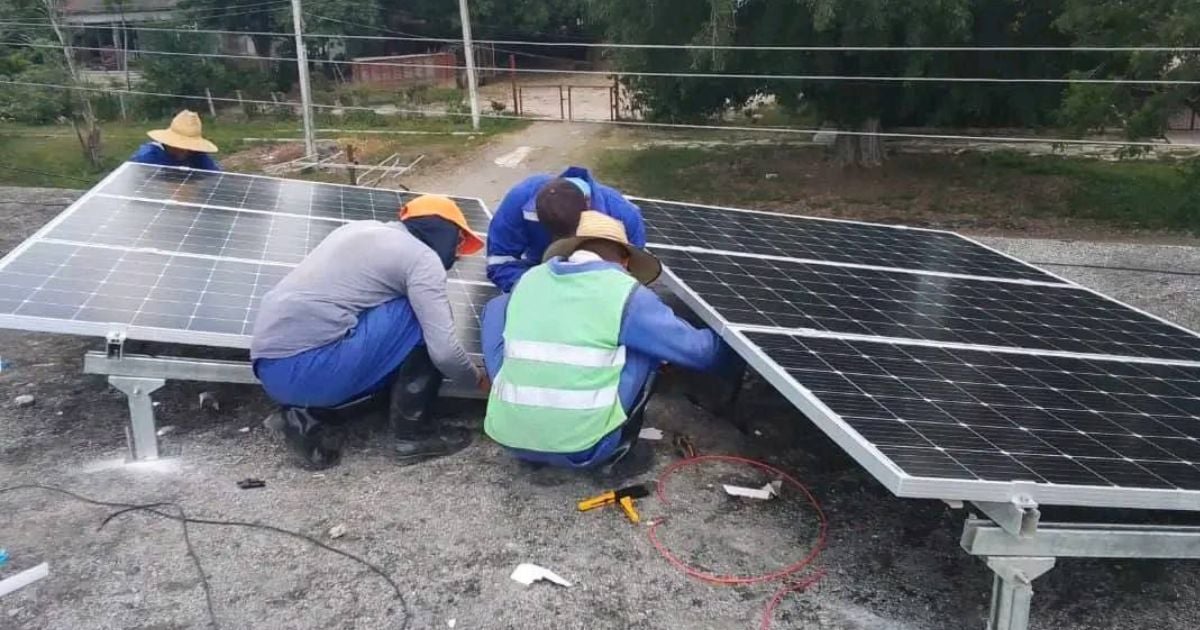
Several communities in the province of Granma received generators and photovoltaic systems to alleviate the energy shortage caused by the damage from Hurricane Melissa.
The United Nations Development Programme (UNDP) reported on its social media that the equipment was installed in the towns of Guamo Viejo, Grito de Yara, Vado del Yeso, and Cauto Embarcadero.
The generators allow residents to charge basic communication and lighting devices, in addition to facilitating coordination during the emergency.
The municipalities of Río Cauto and Cauto Cristo, to which those communities belong, remain under a cyclone alert a week after the hurricane's passage, due to the flooding caused by the rains, which keep water levels at critical points in anticipation of possible new precipitation.
The province lost access to the National Electric System after several transmission towers collapsed and now only receives energy from small generation islands that cover about 65% of the demand.
The generators were acquired by UNDP with support from the United Nations Central Emergency Response Fund and coordinated by the Office for the Coordination of Humanitarian Affairs, as part of the system's proactive response by the agency in Cuba alongside Civil Defense.
Additionally, autonomous photovoltaic systems of 2 kWp (kilowatts peak) were activated at the university center in the municipality of Río Cauto to meet the basic services of the location and provide energy access to the nearby community.
Another system was installed at the University of Granma in Bayamo, along with the delivery of a fuel generator.
The activities at the university centers were carried out under the FRE Local project, implemented by the University of Sancti Spíritus with the support of UNDP and financial backing from the European Union in Cuba.
As part of the response to the devastation caused by Hurricane Melissa, UNDP has initiated various actions in eastern Cuba.
From immediate assistance, the UNDP launched a special call directed at local economic actors to support productive recovery. Micro, small, and medium enterprises, as well as cooperatives, will be able to receive up to 40,000 dollars in funding to restore their operations in severely affected areas.
These funds will be channeled through an emergency response platform supported by the United Nations Peacebuilding Fund and the European Union.
Prior to this measure, the UNDP had already activated plans with local governments to identify immediate needs. State and private companies were also called upon to contribute logistical supplies, construction materials, and essential services.
This coordination aims to promote resilience in communities affected by the energy crisis and the collapses caused by the cyclone.
Filed under: