
Related videos:
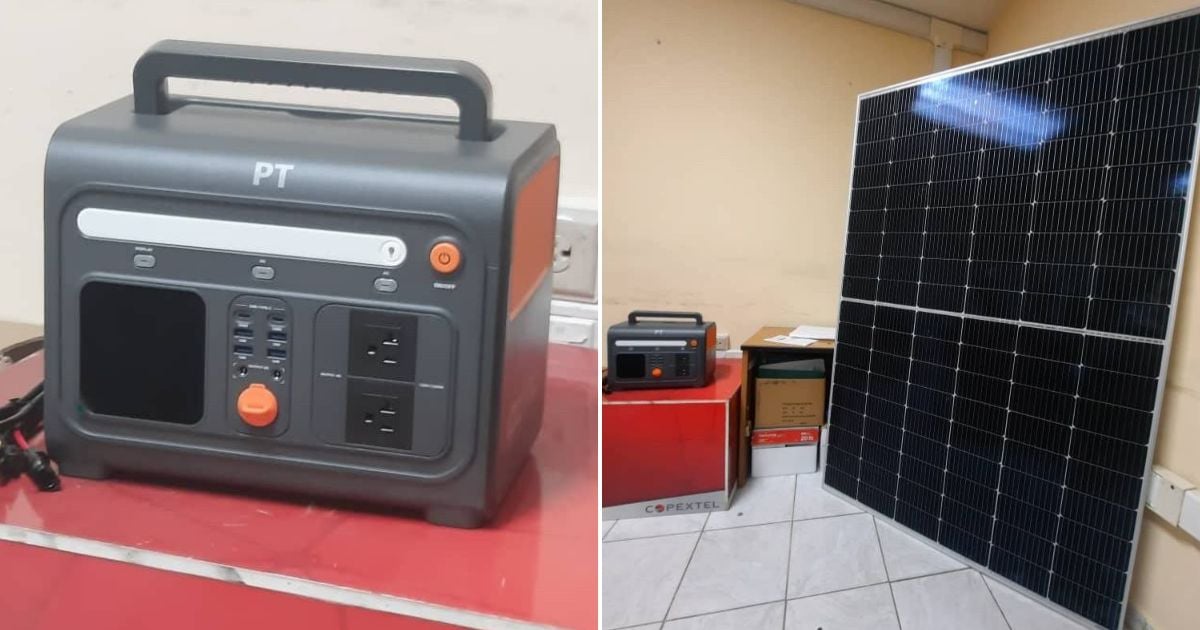
The University of the East announced that more than 400 of its workers and professors will be “benefited” by the provision of photovoltaic panels, as part of the so-called “Government Program for the Recovery of the National Electro-Energetic System.”
According to the information provided by the institution on its official Facebook page, the solar modules were assigned to the Ministry of Higher Education and will benefit 423 professors, researchers, and non-teaching staff at this university across all faculties, research centers, and associated entities, including the Science and Technology Interface Company, Cintro S.A.
Despite the triumphant rhetoric, it should be noted that this university is one of the largest in the country, which suggests that the number of "beneficiaries" won't even match the staff, especially considering that the institution has experienced a significant emigration, like the rest of the country.
In the comments section, the University of Oriente clarified that the measure also includes retired workers, "they are among those who will benefit. It was a very fair decision for the groups to take them into account."
The publication emphasized that these allocations represent "an alternative that promotes the utilization of renewable energies and improves the living conditions of members of the university community."
However, although the gesture provides a temporary relief for the beneficiaries, the measure is far from offering a real solution to the deep energy crisis that the country is experiencing.
The national electrical system continues to be in collapse due to a lack of maintenance in the thermoelectric plants, prolonged blackouts, and fuel shortages, which daily affects millions of Cubans.
The delivery of solar panels to a portion of the university staff can mitigate the effects of power outages in some homes, but it does not change the overall situation of a country surviving between darkness and the government's makeshift patches to cover up the failures of the electrical system.
In the midst of the deep energy crisis affecting Cuba, just a few days ago, the Banco de Crédito y Comercio (BANDEC) in Pinar del Río announced the implementation of a new personal loan program for the purchase of equipment that operates on renewable energy sources.
According to the official site Cubadebate, the measure aims to streamline banking procedures and promote the use of sustainable technologies, but in practice, it will only benefit a limited group, becoming yet another measure that increases the gap between those who can access technology and those who cannot.
In this initial stage, the loans will be directed exclusively to workers in the public health and education sectors, previously selected by their institutions, emphasized the cited source.
Filed under: