
Related videos:
Santiago de Cuba is once again the backdrop for a tragedy that recurs with every cyclone: destruction, institutional abandonment, and a community that survives solely through the solidarity among its citizens.
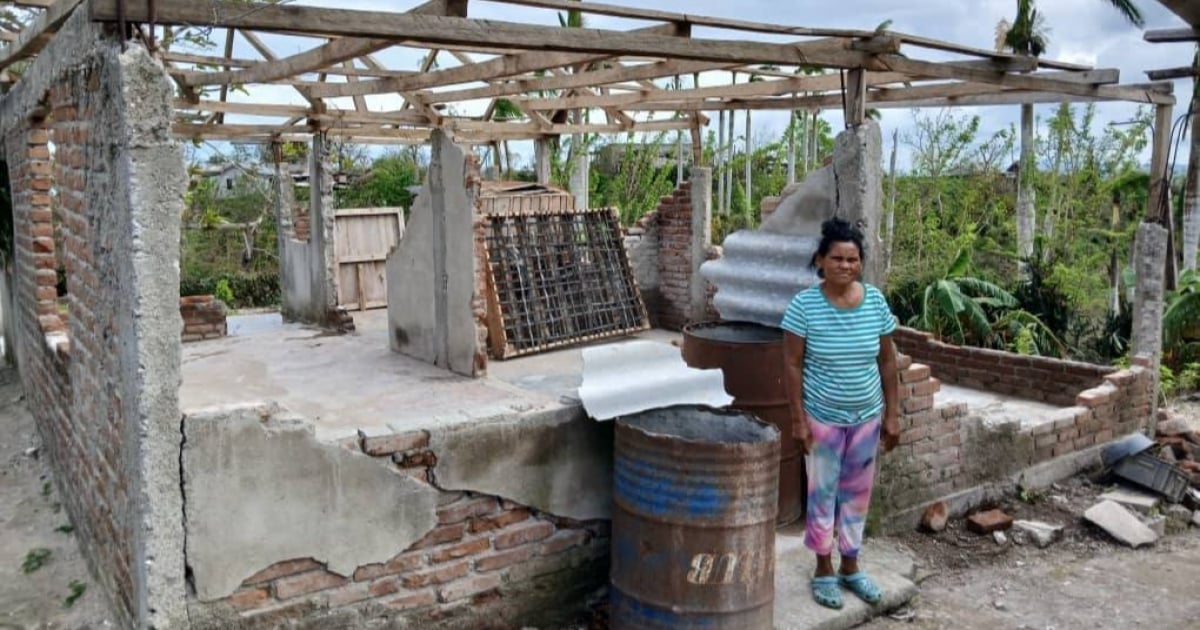
After the passage of the hurricane Melissa, the province was plunged into a landscape that not only reveals the impact of the wind and rain but also highlights the depth of a structural crisis that leaves the population completely defenseless.
The testimony published by the activist Yankiel Fernández on Facebook starkly summarizes what thousands experience in silence.
"In Santiago, I once again experience pain, suffering, abandonment, misery. What Melissa did not sweep away with the wind, abandonment wiped out," he wrote.
Her description of the losses is overwhelming: Melissa took down roofs, tore apart electrical wiring, ripped out windows, lifted doors, and swallowed mattresses (...) refrigerators that had been dead for decades due to power outages.
"The most precious thing, life, stood firm, but the rest was reduced to rubble, dirty water, and mud," he said.
However, what hurts the most, he pointed out, is not the wet wood or the lost belongings, but the moral decay that emerges at a time when the country is facing a general crisis, an epidemic, and terrible shortages.
Thus, Yankiel lamented seeing residents reselling bread, candles, and water, profiting from the suffering of others as if it were a gold mine.
"Human misery on top of material misery," he emphasized.
And even when life was preserved, the people now have to deal with the certainty that the institutional response will be as slow and ineffective as ever, a cycle that repeats itself every time a cyclone passes through "a country that was already broken from the factory."
"We know the next scene by heart: months without electricity, without water, without food, without answers. Absent governments, empty promises, expert assessments that never arrive, aid that evaporates as if the wind took it away," he denounced.
"We know that no one will come. That knowledge, not the hurricane, is what is truly unbearable," she emphasized.
A flooded territory and a population without resources
The torrential rain caused massive flooding, rising rivers, destroyed roads, and entire communities isolated.
Thousands of families lost roofs, walls, furniture, clothing, food, and any minimal tools to start over. In a country where official salaries barely cover even the basics, replacing what has been lost is a pipe dream.
The material damage in Santiago de Cuba is overwhelming: over 95,000 homes affected. These are not just destroyed houses; they are homes that could not recover from the previous cyclone and are now suffering even greater setbacks.
Despite official statements in which Prime Minister Manuel Marrero Cruz assured that "no one will be left unsupported," the experience of those affected reveals a different reality: promises that fade away and official aid that is announced with triumphalism but fails to materialize on the ground.
Real solidarity: that of the people
While institutions accumulate delays, silence, or excuses, the real response has emerged from the grassroots. Independent support networks mobilized long before any state structure.
Cáritas Santiago de Cuba immediately activated its parish network, providing more than 4,400 food rations, detergent, and soap to affected families.
The Avilés jeweler Mijaíl García traveled hundreds of kilometers to deliver televisions, clothing, and hygiene products to the communities of Guamá devastated by Melissa.
Citizens from across the country organized through social media to send donations, gather materials, support elderly individuals living alone, and assist those who have not even been able to assess the damage because they are still trapped among rubble and mud.
It is these gestures—rather than official statements—that keep communities alive. Ordinary people traversing impossible paths, building makeshift walls, distributing food without cameras or speeches.
A country that the wind only finishes unveiling
Each cyclone reveals the same wound: a poverty that has become chronic and is not due to the weather, but rather decades of wear and tear.
Cuban families face hurricanes without resources, savings, real access to construction materials, and, above all, without the guarantee of institutional support.
While the state television repeats slogans about recovery and unity, the reality in the neighborhoods is diametrically opposed: mothers crying in front of houses that have crumbled like paper, elderly people lacking the strength to start over, children whose childhood is shaped by blackouts, shortages, and ruins.
And the hardest part, as Yankiel wrote, is the shared awareness among everyone: "We know that no one will come. That knowledge, not the hurricane, is what is truly unbearable."
A country sustained by civic solidarity
The work of independent initiatives like "Aliento de Vida," the solidarity project led by Yankiel Fernández, confirms that daily survival in Cuba relies more on citizen support than on institutions. For nearly a decade, it has provided food, clothing, hygiene products, and essential items to families in extreme vulnerability.
Last year, over 540 pounds of donations were brought to Guantánamo for those affected by Hurricane Oscar.
And now, amidst the desolation left by Melissa, Fernández witnesses once again a country that stands solely by the will of its people.
His message, filled with pain but also with dignity, ends with a warning that needs no metaphors: the destruction is not solely the work of the cyclone, but of a system that has left its people without tools, without protection, and without institutional hope.
Filed under: