
Related videos:
The 2025 Atlantic hurricane season comes to a close without a single hurricane making landfall on U.S. soil, a phenomenon not seen since 2015, according to data from the National Oceanic and Atmospheric Administration (NOAA).
Although it meant a breath of fresh air for the United States, the Caribbean experienced the most destructive side of a year that combined long periods of calm with historically powerful storms.
According to CountOn2 and the official NOAA report, the season concluded with 13 named storms, five hurricanes, and four of them classified as major, category three or higher.
NOAA Administrator Neil Jacobs described 2025 as "a much-needed pause" following consecutive years of impact, although he warned that the country was not completely free from damage.
Tropical storms like Chantal caused flooding in the Carolinas, and the strong waves from distant hurricanes led to losses along the Atlantic coast.
According to the preliminary report from the National Hurricane Center and the data compiled by Wikipedia, the 2025 season was one of the most irregular in the last decade.
Storm Andrea, the first of the year, did not form until June 23, marking the latest start since 2014.
However, the initial inactivity gave way to weeks of extreme atmospheric violence, with three category five hurricanes—Erin, Humberto, and Melissa—something that had only happened once before, in 2005.
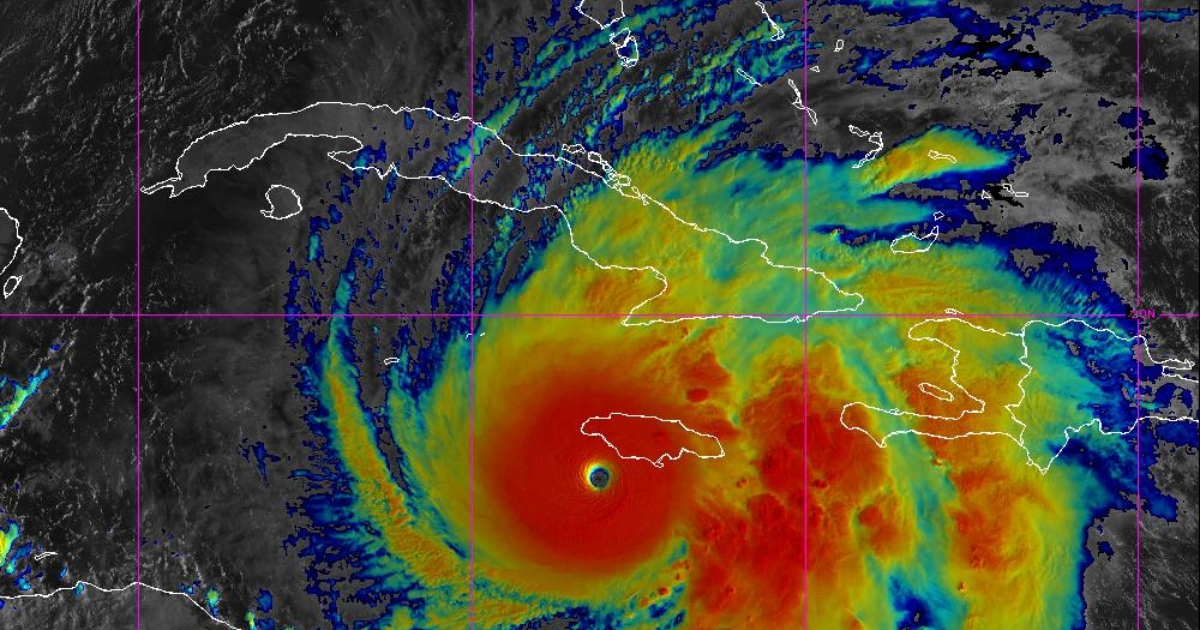
The most severe impact of the season was concentrated in the Caribbean and Central America. Hurricane Melissa, with maximum winds of 295 kilometers per hour and a minimum pressure of 892 millibars, became the third most intense cyclone recorded in the Atlantic.
The system caused dozens of deaths in Jamaica, Haiti, and the Dominican Republic, and caused severe damage in eastern Cuba, where it made landfall at the end of October as a category four hurricane, along with heavy flooding.
In total, the season resulted in at least 115 fatalities and estimated material losses of over 6.5 billion dollars, according to preliminary data from NOAA and the National Hurricane Center.
NOAA emphasized that this was one of the most complex years for weather forecasting due to the increase in instances of rapid intensification.
Nevertheless, specialists from the National Hurricane Center have achieved significant improvements in forecasting accuracy thanks to the use of models based on artificial intelligence, implemented for the first time in real operations.
"The year 2025 shows that we can have an intense season without direct impacts in the United States, but it also highlights that the Caribbean remains the frontline of climate change," stated Ken Graham, director of the National Weather Service, while presenting the report.
With ocean temperatures warmer than usual and a possible return to neutral conditions of El Niño, experts expect that the upcoming season, which will officially begin on June 1, 2026, will maintain high levels of cyclonic activity.
For now, the United States is closing a decade of vulnerability with exceptional relief.
But for the Caribbean islands, where hurricanes Erin, Humberto, and Melissa devastated entire communities, the 2025 season will be remembered as one of the most challenging in recent times.
Filed under: