
Related videos:
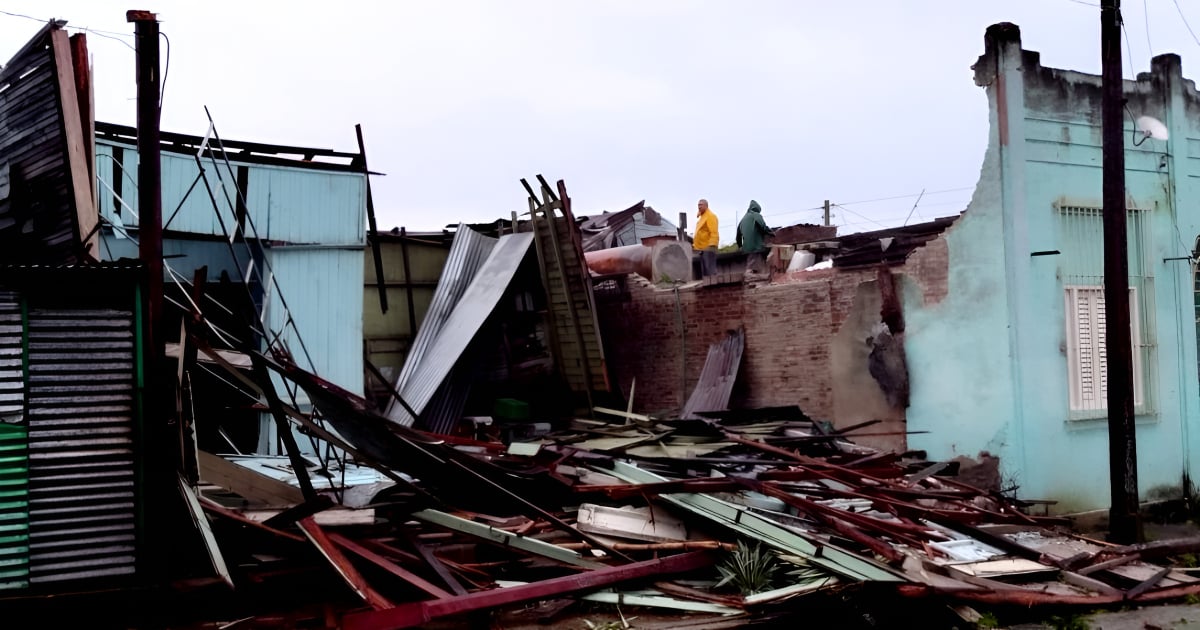
The passage of Hurricane Melissa through eastern Cuba left a scene of devastation with 1,318 total housing collapses, according to a preliminary report released by the Ministry of Construction (MICONS).
The meteor, which struck the island as a category 3 on the Saffir-Simpson scale, hit during the early hours of Wednesday with winds of up to 200 kilometers per hour, heavy rains, and storm surges that devastated entire communities.
The director of the Project Front of MICONS, Ricardo Guardia, reported on state television that, in addition to the total collapses, there were 16,464 affected homes, of which 1,142 have partial damages. Regarding roofs, 5,279 were completely lost and another 8,666 suffered partial destruction.
According to the report from the agency EFE, the executive assured that “all cases will be addressed” and announced the sale of construction materials for those affected, as well as the activation of tile production and the shipment of 1,000 tons of cement intended for reconstruction.
However, so far the regime has not presented an official assessment of the damages, nor has it specified the actual resources available to address the emergency, amid a deep economic crisis that leaves the country unable to respond effectively to natural disasters.
Hurricane Melissa struck the provinces of Santiago de Cuba, Granma, Holguín, Las Tunas, and Guantánamo, leaving behind a trail of destruction that includes power outages, interruptions in telecommunications, damaged roads and bridges, as well as communities isolated due to flooding caused by overflowing rivers.
Despite the extent of the damage, state media have refrained from providing a transparent assessment of the humanitarian situation in the most affected areas, limiting themselves to general reports on rescues and cleanup efforts.
Meanwhile, hundreds of families have lost everything, with no certainty about when they will be able to rebuild their homes or receive effective assistance.
Hurricane Melissa is considered one of the most destructive to hit Cuba in the last decade, exposing the structural vulnerability of housing and the country's lack of preparedness for high-intensity weather events.
Official figures under suspicion and a human drama hidden behind the numbers
Although the MICONS provided an initial assessment of the damage, the figures released have generated skepticism among those affected, who claim that the collapses could be much greater than what the regime acknowledges.
On social media, residents of Santiago de Cuba, Guantánamo, and Holguín have reported entire neighborhoods reduced to rubble, while state media continue to project an image of control and “guaranteed attention” that contrasts sharply with the reality on the ground.
The impact of Hurricane Melissa has once again exposed the structural fragility of Cuba's housing stock, with thousands of homes built decades ago without proper maintenance or materials. For many families, the collapse of their homes was not a surprise, but rather the inevitable outcome of years of official neglect and systematically unfulfilled promises.
Despite reassuring speeches, state aid is progressing slowly. The victims are facing shortages of cement, roofs, and wood, in addition to the bureaucracy that delays any reconstruction. In several municipalities, people are sleeping outdoors or improvising shelters with plastic tarps, without water or electricity.
The regime, for its part, avoids providing data on victims, displaced persons, or agricultural damages, limiting itself to partial figures that aim to project efficiency, while the east of the country struggles to rise from the mud and despair.
Filed under: