
Related videos:
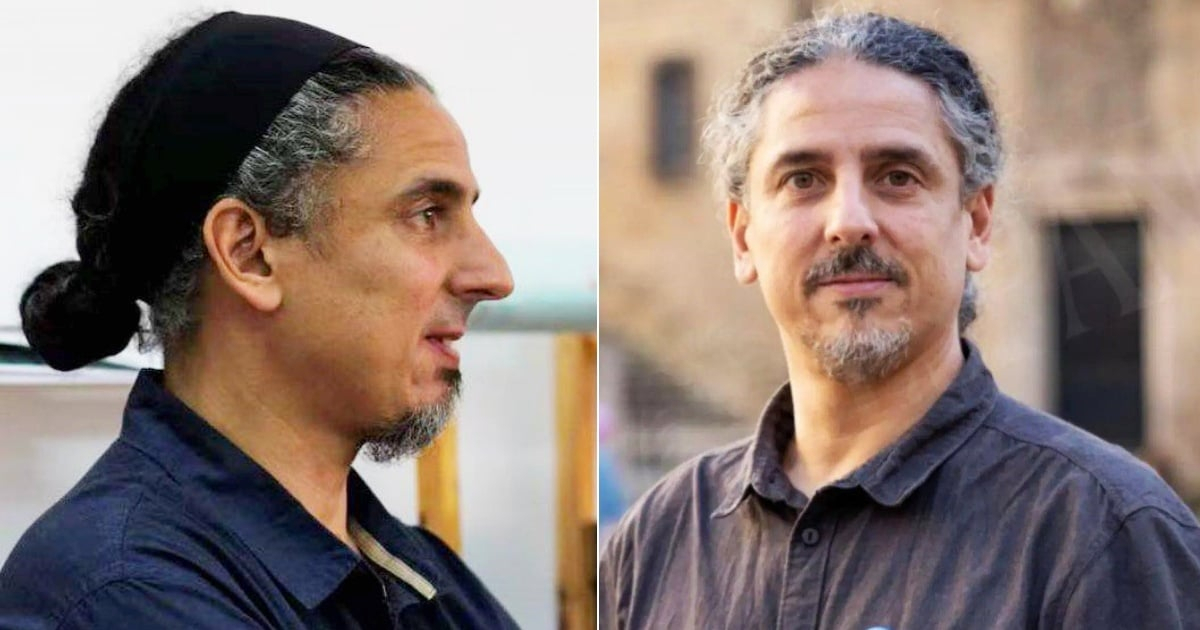
The Spanish fugitive Martiño Ramos Soto, sentenced in Spain to 13 and a half years in prison for sexually abusing a minor, was discovered and arrested in Havana after a series of mistakes that undermined the false identity he had built under the name "Martín Soto."
According to the newspaper El Mundo, for months the former Galician politician lived a normal life in the Cuban capital, attending cultural events and presenting himself as a photographer, until a familiar face, a report on social media, and a sudden farewell exposed him.
According to the media outlet, Ramos had started a new life in Cuba with a remarkably high standard of living: he wore expensive clothing, carried state-of-the-art cameras, and frequently invited young people—especially women—to concerts, exhibitions, and artistic performances.
However, his behavior raised suspicions. "There was something strange," agree people who briefly knew him in Havana.
The first stumble occurred at a birthday party when a Cuban resident in Spain thought she recognized him among the attendees.
This impression was reinforced days later when, on social media, someone from the Madres Protectoras de Madrid collective contacted a friend of the fugitive, claiming to have seen his real name in some documents. The alarm began to spread.
EFE recalled that the decisive moment came when a young Cuban uploaded a photo to Instagram in which she tagged the man she knew as “Martín Soto.”
The post received a flood of comments from Spain: “That man is not a photographer and his name is not what he claims; he is Martiño Ramos Soto, a fugitive convicted of rape,” users warned. The young woman was left in shock.
"How can you be sure you know someone if you ignore that they are capable of doing those things?" she said later.
The Cuban police were already monitoring him
Although the alerts on social media triggered the public denunciation, the National Revolutionary Police had already had the fugitive located for months.
Ramos had fled from Spain, passing through Portugal, Brazil, and Peru before arriving in Cuba, and the authorities were aware of his entry into the island.
Despite his firm sentence, he was not immediately arrested, but he was kept under observation, according to the cited sources.
The arrest took place on November 24, after Ramos began preparing a new escape, likely realizing that his identity was starting to be questioned.
That sudden farewell was another warning for those who knew him in Havana.
Since his arrival in Cuba, Ramos integrated into the artistic circles of Vedadoor. He offered free photographs to musicians, poets, models, and young artists, which allowed him to easily enter social groups.
"Her introduction was always the same," recalls a young poet: "she would take a picture of you, ask for your email or Instagram, and then send the material. But she never talked about her life; she never said what she was doing in Cuba."
Another woman described him as someone with a "childish" attitude, desperate for acceptance.
A worker from a restaurant he often visited also remembers him well: "He was always alone, but looking for someone to talk to, to join a group."
One of the most wanted fugitives in Spain
Ramos was one of the ten most wanted fugitives by the Spanish National Police. His conviction—due to abuses and sadistic practices against a student aged between 12 and 16—made his capture a priority for the police force.
Following his arrest, both Cuba and Spain expressed their willingness to expedite his transfer so that he can serve his sentence on Spanish territory.
Ramos, for his part, has not requested consular assistance but has asked for a list of lawyers in Cuba.
Her downfall reveals how a slip in social media, a recognized face at the right time and community collaboration can dismantle a carefully constructed false identity.
In Havana, his history has left a mix of relief and unease among those who lived close to him, unaware that they were in the presence of someone condemned for extremely serious crimes.
Filed under: