
Related videos:
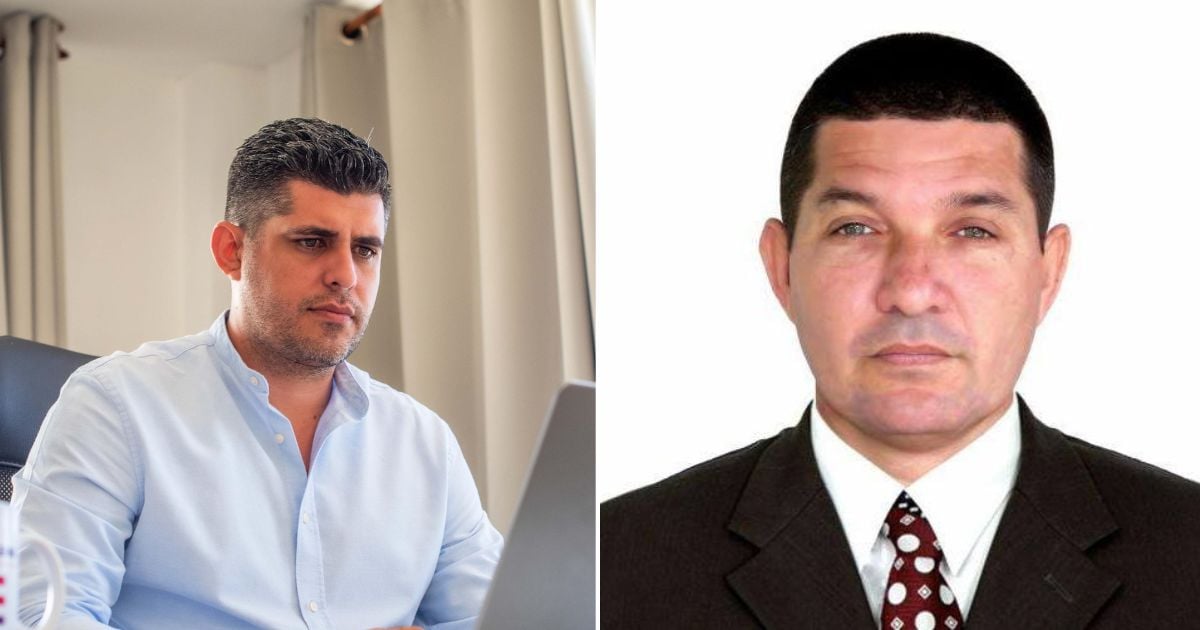
Cuban deputy Carlos Miguel Pérez Reyes, founder and president of the technology company Dofleini, published an extensive text this Thursday that sparked controversy as he attempted to justify the limits on freedom of expression in Cuba, just days after the arrest of William Sosa in Tunas, who was detained for posting criticisms on social media.
In his post on Facebook, Pérez stated that he reviewed the Cuban Constitution and the Penal Code to explain “the limits of the right to criticize and where the crime begins.”
He stated that criticism "is a right," but it has limits established by law, and he cited Article 4 of the Constitution, which declares the socialist system "irrevocable," and therefore obliges one to defend it against those who challenge it.
The deputy also mentioned articles 120 and 143 of the Penal Code and Decree-Law 370, which are commonly used to punish opinions or publications on social media.
According to their interpretation, criticism is valid as long as it does not "incite violence, spread false information, or receive foreign funding."
However, their attempt to "explain" freedom of expression was interpreted as a defense of the repressive Cuban system, where ambiguous laws allow for the punishment of any opinion that is uncomfortable for those in power.
In the comments, Pérez Reyes addressed the specific case of William Sosa, but he refrained from labeling it as an injustice.
"I do not have the elements to issue a reasoned opinion... I am authorized to request information and ask on what basis the warning was made," he wrote.
William Sosa, a resident of Las Tunas, was arrested on November 12 by State Security after he published reflections on the economic crisis and corruption.
His son confirmed on social media that the man was transferred to prison and stated that his "only crime was to think and write."
The regime accuses him of the crime of "disobedience," a provision of the Penal Code that has been repeatedly applied against citizens who express opinions online.
The publication by the deputy sparked an intense debate on social media, with comments ranging from support to outrage.
For some, like Carlos Camilo, Pérez Reyes' gesture was unusual and necessary: "William is a man who simply tried to make us reflect with respect and honesty. He is a fidelista and a martiano. Thank you for addressing the issue; hope has returned today."
Others, however, demanded action and consistency. Dariel Rodríguez García reminded him: “The man is in prison, deputy. But not in a station, rather in a jail. Every day that goes by is a defeat and a machine of disappointment.”
From a more critical perspective, Mauricio de Miranda Parrondo questioned the very foundation of the system that the deputy defends: "Our constitution has a fundamental contradiction: it recognizes the sovereignty of the people but establishes the Communist Party as the superior force. What are we supposed to believe? We are citizens, not subjects."
User Odalys Pérez positively assessed that a deputy spoke about the issue, but cautioned: “Suppressing honest criticism will not help us move forward; on the contrary, it's a dark tunnel that can only be escaped by listening and changing.”
For her part, Flavia Cusidor reflected on the country's political culture: "For years, sincere disagreement has been labeled as disrespect or counter-revolution. We still do not know how to differentiate legitimate criticism from crime."
Not everyone opposed it. Yanelis González Duvergel defended the existence of limits to public discourse: “In Cuba, that limit is well-defined, and I prefer it that way. Everyone can have an opinion, but without offending.”
Finally, Pedro Orlando Guevara Yero raised the central question that remains unanswered: “Which of the reasons presented applies to William Sosa’s case? This man should not be detained for another minute. One only has to review his profile to see that.”
Filed under: