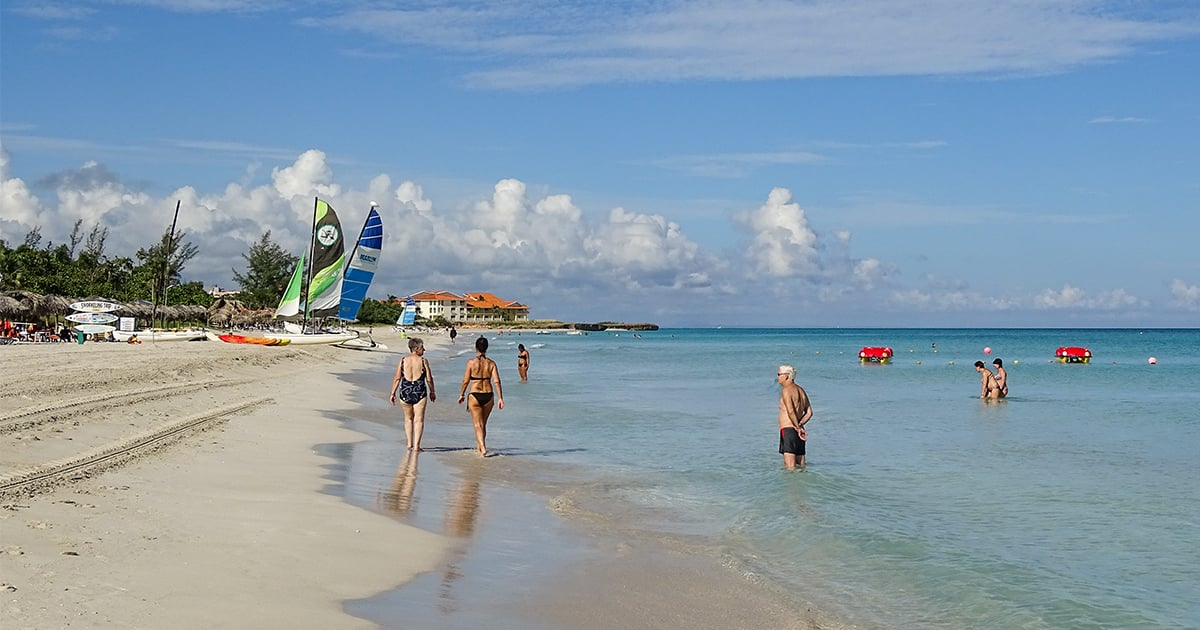
The Cuban tourism sector is experiencing its worst year in decades. The Minister of Tourism, Juan Carlos García Granda, revealed during the state television program Mesa Redonda that by the end of October, only 506,074 visitors had arrived on the island out of the 1,757,480 expected in the annual plan, representing a shortfall of 71.2% —meaning that only 28.8% of the target has been met.
The figure confirms the trend of a free fall that Cuban tourism is experiencing throughout 2026. Between January and September, Cuba accumulated 477,707 international visitors, a decrease of approximately 65% compared to the same period in 2025, according to data from the National Office of Statistics and Information (ONEI). September was the most critical month, with only 27,354 arrivals.
García Granda appeared before the cameras accompanied by the Director General of Development of the Ministry of Tourism (MINTUR), José Alberto Pérez Lazo; the Legal Director, Juan José Álvarez; and the President of the Cubasol Business Group, Liubersy Pérez.
The minister attributed the collapse to the U.S. embargo, Washington's sanctions, what he described as an "energy blockade," and pressures on international tourism operators. However, the sector's collapse is also due to structural factors accumulated over years of mismanagement by the dictatorship.
"Cuba remains open to the world. Our country and our people need tourism; that's why we resist, innovate, and reinvent ourselves to keep operating," stated García Granda, in a message that contrasts with the data he himself presented: with two months yet to be accounted for, the annual plan is already mathematically unattainable.
The impact of the sanctions became particularly evident starting in May 2026, when the Trump administration signed Executive Order 14,404 against entities linked to GAESA, the military conglomerate that controls most of Cuba's hotel infrastructure.
After the deadline for foreign companies to sever ties with that conglomerate expired, Iberostar, Meliá, and Barceló ceased their operations on the island between June and July. In total, Iberostar left 12 hotels and Meliá another 15.
On July 13, the U.S. Department of the Treasury directly included MINTUR in its list of Specially Designated Nationals, further isolating the sector.
Despite the collapse of the figures, the regime portrayed the situation as a scenario of "resistance and innovation."
García Granda reported that the MINTUR is making progress in the installation of photovoltaic systems in tourism facilities, incorporating electric vehicles and charging stations, designing new packages that combine culture, nature, and wellness, and maintaining 96 facilities with cultivated areas for self-consumption.
The minister summarized the official strategy in three words: "unity, resilience, and creativity."
The contrast with reality is stark. In 2018, Cuba reached its historic high with nearly 4.7 million visitors.
In 2025, the goal was 2.6 million, but the year ended with only 1,810,663 arrivals. The hotel occupancy in 2026 was estimated to be below 10%, a level that makes the profitability of any establishment unfeasible.
Related videos:
Filed under: