
Related videos:
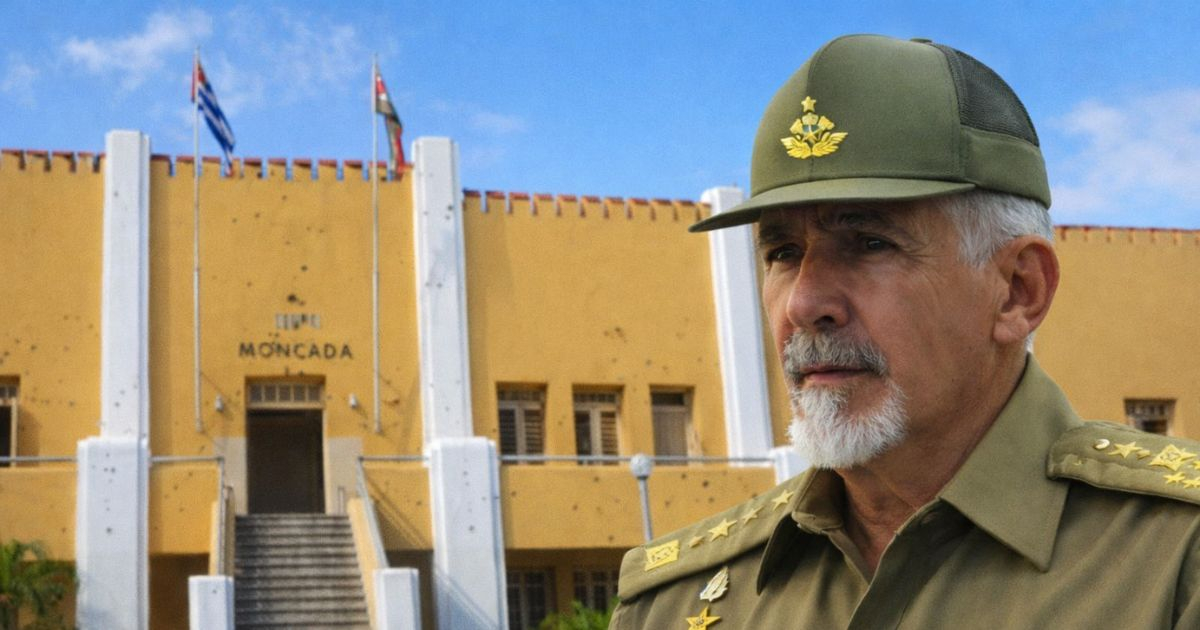
Ramiro Valdés is 82 years old and has been one of the pillars of the most longstanding repressive apparatus in the Western Hemisphere for over five decades. His role as the official speaker for July 26th is not a minor detail: it is the Cuban dictatorship sending itself a love letter signed with someone else's blood.
In his speech, Valdés stated that the Revolution "liberated the people of Cuba." The question that no one dared to ask at that event—because asking it out loud in Cuba has consequences—is this: Did it liberate the people, or did it take them hostage?
The man who talks about liberation was the founder of Cuba's State Security, the institution specifically designed to monitor, persecute, imprison, and silence that very same people. Under his direct supervision as Minister of the Interior, political terror was institutionalized in Cuba. The Military Units for Production Aid (UMAP), the forced labor camps where religious individuals, homosexuals, and "dissidents" were interned, flourished under the oversight of his apparatus. Speaking of liberation from such a biography requires a shamelessness that only stems from the impunity of more than fifty years without accountability.
The catalog of achievements that do not exist
Valdés repeated the usual mantras: university graduates, teachers, healthcare workers who "have offered their generous help" both inside and outside the country. It's worth unpacking that phrase.
Cuban doctors do not "provide generous help" abroad. They are sent by the State on missions that the regime itself negotiates as slave labor contracts with third governments. The Cuban State retains between 75% and 90% of their salaries. Their passports are confiscated. They are prohibited from bringing their families as a means of control. Those who defect are separated from their children for years. This is not called international solidarity; it is called state-sponsored human trafficking, a practice that international organizations have been documenting for years.
The healthcare system that Valdés cites as an achievement is showing increasingly evident cracks. The shortage of basic medications, the decline of hospital infrastructure, and the growing exodus of healthcare professionals contradict the official narrative. The doctors who have not emigrated are working with insufficient resources. The life expectancy he himself mentioned as an achievement is now a figure threatened by the silent collapse of the system.
"The power was in the Yankee embassy."
This phrase, repeated since 1959 with the fidelity of a psalm, also deserves its share of criticism. In 2014, power in Cuba is in the hands of a military and civilian elite that controls tourism, imports, telecommunications, and a significant portion of the formal economy. The Cuban people do not have access to that power. The military and their associates do.
The narrative of Yankee imperialism as the sole cause of all Cuba's ills has served for more than half a century as the semantic shield with which the dictatorship deflects responsibility for its own governance. The U.S. embargo exists and has real effects, but no embargo can explain the absence of freedom of the press, the systematic persecution of dissenters, or the fact that Cuba continues to be one of the countries with the highest relative emigration in the hemisphere.
The speaker and his legacy
Ramiro Valdés celebrates a revolution that he decisively helped transform into a dictatorship. He does so from a position of total impunity, in front of an audience that has no alternative to protest, at an event whose media coverage is monopolized by the State. It is, in every detail, a portrait of a system that remains alive thanks to coercion, not consensus.
That an 82-year-old man, with that biography, remains the official face of the regime's most important celebrations speaks more about the state of Cuba than any speech he could deliver.
Filed under: