
Related videos:
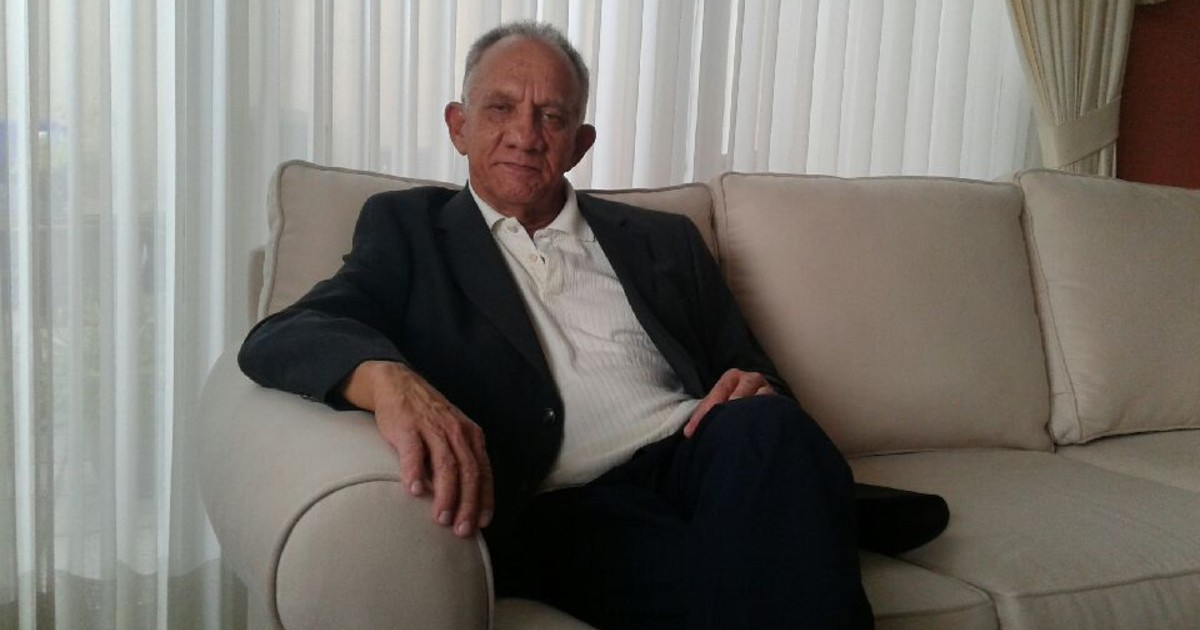
Edgerton Ivor Levy is the forgotten hero in the history of dismantling the largest network of Cuban espionage in the United States over the past six decades.
Levy and his wife Ivette Bermello, professors of History at the University of Havana and trained as agents Ariel and Laura by the Intelligence Directorate (DI) of Cuba, were key players in the dismantling and arrest of members of the Wasp Network in 1998. Upon their arrival in the United States, following a simulated illegal exit with the support of the Special Troops base in Jaimanitas, west of Havana, the couple contacted FBI authorities to confess their mission as agents sent by the Cuban government.
Thus, the entire deployment, movements, and contacts of the more than 20 agents and officers in the network were monitored by the FBI from the start of their operational actions on U.S. territory.
However, that crucial evidence has remained buried until now by the narrative surrounding the Red Avispa and by the aggressive international campaign launched by the Cuban regime in favor of the so-called "Five Heroes Prisoners of the Empire," the label under which Castro's propaganda demanded the release of spies sentenced to lengthy prison terms in 2001.
Twenty-one years later, the course of events could not be more bewildering for Levy. The five individuals sentenced in the case are back in Cuba, decorated and elevated as patriots. Three of them were released without serving their sentences by the administration of Barack Obama as part of the process of normalizing relations with Raúl Castro's regime on December 17, 2014. An action that the former agent does not hesitate to label as "an anti-American act."
But the most recent jolt of propagandistic distortion has been marked by the film Wasp Network, directed by the acclaimed French filmmaker Olivier Assayas and featuring stars like Penélope Cruz, Gael García, Edgar Ramírez, and Ana de Armas in leading roles. The film, based on the book The Last Soldiers of the Cold War (2012) by Brazilian journalist Fernando Morais, was recently showcased with significant promotional impact at the festivals in Venice, Toronto, and New York, and will soon branch out into international commercial circuits.
"A farce, a scandalous farce with a red carpet," says Levy in an exclusive interview with CiberCuba.
The release of Wasp Network and another film in production in Canada about the Wasp Network, with the approval of the Cuban government, has motivated him to complete his book Nobody Told Me, a testimonial account about the Wasp Network and Cuban espionage in the United States that will be published soon.
Failures exposed
What do you attribute to the fact that both the official discourse of the Cuban regime regarding the five spies and the books, defense lawyers, and supposed experts on the subject have overlooked or turned a blind eye to the crucial role you played in the case?
I believe it is related to the fact that the capture of the Red Avispa revealed too many failures in the Cuban regime's intelligence system, which was also a result of the dismantling of the MININT that occurred after the cases of Arnaldo Ochoa and José Abrantes in 1989. Senior leaders and personnel from the FAR stormed into the MININT, and this did not sit well with the former hierarchs of the DI. The same unsuccessful attempts of our illegal departure by sea demonstrated the lack of coordination that existed between the preparation team, the Special Troops, and the Border Guard Troops.
Could it be that Fidel Castro took pride in having provided confidential information to an FBI delegation that was invited to Havana in June 1998, when in reality the FBI already knew about those reports in advance?
That also weighs heavily on the official narrative that Cuba wants to establish for the future. It is part of the flaws of the MININT that have now come to light. Fidel Castro sent a letter with Gabriel García Márquez to Bill Clinton to alert him about the supposed terrorist activities of exiles that his network had detected. All of this was already in the hands of the FBI. The most regrettable thing is that the Cuban government imposed a different version to protect Fidel Castro's blunder, and even worse is that international media, journalists, and filmmakers accepted it without the slightest questioning.
Have you seen the Olivier Assayas movie about the Wasp Network?
No, but I have seen the circus that has been created during the presentations. I know the book it’s based on, and that is enough for me. A movie derived from that book can only be a collection of lies.
The Book of Omissions
Why do you criticize the book that inspired the film so harshly?
It is simply ridiculous. Morais's book was made with the approval of Cuban Security, sponsored and authorized by the Cuban government. I’m not saying this; the author mentions it at the end of the text, where he thanks several collaborators in Miami, some of whom are actually embedded in local media. Can one expect any truthfulness when starting from manipulated versions of events? What’s curious is that they have handed these film productions over to foreign filmmakers, so that the lies can gain some international attention through others' lips, preventing the habitual liar that is Cuba from being the direct source. It’s a mockery. What kind of research could Morais have conducted with the information that Cuba allowed him to use?
What is your main concern regarding Morais's research?
Morais merely collected relevant information to align with the official narrative of the Cuban government. He claims to have had access to all the case documentation, with the help of his aides here in Miami. It then becomes puzzling why the evidence from the prosecutor's files—including messages between the illegal officers and the leadership of the DI—was omitted. These messages reveal that the network's priorities were to obtain information from Southern Command, infiltrate military bases in Florida, identify vulnerable locations to introduce weapons into U.S. territory, and organize sabotage efforts to set fire to airplane hangars, among other activities detrimental to U.S. national security. The story that this network aimed to neutralize Cuban exiles is impossible to swallow when one reads those documents.
The network's priorities were to gather information from Southern Command, infiltrate military bases in Florida, identify vulnerable locations to introduce weaponry into U.S. territory, organize sabotage to set fire to aircraft hangars, and engage in other activities harmful to the national security of the United States. The narrative that the network came to neutralize Cuban exiles is impossible to accept when reading those documents.
It seems that those documents have been forgotten...
Yes. It is sad that even many honest people have bought into the narrative of the protective role of the network. I believe that reviewing these documents is a pending task for the Cuban people themselves, who are victims of distortion and censorship regarding this matter.
When the first edition of Morais's book was published in 2012, it had already been two years since his case was public in the Miami media. How is it possible that a supposedly thorough investigation could allow such a careless omission?
That’s what I wonder as well, and it’s a question that the international press should pose to Morais. We’re talking about a long-standing investigative journalist, and I don’t believe that his "advisors" in Miami were unaware of my existence. Page 90 of the Cuban edition is enough to make one drop the book. It states things like a "thick and impenetrable secret" lingers over how the network was uncovered, that the State Security Department swore they "have no information to help unravel the mystery," that there are no signs of "a traitor among them," and that "it can be confidently asserted that the organization operated without being detected by U.S. authorities"... I find it hard to believe that this was merely the author's naivety.
The Invisible Agent
But it's not just Assayas' film; another movie is in the works based on the book The True Story of the Five Cubans (2013), by Canadian Stephen Kimber, featuring the involvement of production companies Pictou Twist Pictures and Picture Plant from Nova Scotia, and Conquering Lion Pictures from Toronto, in collaboration with the Cuban Institute of Cinematographic Art and Industry (ICAIC). Did they ever reach out to him regarding those books or possibly for the film scripts?
No. Just as I do not exist for Cuba, I do not exist for the repeaters of the official version either. This is a common practice of the regime. I am not surprised at all. Kimber's book is cut from the same cloth. Kimber was a passionate admirer of the Five and was dazzled by the story he was told after a visit to Havana. He came to Miami, spent time in Washington, and received approval to interview the spies in prison. He became an activist advocating for their release. René González, one of the convicted spies, corresponded with him and claimed that the book was encouraging for their cause. There is no need to add another word to recognize where this is headed. I have read that they already have $7 million to start filming, so the second episode of this red carpet farce is on the way.
Do you believe that your book will manage to uncover the veil of distortion that obscures the truth about the Red Avispa?
I don't have much hope, because Cuba's propaganda machinery is powerful. But I felt the need to tell the true story of this process to feel good about myself and leave a testament for the future. That's what you think at 71 years old. I hope there is an entrepreneur who dares to make the film of vindication.
Let's review the milestones of this incomplete story. How do you recall the moment when the FBI decided to dismantle the network on September 12, 1998?
I still vividly remember those moments. That morning, we received a call from the FBI agents in charge of the case, asking Ivette and me to meet at 9 a.m. at Amelia Earhart Park in Hialeah to receive important information. The news left us stunned. Ten members of the network had been arrested in a special operation that night. I never thought they would dismantle the network. The reasoning is that it’s often better to keep an agent on the street under control rather than arresting them, as you lose a reliable source of information that’s within reach. The key in intelligence matters is that the enemy never knows what you know.
An anti-American action
How did you react to the Obama administration's decision to free the spies Gerardo Hernández, Ramón Labañino, and Antonio Guerrero in 2014? Did you ever imagine a conclusion like that?
I wasn't entirely surprised, because the stones in the river had been echoing for a while. The offensive in the pages of The New York Times and other publications to lay the groundwork in public opinion was evident. None of that was without purpose, and it was clear something was coming. But when I heard the news, I felt a deep frustration that turned into disappointment.
What are your criticisms of this swap negotiated by the Obama administration to secure the release of contractor Alan Gross?
Throughout the entire process while we were working together with the FBI, there were moments of intense personal tension and uncertainty. We didn't know what would happen to our lives, whether we would enter the witness protection program, or if we would testify at the trial of the five accused… I feared for our safety if they were released, but we always had the support of the FBI agents who assured us not to worry, that this was a country of laws and we should not be afraid. When I learned that the three were in Cuba, and that it had reached the extreme of organizing a covert operation for Gerardo Hernández's wife to become pregnant, a person linked to the murder of four pilots from Hermanos al Rescate, I couldn't help but feel a deep resentment towards President Obama, whom I never liked, and even less so after this. The frustration of December 17th was enormous, as I perceived it as an anti-American act.
In addition to the disappointment, do you have any fears since then?
At this point, I have stopped feeling fear, but I haven’t let go of the worry. Since that day, I have taken additional precautions. I am not unprepared. One only needs to watch the local news to understand how easily, here in the United States, a car can veer off and kill a pedestrian, or a stray bullet can end a life. The reach of Cuba is long, and an attack can be disguised in various ways. And I don’t live in a glass dome. The Cuban regime does not usually forget its enemies. The harm they could cause us in the future is not an option to be dismissed.
But you have decided to tell everything in your book. Although some time has passed, the topic has become relevant again. Do you think you might face repercussions?
Indeed, the writing of this book is a necessity to tell my truth in the first person, but I do not overlook the fact that it serves as a daring exorcism. What I am trying to say is that if something happens to me or my wife after its publication, we can trace back the reasons. One of the things I learned from the very officers and trainers of the Cuban Intelligence is that in this turn, coincidences do not exist. They insisted a lot on this during the training process we underwent there.
Spies under control
From the perspective of the counterintelligence work that resulted from your cooperation with the U.S. government, what do you consider the most significant aspect of the work you carried out?
Never in the history of the disagreement between Cuba and the United States had an illegal officer been captured on American soil, that is, intelligence officers with false identities, usurping the names of individuals born and deceased in this country. This time, three were captured. Moreover, with the information that my wife and I provided, not only was the Red Avispa kept under control and dismantled, but many agents and collaborators who had come into contact with them since 1994 were also identified and neutralized. Just look at the list of individuals investigated, detained, and charged with illegal connections to Cuba up until the early 2000s. Members of the Red Avispa's leadership frequently traveled to New York to meet with legal officials and carry documentation intended for the DI, which was sent through the Cuban Mission at the United Nations. It is obvious that the United States lacks the capacity to keep track of all Cuban officials working on American soil, but if an illegal officer meets with them, it is already reason enough to put them on the surveillance radar.
What could have been cases derived from their contribution?
For example, there is the case of Mariano Faget, a high-ranking official in Immigration in Miami. Faget met with a Cuban official who had previously met with a member of the Red Avispa. This led to follow-up on the legal officer who came to Miami. Also included in this network of associations are the cases of FIU professors Carlos Álvarez and Elsa Prieto, former Deputy Secretary of Defense and academic Alberto Coll, and possibly the couple Walter Kendall and Gwendolyn Myers, who were caught after spying for Cuba for 30 years. An unprecedented number of people were prosecuted or expelled for espionage activities during that period. I am not aware if the FBI's control over intelligence activities related to Cuba has diminished since the dismantling of the network, but there are obviously fewer legal actions and less public information on the subject.
You made contact with the FBI before connecting with Gerardo Hernández, the head of the network, upon your arrival in the U.S. How did that determination come about?
It was in early December 1993. I was working in parking control at the Four Ambassador in the Brickell area. The FBI frequently visited to monitor who was coming in and out of that place, where people involved in serious crimes related to weapons and drugs converged. I had established a working relationship with the FBI agents who came to request entry and exit records, and I took advantage of one of those visits to tell them that I had information from Cuba that might interest them. We had an initial meeting at a Denny's in Hialeah, and then the whole process of polygraphs, biographical information, interviews began, lasting for months. Since December of that year, I was supposed to make contact with the network as planned in Cuba, and I was going twice a month to the agreed location, but nothing happened. I was almost embarrassed with the FBI agents when, finally, the meeting with Gerardo occurred in May 1994.
For your quick integration into life in the United States, you had the advantage of being fully proficient in English. Where did you learn it?
My father was born in Jamaica and my mother was an English teacher. Since I was a child, I spoke English at home. I had two uncles who were Baptist ministers living in the United States. In 1958, I came with my parents on vacation to this country, and in 1960, I visited the uncle who lived in New Orleans, and then we drove to the state of Illinois to participate in a summer religious camp.
The Lives of Others
What activities did you all engage in under the guidance of the network manager?
We really didn't do much. The job was to infiltrate exile organizations, and I was assigned to Cuban-American congress members to gather information about their activities and personal lives that could be used against them. The network prioritized penetrating federal government institutions, military facilities, the mail, legislators' offices, police departments, local governments, and commissioners... Due to the few results, first Hugo Soto, who later escaped to Cuba, and Labañino pressured and threatened us with being returned to Cuba.
What role did Héctor Pesquera, then head of the FBI in Miami, play in the Wasp Network case?
If Pesquera had not been at the helm of the FBI in Miami, the story of the Wasp Network would be different. He himself has revealed that there was strong opposition at the levels of Washington to prosecuting the Cuban agents. Pesquera played a leading role in seeking justice. He was aware of us, cared about our safety, our conditions, the personal and family problems that our decision brought us. Pesquera became fully involved in this case and proved to be a humane, fair, and sensitive individual. There are things we will have to be grateful for to him and many people in the FBI, especially agents Carmen and Raúl, for the rest of our lives. We very much regret Pesquera's departure from the leadership of the FBI in Miami.
What was the turning point in your cooperation with the FBI?
The shooting down of the Hermanos al Rescate planes in 1996. After that moment, the FBI agents who were handling our case were changed, and they began to listen more attentively to what we had to say.
What happened to you after the capture or stampede of the members of the network? Did Cuban Intelligence try to contact you?
Yes, we had several contacts by phone that, of course, were known to the FBI. The DI urged us to leave the United States via Mexico, where people would be waiting for us to facilitate our return to Cuba. Our strategy was to stall the matter by arguing that we were under surveillance. Until that communication finally faded away.
The hardest hour
What was the most difficult moment during the entire judicial process of the Five?
When we were presented with the possibility of being witnesses at the trial, we did not want to expose ourselves, as we had decided not to accept the Witness Protection program. We had information about the lives of protected witnesses; we had read and watched films on the subject, and it didn't seem like the best option for us and our family. Today, we do not regret the decision we made. I thank the FBI for their consideration towards us, and especially for the respect Pesquera showed for our request.
Do you believe that the network made mistakes stemming from the leadership of the DI?
Without a doubt. In our particular case, the mistakes were significant right from the preparation stage, and I believe that the outcome of the network can be attributed to those errors. For example, I knew Hugo Soto since our pre-university days at La Víbora in Havana. His mother was my teacher in Basic Secondary School. Later, we had both been colleagues at the Cuban Institute of Friendship with the Peoples (ICAP). Ivette knew the mother of Gerardo Hernández, who in turn was acquainted with Ivette's brother. Such connections cannot happen in intelligence work, especially if you come to another country to operate. Our preparation chief placed too much trust in us. Those were monumental failings.
Do you think that the way the network operated here was also deficient?
Obviously. Many of them thought they were in Cuba. They didn't conduct proper checks, they didn't adequately inspect the places, they were very overconfident. Everything pointed to very poor work.
From the members of the network, how do you remember those who had contacts with you?
A longstanding relationship from my youth connected me with Hugo Soto, which facilitated a better working relationship, although Ivette had several confrontations with him. Hugo Soto shared many things with me that he perhaps shouldn't have, such as the weapons he transported from Mexico for the attack on Luis Posada Carriles in Guatemala in 1990. He even asked me to accompany him in tracking down Jorge Mas Canosa, who frequently visited a house on an islet in the Keys. Regarding Gerardo Hernández, whom we never imagined as the head of the network, I must say he was a cordial and understanding person toward us. It was quite unpleasant to later discover that he was involved in the preparations for the downing of the planes from Brothers to the Rescue. The most dangerous of all seemed to us Labañino, who was a despot, a violent person, arrogant, and was in charge of the penetration of the Southern Command, in addition to continuing to operate against the MacDill Air Force Base in Tampa, where military air traffic from and to Central America, South America, and the Caribbean is controlled.
Warning: Avoid Hialeah
Where did the contacts between them and you take place?
My first contact was with Gerardo at a K-Mart in North Miami. We would then meet separately in different places like Bayside, a pizzeria in Miami Beach, at the Miami Dade Library, and in Coconut Grove.
Is there any place that was never recommended?
Hialeah. The fear of Hialeah was that we would encounter someone who knew us from Cuba and could identify us. There was a sort of allergy towards Hialeah.
Of the more than 3,000 pages of messages from the network and other documents that remain classified, what sensitive information is still being protected?
Not much more than what is already known; perhaps they can get some people involved. There must be many pages that reference the work of Ivette and me.
Did you use pseudonyms for your work with the FBI that were different from those of Ariel and Laura that they had for Cuban intelligence?
Yes, but I prefer not to disclose them.
A great irony
Would you like to make a movie based on your testimony and your book?
It wasn't part of my plans, but it's a window I leave open.
What does this epilogue of Cuban spies turned academic directors and three of them appointed as deputies of the National Assembly provoke in you?
I really try to avoid such news. I prefer not to know anything. But it’s a great irony. Because everyone continues in the same roles for which they were prepared. Gerardo is the vice-rector of the Higher Institute of International Relations (ISRI), which is a place where they study and recruit future intelligence officers. Fernando González presides over ICAP, which is a front organization for Cuban intelligence. Labañino is the vice president of the National Association of Economists and Accountants of Cuba, who speaks at events reminiscing about the times of the Soviet Union and insisting on the role of the Communist Party and against private property. Cuba continues to maneuver them as its pawns.
Do you feel that everything you did was in vain?
It is frustrating after the sacrifice it represented for us. But I feel that I served the national security of the United States and the future of Cuba.
ANNEX: List of identified members of the Avispa Network
THE FIVE CONVICTED SPIES
- Gerardo Hernández Nordelo. Illegal officer and head of La Red Avispa. Also known as Manuel Viramontes, Giro, Giraldo, Daniel Cabrera. Graduated from the Institute of International Relations (ISRI) in Havana. Resided in North Miami Beach. Sentenced to two life sentences plus 15 months. Released by presidential order on December 17, 2014. He is currently the vice-rector of ISRI and a deputy in the National Assembly.
- Fernando González Llort. Illegal officer and substitute for the head of the network. Alias Rubén Campa, Vicky, Camilo, Oscar. Graduate of ISRI. Resided in Hollywood, Florida. Sentenced to 19 years, sentence reduced to 17 years and nine months. Released on February 27, 2014. Currently he is the president of ICAP and a deputy in the National Assembly.
- Ramón Labañino Salazar. Illegal official. Graduated in Economics from the University of Havana. Alias Luis Medina, Allan, Johnny, Oso. Graduated in Economics. Resided in Hollywood, Florida. Sentenced to life in prison plus 18 years, reduced to 30 years. Released by presidential order on December 17, 2014. Currently, he is the vice president of the National Association of Economists and Accountants of Cuba and a deputy in the National Assembly.
- René González Schwerert. Agent. Alias Castor, Iselin. Pilot and flight instructor. Resided in Kendall, Miami-Dade. Sentenced to 15 years. Released on October 7, 2011, with three years of probation. Renounced his U.S. citizenship and chose to live in Cuba in 2013. He is currently the vice president of the “José Martí” Cultural Society.
- Antonio Guerrero Rodríguez. Agent. Alias Lorient, Rolando González Díaz. Graduated in Airport Construction Engineering in the Soviet Union and an expert in explosives. Resided in Big Pine Key, Florida. Sentenced to life imprisonment plus 10 years, with the sentence reduced to 21 years and 10 months. Released by presidential order on December 17, 2014. He is currently the vice president of the Superior Organization for Business Management in Design and Construction Engineering.
MIEMBROS DE LA RED QUE COOPERARON CON EEUU
- Edgerton Ivor Levy. Agent. Alias Ariel. Professor of Cuban History at the Faculty of Philosophy and History at the University of Havana. Husband of agent Ivette Bermello. Resided in Miami. Assigned to infiltrate exile organizations and to monitor Congress members Ileana Ros-Lehtinen and Lincoln Diaz-Balart. Cooperated with the FBI since his arrival in the U.S. in 1993. Did not enter the witness protection program and remained under his own identity (Hiden in the Open).
- Eva Ivette Bermello. Agent. Alias Laura. Professor of Cuban History at the Faculty of Philosophy and History at the University of Havana. Wife of agent Edgerton Levy. The couple was identified as “Arlau”. Resided in Miami. Assigned to infiltrate exile organizations. Cooperated with the FBI since her arrival in the U.S. in 1993. Did not enter the witness protection program and maintained her own identity (Hiden in the Open).
- Alejandro Alonso. Agent. Alias Franklyn. Resident of Miami. Assigned to monitor military units and the Democracy Movement. Sentenced to 7 years. Cooperated with the FBI upon arrest and entered the witness protection program.
- Linda Hernández. Agent. Alias Judith. Wife of Agent Nilo Hernández Mederos. Assigned to contact former employees of the U.S. Navy for recruitment purposes and to infiltrate the Alpha 66 organization. She spied on Homestead Air Base and also sent thousands of anonymous letters against political figures in the U.S. Resident of Miami. Sentenced to 7 years. She cooperated with the FBI upon her arrest and entered the witness protection program.
- Nilo Hernández Mederos. Agent. Alias Manolo, Nicolo. Husband of agent Linda Hernández. The couple was identified as "Los Juniors." Assigned to infiltrate CAMACOL and Alpha 66. Resides in Miami, where he established a company for the export and sale of computers and medical equipment. Sentenced to 7 years. Cooperated with the FBI upon arrest and entered the witness protection program.
- Joseph Santos Cecilia. Agent. Alias Mario. Husband of agent Amarilys Silverio García. Professor of Engineering and Computer Science at the Universidad Central de Las Villas in Santa Clara. Resident of Miami. Assigned to infiltrate Southern Command, for which he worked as an employee of a food company near the military area in Doral. Sentenced to 4 years. Cooperated with the FBI upon arrest and entered the witness protection program.
- Amarilys Silverio García. Agent. Alias Julia, Margot. Wife of agent Joseph Santos Cecilia. The couple was identified as “MaJu”. Mathematics and Computer Science professor at the Central University of Las Villas. Resident in Miami. Assigned to infiltrate Southern Command. Sentenced to three and a half years. Cooperated with the FBI upon arrest and joined the witness protection program.
- George Gari. Agent. Alias Luis. Husband of agent Marisol Gari. Trained as a specialist in explosives, weapons, microdot photography, surveillance techniques, and communications. Resided in Miami and Orlando. Assigned to spy on the Cuban American National Foundation (FNCA) and to infiltrate the MacDill Air Force Base in Tampa. Served as a messenger between Miami and New York. Sentenced to 7 years. Cooperated with the FBI upon arrest and entered the witness protection program.
- Marisol Gari. Agent. Alias Margot. Wife of agent George Gari. Federal employee of the United States Postal Service. Resided in Miami and Orlando. Assigned to intercept correspondence from the FNCA. Sentenced to 3 and a half years. Cooperated with the FBI upon her arrest and entered the witness protection program.
SPIES WHO FLED OR RETURNED TO CUBA
- Hugo Soto. Illegal officer. Alias Horacio, Roco, Ricardo Villarreal. History graduate. Officer of the DI with numerous assignments abroad. Responsible for supervising the airbase at Key West and monitoring Jorge Mas Canosa. Initiated the infiltration plans of Southern Command which were later continued by Officer Labañino. Resided in Normandy Isle, Miami Beach. Returned to Cuba in 1998.
- Alberto Manuel Ruiz. Illegal officer. Alias Albert, Manny, A-4. Officer of the DI and head of the Avispa Network before Gerardo Hernández arrived in the US. Resided in Miami. Responsible for overseeing the infiltration of the Key West airbase. Participated alongside agent Juan Pablo Roque in drafting the plan that led to the downing of the Brothers to the Rescue planes. Returned to Cuba.
- Remigio Luna. Illegal officer. Alias Marcelino, Remi, El Abuelo. Senior officer in the DI. Resided in Miami. Assigned alongside officer Horacio to designate appropriate dates and the flight plan for the Hermanos al Rescate planes, ensuring that the squadron did not include members of the espionage network. Returned to Cuba.
- Juan Pablo Roque. Agent. Alias German. Lieutenant Colonel of the Armed Forces of Cuba and combat pilot of Migs, trained in the Soviet Union. Resided in Miami. Husband of the Cuban-American exile Ana Margarita Martínez, whom he used as part of his camouflage plan. Served the FBI as a double agent, but did not report on the Red Avispa. Assigned to penetrate and monitor the activities of Brothers to the Rescue. Escaped to Cuba on February 23, 1996, one day before the downing of the Brothers to the Rescue planes. Upon his return, he was portrayed by official media as a disillusioned member of the Miami exile community. He is currently unemployed.
- Daniel Rafuls Pineda. Agent. Alias José. Graduated from the “Camilo Cienfuegos” Military School and professor at the “General Antonio Maceo” Interarm School. Studied Scientific Communism in the Soviet Union. Husband of agent Vivian Sabater. Resided in Miami. Assigned to infiltrate academic institutions and intellectual circles. Worked as an employee at the El Botín restaurant and participated in Radio Martí programs. Escaped to Cuba in 1998. Upon his return, he was presented as a “hero of the revolution.” Served as a member of the Provincial Assembly of the People's Power in Havana and as a deputy to the National Assembly. He earned a doctorate in Political Science and is currently a professor of Sociopolitical Theory at the University of Havana.
- Vivian Sabater. Agent. Alias Tania. Professor of Dialectical Materialism at the Faculty of Philosophy and History of the University of Havana. Wife of agent Daniel Rafuls. The couple was known as "Los Pepe." Lived in Miami, where she worked as a substitute teacher at Kinloch Park Elementary. Assigned to infiltrate academic media and intellectual circles. Escaped to Cuba in 1998. Was presented as a "heroine of the revolution." She returned to university teaching at the University of Havana.
- Sanyo or SY-95. Agent. Their real name is not identified in the declassified documents. Their incorporation into the network is mentioned in the reports of the legal officials. They allegedly escaped to Cuba.
MIEMBROS DE LA RED QUE FUERON DEPORTADOS A CUBA
- Olga Salanueva Arango. Agent. Alias Ida. Graduate in Industrial Engineering. Wife of agent René González. Resided in Kendall, Miami-Dade. Trained as a radio operator for espionage work. Deported to Cuba in 2000.
- Juan Emilio Aboy. Agent. Alias Gabriel. Professional diver. Resided in Miami. Worked as a professional diver at a naval base near Arlington, Virginia, and at the Turkey Point nuclear plant in Homestead. Deported to Cuba in 2005.
MEMBER OF THE NETWORK THAT REMAINED IN CUBA
- Adriana Pérez O’Connor. Agente. Alias Bonsai. Graduada de Ingeniería Química. Wife of the illegal officer Gerardo Hernández Nordelo. Entrenada en comunicaciones, pero no llegó a viajar a EEUU. Fue diputada a la Asamblea Nacional del Poder Popular. Actualmente trabaja en el Centro de Investigaciones de la Industria Alimentaria. Alquila su casa original a través de la firma Airbnb.
OFICIALES LEGALES ENCARGADOS DE ATENDER A LA RED
- Eduardo Martínez Borbonet. First Secretary of the Cuban Mission to the United Nations (CMUN) in New York. Expelled for espionage on December 28, 1998. From 2011 to 2016, he served as Cuba's ambassador to Nicaragua.
- Roberto Azanza Páez. Third Secretary of the Cuban Mission to the United Nations. Expelled for espionage on December 28, 1998.
- Gonzalo Fernández Garay. Counselor of the Cuban Mission to the United Nations. Expelled for espionage on December 28, 1998.
Fuentes: Declassified documents by the FBI, Fiscalía Federal del distrito Sur de Florida y artículos periodísticos relacionados con el proceso judicial de la Red Avispa.
Filed under: