
Related videos:
The U.S. Secretary of State, Marco Rubio, launched a harsh critique against the regimes of Cuba, Venezuela, and Nicaragua, accusing them of systematic human rights violations, political repression, and being responsible for instability in the region.
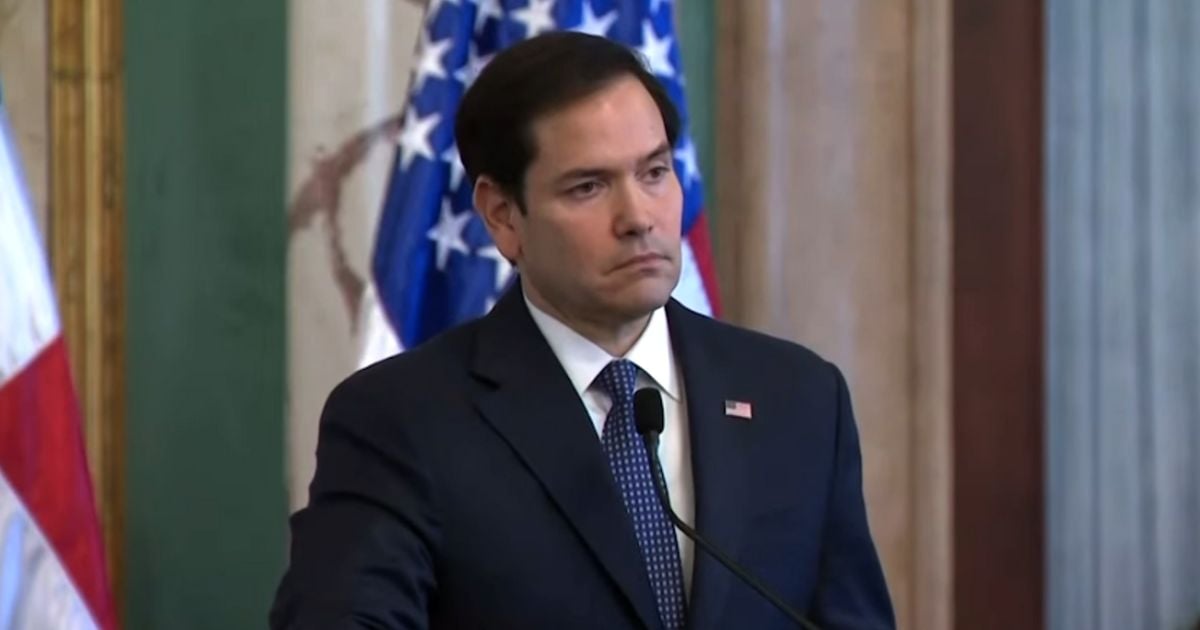
His statements were made during a press conference as part of his tour across several countries, including the Dominican Republic, where he discussed the political crisis in these countries and its impact on Latin America.
In the broadcast, shared by El País on its YouTube channel, Rubio emphasized that, in the last decade, Venezuela has forced nearly 8 million people to leave the country, while the regime continues to brutally repress the opposition: “Imprisons, tortures, and murders the innocent.”
Regarding Cuba, the Secretary of State reported that more than 10% of the population has fled the country, while the regime keeps over 500 people imprisoned, including 16-year-olds who were arrested merely for protesting in the streets.
Regarding Nicaragua, Rubio criticized that Daniel Ortega's regime has turned the country into a family dynasty and has unleashed a brutal crackdown against any opposition.
"All the presidential candidates have been prosecuted by the justice system, or rather, by the Nicaraguan injustice," he noted, recalling that the regime has deported nuns and declared war on the Catholic Church and all religious figures.
Rubio also warned that the crisis in these three countries not only affects their citizens but also destabilizes the entire region: “All countries have had to pay, to some extent, for the instability that exists in the region,” he stated.
He also mentioned that Venezuela maintains close cooperation with Iran, while Cuba has provided support for Chinese espionage and has facilitated Russia's presence in the region.
“I hope there will be a change in those countries, but I don’t expect it by December. That’s how I speak about those regimes because it is the reality of how they have behaved,” Rubio stated.
He also insisted that governments can change, but for that to happen, it is necessary to speak clearly: “Politics works well when we speak clearly, we don’t get confused. And I am not confused.”
Rubio's statements come at a critical moment, as in December 2025, the Dominican Republic will host the Summit of the Americas, an event that will bring together leaders from across the continent to discuss the political, economic, and security challenges in the region.
The Secretary of State emphasized that although the summit serves as a platform to advocate for democratic changes in these countries, he warned that he does not expect to see immediate transformations: “I wish it were not the case, but unfortunately, it has been this way for a long time.”
Rubio blamed Cuba, Nicaragua, and Venezuela for the migration crisis in the hemisphere this Tuesday, referring to their governments as "enemies of humanity".
During a press conference in San José, Costa Rica, Rubio pointed out that these regimes have caused a massive exodus of citizens due to the ineffectiveness of their political and economic systems.
Frequently Asked Questions about Marco Rubio's Stance on Cuba, Venezuela, and Nicaragua
Why does Marco Rubio criticize the regimes of Cuba, Venezuela, and Nicaragua?
Marco Rubio criticizes the regimes of Cuba, Venezuela, and Nicaragua for their systematic violations of human rights and political repression. According to Rubio, these governments are responsible for the mass exodus of citizens and the instability in the region. Rubio accuses these regimes of imprisoning, torturing, and forcing their citizens into exile.
How do the regimes of Cuba, Venezuela, and Nicaragua affect the region, according to Marco Rubio?
Marco Rubio claims that the regimes of Cuba, Venezuela, and Nicaragua destabilize the region due to the migration crisis they generate and their cooperation with adversarial countries to the U.S., such as Iran, China, and Russia. Rubio asserts that the instability in these countries negatively impacts all of Latin America.
What does Marco Rubio propose to address the crisis in these countries?
Marco Rubio proposes a clear and firm policy against the regimes of Cuba, Venezuela, and Nicaragua, insisting that democratic changes are necessary. Rubio emphasizes the importance of speaking clearly and pushing for democratic reforms.
What is Marco Rubio's relationship with the Cuban-American community and his stance on Cuba?
Marco Rubio, of Cuban-American descent, has been a consistent critic of the Cuban regime and has advocated for a change of government in Cuba. Rubio is seen as a key ally by the Cuban-American community in their fight against the Cuban regime and other authoritarian regimes in Latin America.
Filed under: