
Related videos:
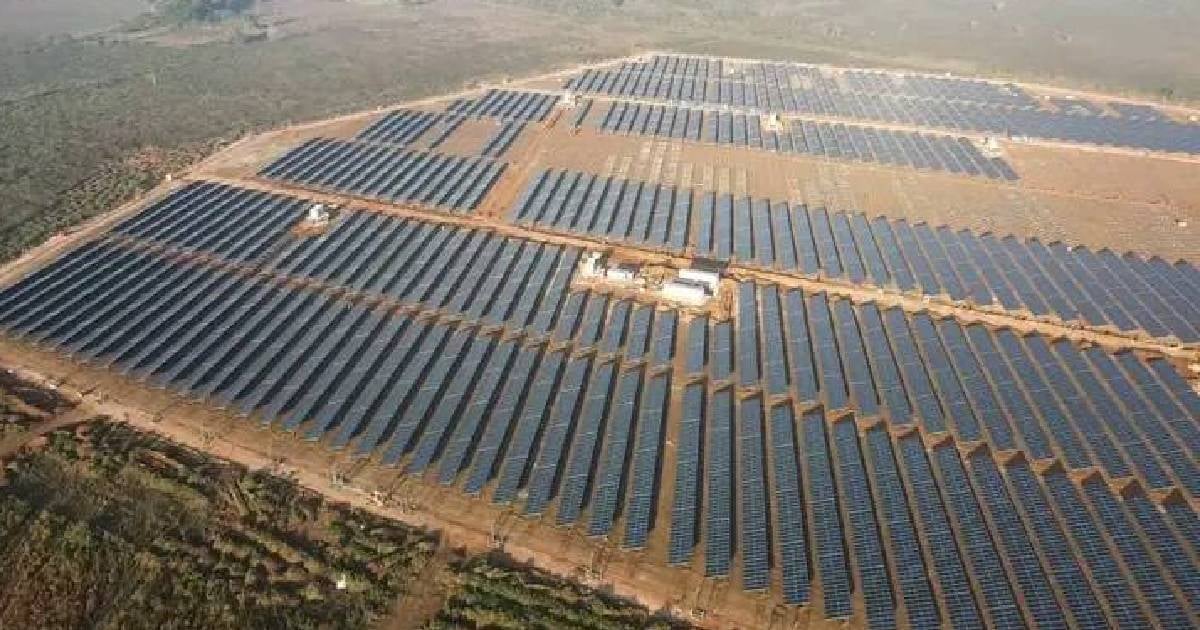
The Cuban regime is preparing to inaugurate the Ciego Norte Solar Photovoltaic Park in the province of Ciego de Ávila, with a generation capacity of 21.87 megawatts (MW), which is in its final assembly phase.
According to the publication on Facebook by the Periódico Invasor, it is expected to synchronize with the National Electric System (SEN) by the end of this month, amid a energy crisis that is severely impacting the population.
An ambitious plan in the midst of the crisis
On March 1st, the government inaugurated the photovoltaic solar park "Alcade Mayor" in Cienfuegos, with a capacity of 21 MW, as part of its strategy to promote renewable energy and reduce dependence on fossil fuels.
Added to this was the "School of Nursing" in Havana, inaugurated weeks earlier with 42,588 solar panels and a capacity of 21.8 MW. These projects are part of an investment plan that aims to install 46 solar parks with a total generation of 1,200 MW before the end of 2025.
However, skepticism among the population is high, given the history of unfulfilled promises and the precariousness of the national electrical system.
While new investments in renewable energy are being announced, the SEN continues to collapse with generation deficits exceeding 1,500 MW, forcing daily rationing in multiple provinces and continuous blackouts.
The Antonio Guiteras thermoelectric plant, the largest in the country, is in critical condition, with corroded structures and constant failures, while other plants such as those in Nuevitas, Mariel, and Felton remain out of service or under indefinite maintenance.
China, a key player in Cuba's energy strategy
In its effort to strengthen renewable energy, the Cuban government has received the support of China.
During the International Fair of Havana last November, Hangzhou Duojia Technology Co. Ltd reaffirmed its commitment to the island's energy transition, stating that solar panels represent the "ultimate solution" to the Cuban electrical crisis.
According to the company president, Qiaoming Huang, containers of solar panels and lithium batteries have been sent to Cuba for small commercial projects, and in April 2024, an agreement was signed between the Cuban government and China to expand the use of solar energy in the electrical grid. However, no details have been provided on how this major project will be financed.
Additionally, the Ministry of Energy and Mines announced in November an even more ambitious plan: the installation of 2,000 MW of solar energy by 2028, with a first phase of 1,000 MW scheduled to begin operations in the summer of 2025. A similar idea was reiterated last February.
A real solution or an insufficient palliative?
Despite the government's efforts to present these solar parks as a step towards energy independence, the reality on the island continues to be characterized by constant blackouts and an outdated electrical infrastructure.
In recent months, power outages have reached alarming levels, with prolonged cuts and energy availability well below demand.
The lack of a clear strategy to maintain the stability of the SEN makes the construction of solar parks appear more as an attempt at propaganda than an effective solution for a crisis that offers no respite to Cubans.
Frequently Asked Questions about the Energy Crisis and Solar Projects in Cuba
What is the Ciego Norte Photovoltaic Solar Park and what is its capacity?
The Ciego Norte Photovoltaic Solar Park is a renewable energy project in the province of Ciego de Ávila, Cuba, with a generation capacity of 21.87 megawatts (MW). It is in its final assembly phase, and it is expected to synchronize with the National Electric System by the end of this month.
How is the current energy crisis affecting the Cuban population?
The energy crisis in Cuba is causing constant and prolonged blackouts, severely affecting the quality of life of the population. The generation deficit exceeds 1,500 MW, which necessitates daily rationing in multiple provinces. The outdated electrical infrastructure and the critical condition of thermal power plants worsen the situation.
What is China's role in renewable energy projects in Cuba?
China has been a key player in the development of renewable energy projects in Cuba, providing technology and resources for the installation of solar parks. The Chinese company Hangzhou Duojia Technology Co. Ltd has supplied solar panels and lithium batteries for small commercial projects, and there is an agreement to expand the use of solar energy on the island.
What are the goals of the Cuban government regarding solar energy for 2025?
The Cuban government plans to install 46 solar parks with a total generation capacity of 1,200 MW before the end of 2025, as part of its strategy to promote renewable energy. However, the feasibility of these goals is questioned due to the critical state of the National Electric System and the history of unfulfilled promises.
Filed under: