
Related videos:
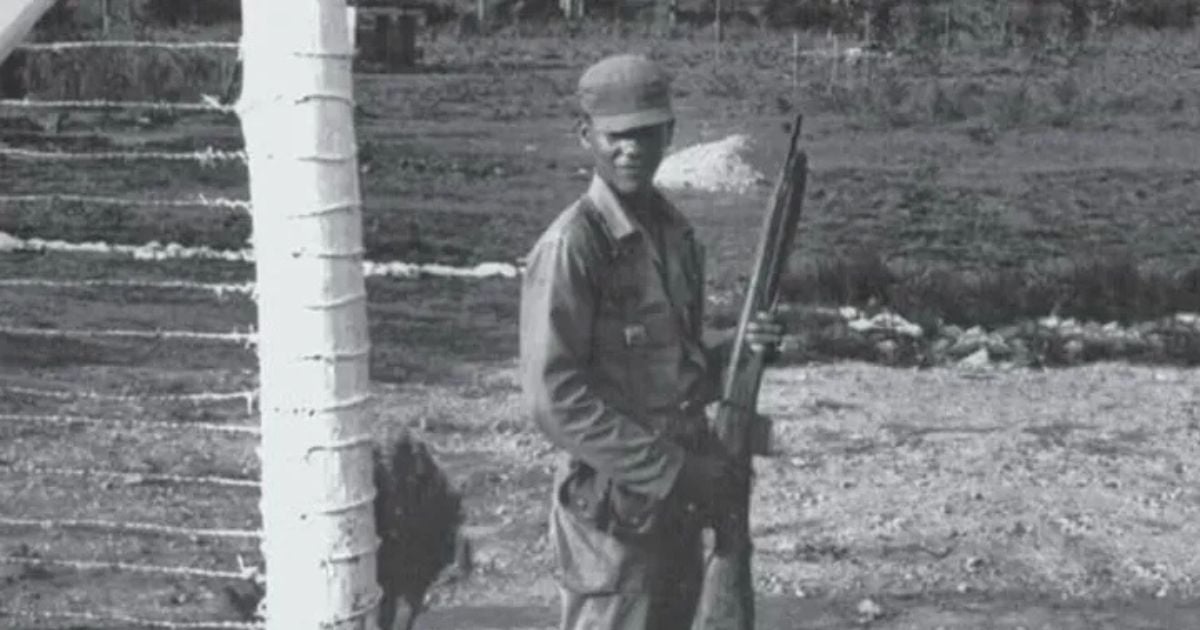
The Cuban filmmaker Lilo Vilaplana launched a fundraising campaign for his upcoming film about the Military Units to Aid Production (UMAP), the notoriously infamous forced labor camps that the regime of Fidel Castro used in the 1960s to imprison political opponents, religious individuals, homosexuals, and anyone deemed "unsuitable" for communist society.
Vilaplana, known for films like Plantadas, made the announcement on his Facebook profile, urging Cubans to support the project and spread the initiative.
"All of these men were taken to the concentration camps that Castro's regime referred to as UMAP for various reasons, but there was only one motive: they did not want communism to take hold on the island," wrote the filmmaker, clearly outlining the focus of his film.
In his post, the filmmaker accompanied the campaign with photographs of some of the men who were forcibly confined in the labor camps promoted by Fidel Castro.
Vilaplana shared a GoFundMe link, where he is seeking to raise $26,000 to finance the production. So far, the campaign has raised $18,351 thanks to 447 donors, getting closer to its goal.
The campaign description explains that the film will be directed and produced by Lilo Vilaplana and Reinol Rodríguez, the creators of Plantados and Plantadas, and that the funds raised will be exclusively allocated to the film's production.
"The UMAP are one of the most condemnable and least known chapters in insular history. They used the innocuous name Military Units to Aid Production to conceal the Caribbean version of a system of detention and confinement. In these camps, priests, seminarians, religious leaders, young people, students, workers, artists, farmers, and professionals were locked away," the project description details.
Furthermore, he emphasizes: “With some of these groups, there was an attempt to discredit and confuse the majority of those confined. In addition to punishment, there was humiliation. The derogatory jargon used insulted them with terms like: lumpen, parasites, lazy people, worms, or simply faggots.”
Finally, it states: “The UMAP were forced labor camps, where abuses were committed that often resulted in serious consequences for the inmates."
Vilaplana has been a strong critic of the Cuban regime and has used his filmmaking as a tool to denounce the repression and abuses of Castroism.
His new project on the UMAP promises to shed light on one of the darkest episodes in Cuba's recent history, a topic that the government has sought to downplay or justify over the years.
"Thank you for your contribution to this noble project that will add another chapter to the history of all of us," concludes the campaign description.
The fundraising efforts are ongoing, and Vilaplana has invited those who wish to contribute to do so through the link shared on his social media.
In recent years, the history of the Military Units for Production Support (UMAP) in Cuba has sparked intense debate. Recently, a group of Cuban activists has created a database with documents regarding the UMAP, aimed at preserving the historical memory of the victims and providing verified information about this chapter of Cuban history. This effort seeks to counter the official narrative and offer a broader perspective on the events that occurred between 1965 and 1968.
In this context, figures linked to the regime have attempted to downplay Fidel Castro's responsibility in the creation and management of the UMAP. Miguel Barnet, a writer and former member of the Cuban Parliament, has stated that the repression in these camps was not a direct policy of Castro, but rather a result of "interpretation errors" by the leaders of that time. These statements have sparked reactions in civil society and among former inmates of the UMAP.
Critical voices have pointed out that the UMAP were a mechanism of repression against dissidents, religious individuals, homosexuals, and other groups deemed "undesirable" by the government. Among those who have condemned this reality is the Cuban singer-songwriter Pablo Milanés, who recalled his experience in these camps during an interview and the systematic discrimination that was enforced there.
Official statements have been contradictory. Mariela Castro, director of CENESEX, has claimed that the issue of the UMAP is “overstated” and that we cannot judge the past with a present mindset. However, testimonies from former detainees, such as that of a Cuban who directly responded to Mariela Castro, refute these statements and demand an official acknowledgment of the repression suffered. His testimony is a call for historical memory and justice.
The debate over the UMAP remains relevant, with opposing viewpoints between those seeking to clarify the truth and those trying to justify or downplay what happened. Meanwhile, the database created by activists represents an important step in documenting and disseminating the history of these forced labor camps in Cuba.
Frequently Asked Questions about Lilo Vilaplana's Film on the UMAP
What are the UMAP and why are they a relevant topic in Lilo Vilaplana's new film?
The UMAP (Military Units for Production Assistance) were forced labor camps in Cuba used in the 1960s by Fidel Castro's regime to detain political opponents, religious individuals, homosexuals, and others deemed "unfit" for the communist society. Lilo Vilaplana's film aims to shed light on this dark chapter of Cuban history, exposing the abuses and humiliations suffered by those interned.
How is the film about the UMAP being financed by Lilo Vilaplana?
Lilo Vilaplana has launched a fundraising campaign on GoFundMe to finance his film about the UMAP. The goal is to raise $26,000 and so far, they have collected $18,351 thanks to 447 donors. The money will be used exclusively for the production of the film, which aims to highlight one of the most condemnable chapters in Cuban history.
What other notable works has Lilo Vilaplana done?
Lilo Vilaplana is known for his work in films such as "Plantados" and "Plantadas," which address themes of repression and abuse in Cuba. Both films pay tribute to Cuban political prisoners and have been screened on various platforms, including VIX, Roku, and Filmin, expanding their international reach.
Why is Lilo Vilaplana critical of the Cuban regime?
Lilo Vilaplana has used his cinema as a tool to denounce the repression and abuses of Castroism. His critical stance is reflected in his film projects that tackle issues of human rights and freedom of expression, aiming to shed light on the Cuban reality and challenge the official narrative of the regime.
Filed under: