
Related videos:
On a March 8 marked by the energy crisis, Cuba's National Electric System (SEN) once again reveals its fragility with an estimated deficit of 1,469 MW during peak hours, which will lead to prolonged blackouts across much of the country.
While the regime tries to polish the commemoration of International Women's Day with empty speeches, the everyday reality of Cuban women is marked by energy shortages, infrastructure collapse, and the disproportionate burden of the crisis on their shoulders.
According to the report from Unión Eléctrica (UNE), the country began the day with an availability of only 1,800 MW against a demand of 2,085 MW, which resulted in an impact of 338 MW.
By noon this Saturday, the figure was expected to rise to 850 MW, while during peak hours a deficit of nearly 1,500 MW is estimated, higher than the previous day, with the possibility of reaching an even larger figure due to the instability of the system.
The technical report details that the main thermoelectric plants in the country operate with serious deficiencies. Among the units out of service due to failures are Unit 5 of the CTE Nuevitas and Units 1 and 2 of the CTE Felton, which again suffered an unexpected failure in its boiler, despite multiple attempts to address its weaknesses in that area.
This is in addition to the scheduled maintenance of several plants such as CTE Mariel, CTE Santa Cruz, and CTE Cienfuegos, along with severe thermal limitations and a lack of fuel that keeps 47 distributed generation plants and three engines from the Melones trailer inactive, resulting in a total impact of 312 MW.
Cuban women, the most affected by the energy crisis
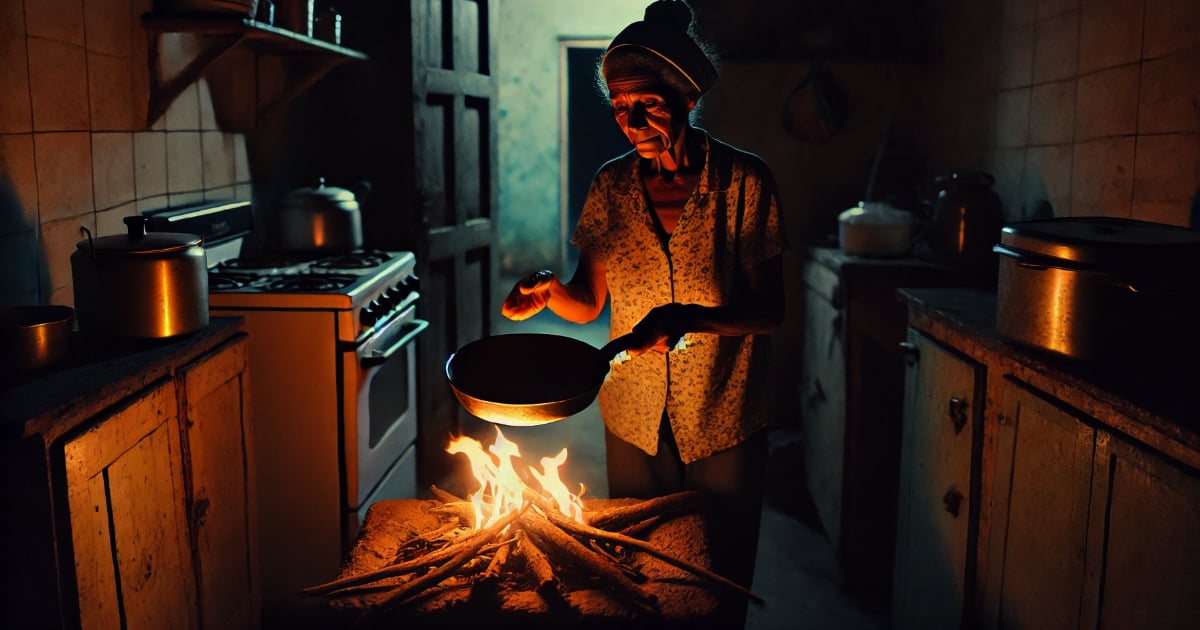
The electrical crisis in Cuba not only means darkness and unbearable heat. For many women, it represents an additional burden in their daily routine: cooking without electricity or gas, taking care of the elderly and children under adverse conditions, and seeking alternatives to support their families in a country where scarcity and inflation hit relentlessly.
Despite official rhetoric on gender equality, Cuban women are the ones who suffer the most from the burden of a crisis caused by decades of mismanagement and state corruption.
Without stable access to electricity, they face greater obstacles in their work, education, and personal lives. While other countries are making progress in rights and dignified conditions for women, in Cuba they are condemned to survive in a failed system.
A future without real solutions
The Cuban regime continues to fail to provide structural responses to the energy crisis. Instead, it insists on technical excuses and blames external factors, without taking responsibility for the progressive deterioration of the National Electric System.
The lack of investment in infrastructure, the obsolescence of thermal power plants, and the dependence on fuel imports have plunged Cuba into a spiral of blackouts with no solution in sight.
This March 8th, Cuban women do not celebrate progress or achievements. If anything, they celebrate their resilience in the face of a system that has condemned them to live in shadow, not just in terms of electricity, but also economically and socially.
Filed under: