
Related videos:
In a new maneuver by the Cuban regime to justify repression, the first secretary of the Provincial Committee of the Party in Granma, Yudelkis Ortiz Barceló, exhibited this Saturday, March 8, Mayelín Carrasco Álvarez, the mother detained for protesting in the public square in the Granma locality of Río Cauto.
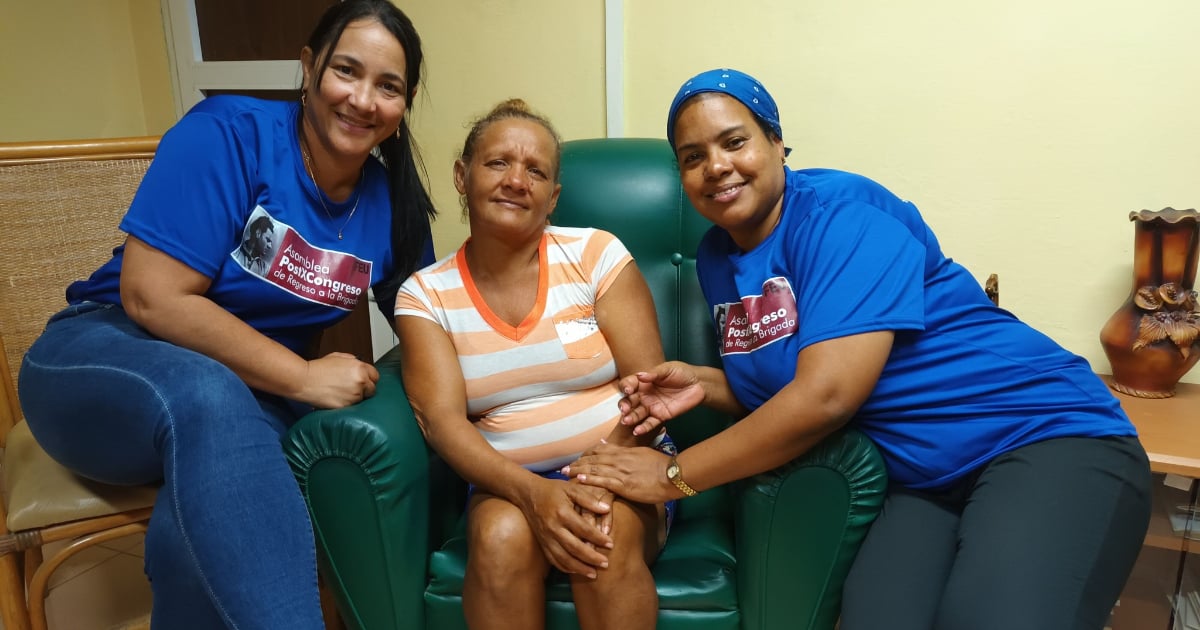
In a message on her social media, the leader of the Communist Party of Cuba stated that Carrasco Álvarez is "very remorseful for her actions" and posed alongside the detained woman in what appeared to be a relaxed manner, sitting in armchairs next to a third woman who was "sweetly" resting her hands on her. The post did not specify the location where the meeting took place.
Ortiz Barceló's statement, published on International Women's Day, sparked outrage among activists and Cuban citizens, who interpreted it as a government strategy to delegitimize Mayelín's protest and discredit the demonstrations of the population in Río Cauto, which have demanded her release.
"Cuba is a state of rights, and more obedience and respect for legal norms is needed," Ortiz Barceló stated in his publication, in which he also accused those who have reported the case of being "instigators" (sic) who do not care about the detained mother.
According to the leader of the totalitarian regime, "demanding a right or several rights does not mean that it has to be done in a way that generates disrespect or disorder in relation to the established norms of social coexistence set forth in the Constitution of the Republic."
“There are other ways and methods for that”, stated Ortiz Barceló before focusing her publication on Carrasco Álvarez. “She is Mayelin Carrasco, the mother from Río Cauto who has been a target for the haters,” noted the Party official, displaying the infamous photograph alongside the demonstrator. According to Ortiz, the detainee “is in good health and very remorseful for her actions”.
Know that the consequences of your actions most affect your loved ones, especially your children, because those who are inciting [sic] have not been seen anywhere concerned or involved about their situation. We are just as much mothers as she is, and from that feeling of love, we exchange!
The official's message also hinted that Mayelín Carrasco remains in the custody of the MININT. While she assured that "she is in good health," her family and neighbors have expressed concern upon learning that the woman fainted during an interrogation in Bayamo.
Various human rights groups have reported that these types of "exhibitions" of detainees aim to force them to publicly retract their actions, a common practice in Cuban state media, as evidenced by the case of the 21-year-old Sulmira Martínez Pérez, the subject of a disgraceful self-incrimination video broadcasted on television by the regime's spokesperson, Humberto López.
Indignation on social media was swift, with many users condemning Ortiz's publication for its cynicism, especially as it coincided with a date that internationally commemorates women's struggle for their rights. "In Cuba, being a woman is a crime if you choose to raise your voice," wrote an activist in response.
While the government tries to portray Mayelín as a "remorseful" mother, in Río Cauto the expressions of solidarity and demands for justice for the woman continue, who has become a symbol of resistance against the social and economic crisis the country is experiencing.
The arrest and transfer of Mayelín Carrasco
On March 5, Mayelín Carrasco Álvarez, mother of three children, was violently detained in Río Cauto, Granma, after peacefully protesting in the Ángel Frías square against the shortages and crisis affecting her community.
His arrest triggered a series of protests by neighbors demanding his release, prompting the regime to launch a strong repression operation, involving high-ranking officials from the Ministry of the Interior (MININT), the National Revolutionary Police (PNR), and members of the Black Berets.
Days later, Carrasco Álvarez was transferred to a MININT facility in Bayamo, where, according to reports from relatives, she fainted during an interrogation, raising concerns about her health and the treatment she received while in custody.
Strategy of repression and display of detainees
Various human rights groups have denounced that the Cuban regime frequently resorts to the practice of publicly presenting detained individuals as "repentant" as a means of social control and intimidation.
Previous cases have shown that these "confessions" and "regrets" often occur under pressure, following threats or promises of reduced sentences.
The case of Mayelín Carrasco Álvarez reflects a recurring pattern of the Cuban regime: to violently repress those who protest, isolate them, and pressure them until they make a public statement of remorse that serves as a warning to the rest of society.
The strategy of depicting dissidents as "broken" is not new, but it increasingly encounters more resistance from a populace that, in light of the deep crisis affecting the island, seems to be losing its fear.
Filed under: