
Related videos:
The Cuban regime highlighted the support of Caribbean leaders for its medical cooperation program amid international scrutiny and sanctions imposed by the United States.
The Cuban Foreign Ministry emphasized that several prime ministers from the region expressed their willingness to lose access to U.S. territory rather than forgo Cuban medical assistance, which they consider essential for their healthcare systems.
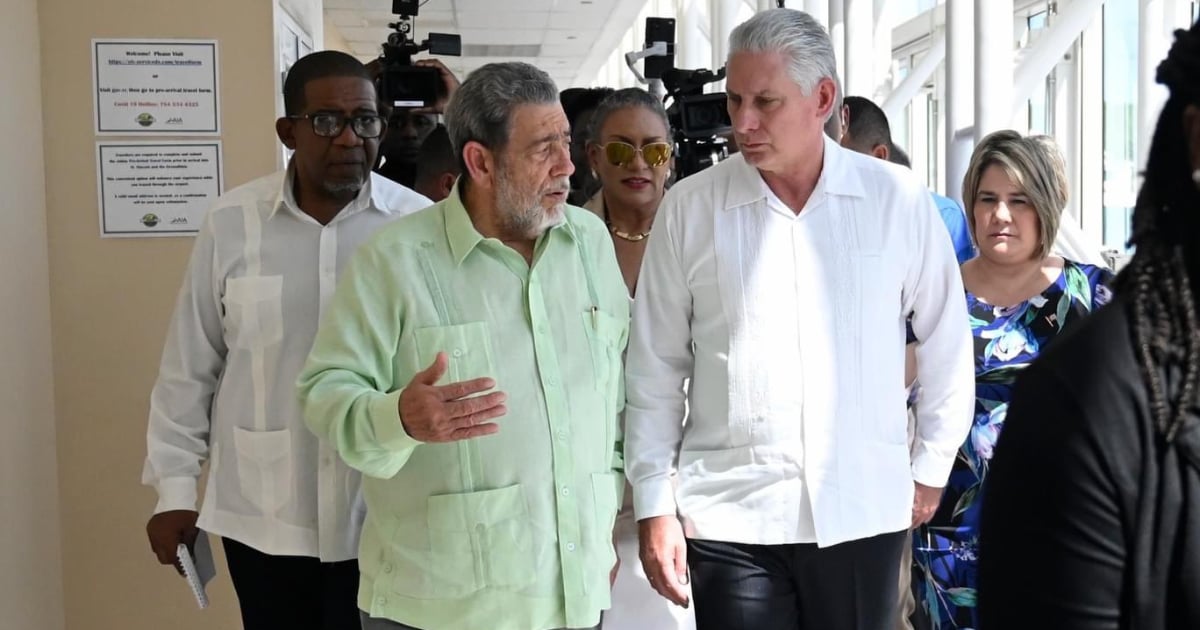
The Prime Minister of Saint Vincent and the Grenadines, Ralph Gonsalves, openly supported the program and stated: “If it is determined that I must lose my visa, I will do it. But I cannot let 60 hardworking and poor people who depend on Cuban doctors die.”
For his part, the Minister of Foreign Affairs of Grenada, Joseph Andall, assured that his country's healthcare infrastructure would collapse without the intervention of Cuban doctors. The Minister of Foreign Affairs of Jamaica, Kamina Johnson Smith, also emphasized that more than 400 professionals from the island work in her nation's healthcare system.
The ambassador of Barbados to CARICOM, David Commissiong, accused the U.S. of using these sanctions as part of a longstanding pressure policy against Cuba. “This is a continuation of the U.S. vendetta against the island,” he stated.
The Cuban regime has denounced the policy of the U.S. Secretary of State, Marco Rubio, who announced visa restrictions for officials from countries that maintain medical cooperation programs with Cuba.
Washington has justified this measure by arguing that Cuban medical missions constitute a form of forced labor and human trafficking, allegations that have been rejected by the Cuban government and several leaders in the Caribbean.
Havana has defended its medical cooperation in multiple forums, asserting that its professionals work under dignified conditions and that these programs have been implemented for decades through legitimate agreements between governments.
However, international organizations and the U.S. State Department itself have pointed out that many Cuban doctors are sent abroad under exploitative conditions, with restrictions on movement and without receiving their salaries directly.
From the Cuban Ministry of Foreign Affairs, the Foreign Minister Bruno Rodríguez Parrilla condemned U.S. policy and stated that it responds to "a political agenda unrelated to the interests of the Cuban people and the Caribbean."
Meanwhile, the controversy continues to escalate, and the governments of the region insist that cooperation with Cuba is an uncompromising necessity for the health of their citizens. Their statements were widely circulated through the social media accounts of senior Cuban diplomatic officials, who view these pronouncements as a victory for their arguments and their narrative regarding the regime's medical cooperation.
Filed under: