
Related videos:
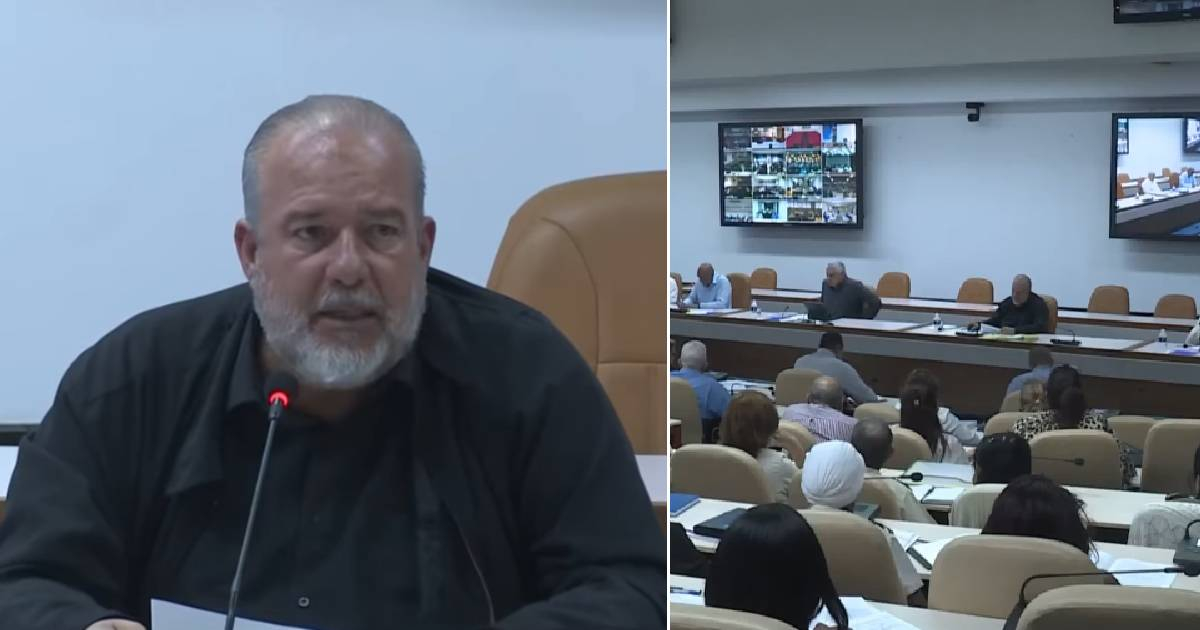
Despite addressing highly important topics amid the systemic crisis impacting the country, Prime Minister Manuel Marrero Cruz understood that it was important to highlight the atmosphere of professionalism and commitment present in the Ministry of Food Industry (MINAL) of Cuba.
During the work review of the organization for the previous year, which also included the presence of the communist leader Miguel Díaz-Canel, Marrero stated that the positive work environment fosters trust and strengthens the sector's ability to gradually meet the needs of the population.
"We must, in these complex times, look at everything we can do and maximize the raw materials for the production of more food," emphasized in a segment published by the official Canal Caribe on the social network Facebook.
Apparently, trust and commitment will drive production in a country facing serious challenges in the agricultural sector, and its regime is unable to ensure food for the millions of families who struggle to survive daily in a context of poverty, as even the basic basket has become a problem amid delays, shortages, and the elimination of products.
According to the former Minister of Tourism, a positive work environment in the industry is a key factor in driving initiatives that optimize resource use and contribute to the country's food self-sufficiency.
According to Marrero, the sector is not only doing things, but it also demonstrates a high level of commitment to gradually improving the quality and quantity of production, which instills confidence in both its collaborators and the public.
In a context of rising demands and economic challenges, the food industry - the leader stated - emerges as a fundamental pillar for ensuring food security and supply in Cuba. Seeing is believing.
Manuel Marrero announces a "restructuring" of domestic trade in Cuba
Just yesterday, Manuel Marrero announced a new "reorganization" process for domestic commerce, in an effort to improve the distribution of basic goods and tackle the economic crisis affecting the island.
During an annual review attended by Cuban leader Miguel Díaz-Canel and officials from the Ministry of Internal Trade (MINCIN), Marrero emphasized that the current system faces serious organizational issues, as well as inefficiencies in the management and distribution of essential goods for the population.
According to a report from Canal Caribe, the violations and delays in the delivery of the regulated family basket were a concern for consumers throughout 2024.
In the meeting, special attention was drawn to the instability in the distribution of basic products such as rice, oil, and sugar.
Citizens interviewed by the state media expressed frustration due to products arriving partially or with significant delays, which forces them to turn to the parallel or informal market, often inaccessible to many because of high prices.
Among the causes mentioned by Cuban authorities is the U.S. embargo, although they avoid referring to governmental inefficiency in managing internal trade. Additionally, there are delays in financial transactions, rising logistics costs, fuel shortages, and the deterioration of state infrastructure.
However, the regime omits in its discourse the impact of its own centralization and control over the economy, which has led to dependency and chronic shortages.
The leader indicated that new oversight mechanisms will be established to combat the diversion of goods to the black market and announced regulations to organize e-commerce, a sector where state institutions have also engaged in illegal practices by selling products without licenses or taxes.
However, these measures have already proven ineffective in the past, as corruption within the state apparatus itself is one of the factors that facilitates the diversion of goods to the black market.
The promises of "reorganization" evoke the failed Reorganization Task implemented in 2021, which instead of improving the economy, accelerated inflation and led to greater scarcity. Despite this background, the government insists on implementing similar measures without acknowledging its responsibility in the current crisis.
The measure that, as explained by the authorities at the time, aimed to simplify economic transactions and improve efficiency, brought with it challenges such as inflation and the rising prices of basic goods and services, presenting many difficulties for the island's residents.
These circumstances have led the government to introduce new regulations for the private sector and to seek alternatives to attract foreign currency, including the partial reintroduction of the dollar in certain economic transactions, exacerbating the poverty of a significant portion of the population.
And while Marrero Cruz talks and makes promises, the Cuban people are mired in misfortune, watching as prices rise each day in the face of the total ineffectiveness of the socialist government apparatus.
Frequently Asked Questions about the Economic and Food Situation in Cuba
What has Manuel Marrero stated about the working environment in Cuba's food industry?
Manuel Marrero stated that there is a climate of professionalism and commitment in the Ministry of Food Industry (MINAL) of Cuba, highlighting that this positive work environment fosters trust and strengthens the sector's ability to gradually meet the needs of the population amidst a systemic crisis. However, the overall context of the country reflects serious challenges in the agricultural sector and an inability of the regime to ensure sufficient food for the population.
What is the "reorganization" of domestic trade announced by Manuel Marrero?
Manuel Marrero announced a new process of "reorganization" of internal trade aimed at improving the distribution of basic goods in Cuba. This announcement was made in the context of a severe economic crisis and amidst organizational and management issues related to the distribution of essential goods. However, the proposed measures are met with skepticism due to the corruption and governmental inefficiency that have characterized similar attempts in the past.
How is the removal of subsidies on the basic basket affecting Cuba?
The removal of subsidies for the basic basket is significantly affecting Cuban families, as essential products may become unaffordable for many households due to high prices. The government has promised to redirect subsidies to those in vulnerable situations, but it has not clearly explained how this will be implemented, leaving a large portion of the population that already lives in economic precariousness in uncertainty.
What does the proposal for "municipal autonomy" in food production in Cuba entail?
The proposal for "municipal autonomy" implies that each municipality develops its own agricultural strategy to achieve food sovereignty. However, this proposal has been met with skepticism and criticism from the population, who see it as an attempt by the central government to disengage from responsibility for the food crisis. The reality presents a bleak picture, with food shortages and skyrocketing prices, while the regime continues to control marketing and pricing.
Filed under: