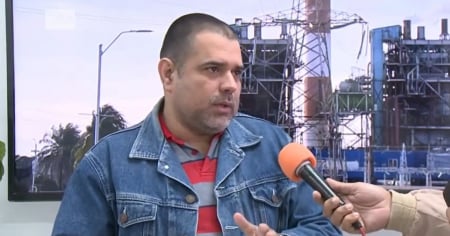
A video shared on the Internet by a journalist from Havana shows details of the incident that occurred on Friday night at the Diezmero electrical substation in the San Miguel del Padrón municipality, which caused the complete collapse of the national electrical system.
Mario Herrera from the telecenter Canal Habana visited the facility to understand the causes of the outage and the prospects for recovery, as Cuba experiences its fourth nationwide blackout in less than six months.
Herrera spoke with Ariel Mas Castellanos, director of Substations at the Electric Company of the capital, who revealed that there was a failure in the insulation of an element of the line due to many years of use. "It is aged," he acknowledged.
It was disheartening to hear the specialist explain that, due to the conditions of the system in Cuba, they have not been able to replace that device, as it is so old that there are no similar ones available in the international market, and it is impossible to find another one to change it.
"It becomes quite difficult because they do not allow us entry into the market for this type of items," he detailed.
The immediate solution, according to Mas Castellanos, will be to remove the item in question, maintain the line, and put it back into service.
The official announced that service to the capital could be restored as soon as generation begins, and assured that everything is ready for that moment. However, he did not address the situation in the rest of the country.
"All conditions are now in place to begin. Once the generation reaches this point, we will start distributing and continue to supply, joining with other substations until we reach Mariel, at the generation plants, to create an island as robust as possible and gradually start providing service," he detailed.
In the early hours of this Saturday, the Electric Union announced that the recovery of service is being carried out through "microsystems", a strategy that enables the supply of electricity to specific areas and essential facilities while efforts are made to restore generation in thermoelectric plants.
So far, 110 MW have been successfully supplied through these microsystems in 12 provinces.
While work is underway to progressively connect these isolated systems with the main generation plants to restore system stability.
Frequently Asked Questions about the General Blackout in Cuba and the Failure at the Diezmero Substation
What caused the nationwide blackout in Cuba on March 14, 2025?
The nationwide blackout in Cuba was caused by a failure at the Diezmero electrical substation, due to an issue with the insulation of a component in the line that had been in operation for many years. The lack of preventive maintenance and the inability to replace outdated components due to market restrictions also contributed to the collapse of the national electrical system.
How is the Cuban government facing the current energy crisis?
The Cuban government is implementing "microsystems" to supply energy to specific areas and vital centers while efforts are being made to restore generation in thermoelectric plants. However, these temporary solutions have proven inadequate for effectively stabilizing the power supply, and the population continues to experience prolonged blackouts.
What are the main challenges in restoring electrical service in Cuba?
The main challenges to restoring electrical service in Cuba include the deterioration of infrastructure, the lack of components for maintenance, and restrictions on acquiring supplies in the international market. Additionally, distributed generation faces limitations due to a shortage of fuel, which worsens the ability to respond to power outages.
What measures are being taken to prevent future collapses of the electrical system in Cuba?
The Electric Union of Cuba has begun a strategy to divide the electricity supply into independent systems by regions, aiming to reduce the effects of future failures and enhance the energy stability of each area. However, the success of these measures depends on the improvement of infrastructure and the availability of resources.
Filed under: