
Related videos:
The energy crisis in Cuba worsened further with the collapse of the National Electric System (SEN) on Friday, March 14, putting an increasingly overwhelmed government in a difficult position.
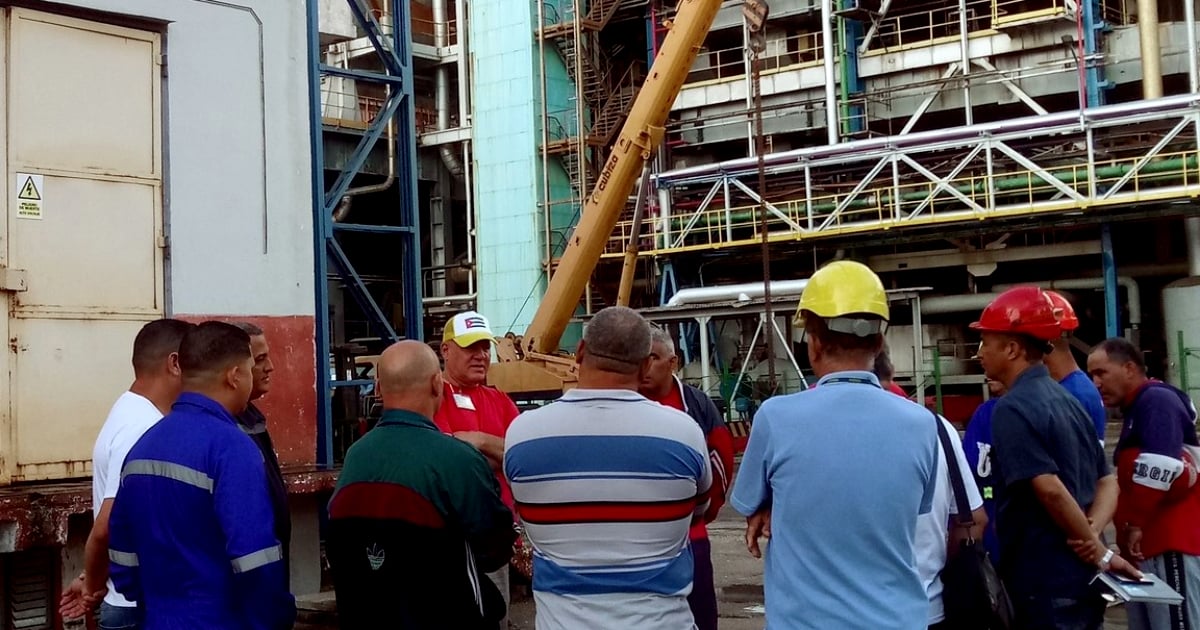
In the chaos caused by the general blackout that has left millions of Cubans without electricity, this Sunday, the Electric Union (UNE) announced on Facebook that the "Lidio Ramón Pérez" (Felton) thermoelectric plant has resumed operation with 190 MW of power in its number one unit.
However, this contribution is insufficient to stabilize a system that is experiencing one of its worst crises in years.
In recent days, the island's electrical grid has experienced a series of catastrophic failures, including the shutdown of the "Antonio Guiteras" thermoelectric plant and the "Carlos Manuel de Céspedes" power station, which led to the fourth collapse of the SEN in less than six months.
This is compounded by the collapse of the so-called "electrical microsystems", a strategy implemented by the regime to recover the national electrical system, but which has proven to be fragile in the face of the magnitude of this type of crisis.
In the eastern region, where Felton plays a crucial role in electricity generation, the authorities' efforts over the last 72 hours have been focused on trying to restore service following the collapse of the SEN.
The partial reactivation of Felton is part of efforts to alleviate the energy deficit in provinces such as Santiago de Cuba, Granma, and Guantánamo, where interruptions have been constant and prolonged. However, the fragility of the system and the lack of sufficient generation have prevented a stable supply from being restored across the region.
The government, in an attempt to justify the crisis, has argued that the power outages are being used to carry out maintenance work on the generating plants.
In Havana, over 98% of customers were without electricity this Saturday, while in other provinces the situation is even more critical.
The population, tired of official excuses, has turned to social media to denounce the lack of responses and the inadequacy of the solutions offered by the authorities. The lack of investments in infrastructure, combined with the government's inability to manage the crisis, has led to an unsustainable situation.
The partial operation of Felton provides temporary relief, but experts warn that the SEN remains in a critical state and the energy deficit will continue to impact the population in the coming days.
Meanwhile, uncertainty and social unrest continue to rise, calling into question the regime's ability to manage the crisis.
Summary of incidents and breakdowns at the Felton thermoelectric plant since January 2024
1. January 4, 2024: The Felton thermoelectric plant experiences a failure in its unit 1, exacerbating the energy deficit in the eastern part of the country. This breakdown leads to prolonged blackouts in Holguín and other nearby provinces.
2. January 28, 2024: Unit 1 of Felton is undergoing extended maintenance due to technical issues detected after its last departure from the system. The SEN is facing a significant deficit due to this reduction.
3. February 12, 2024: UNE confirms that Felton remains out of service and that repairs are progressing with difficulties due to a shortage of spare parts.
4. February 24, 2024: Felton reconnects with the SEN after nearly two months of inactivity. However, generation remains unstable.
5. March 8, 2024: The Felton thermoelectric plant is out of the system again due to a new breakdown, exacerbating the energy crisis on the island. This failure occurs amidst a backdrop of continuous blackouts in the country.
6. March 15, 2024: Unit 1 of Felton remains out of service amidst the collapse of the National Electric System (SEN). Its shutdown coincides with failures at the “Antonio Guiteras” and “Carlos Manuel de Céspedes” thermoelectric plants, severely impacting national electricity generation.
7. March 16, 2024: UNE announces the partial reentry of Felton into the SEN with 190 MW. Its reactivation is part of efforts to alleviate the crisis in the eastern region, although it does not resolve the instability of the system.
Filed under: