
Related videos:
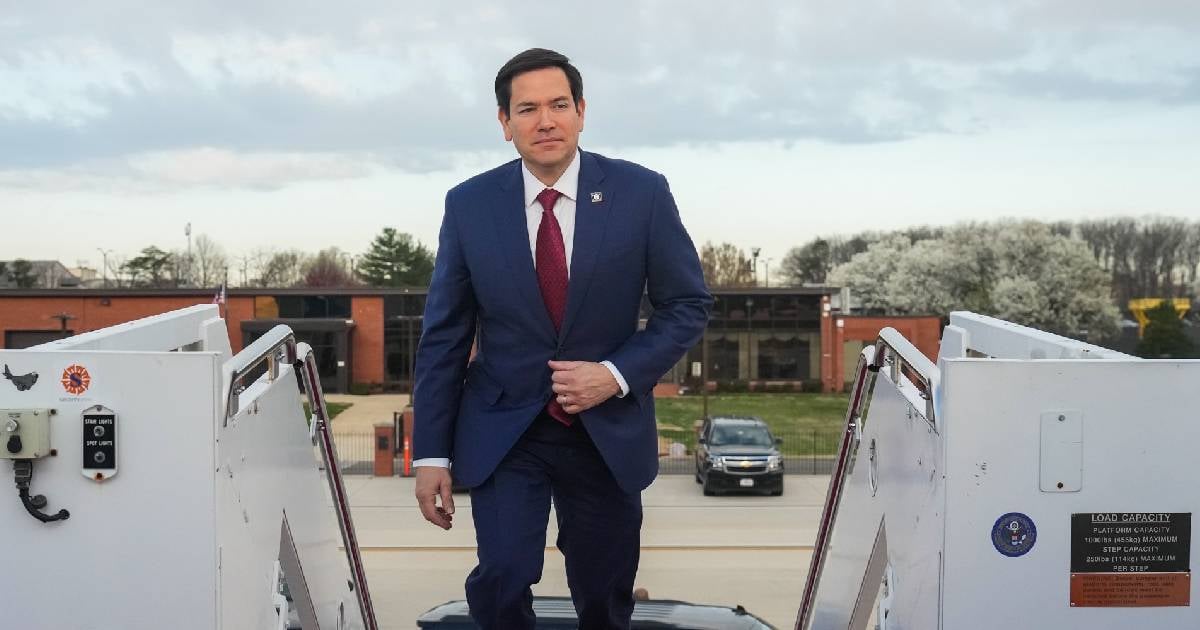
The United States Secretary of State, Marco Rubio, began a tour of the Caribbean aimed at strengthening security in the region, curbing illegal migration, and combating transnational crime, he reported on his social media.
According to a publication from the State Department, the visit includes stops in Jamaica, Guyana, and Suriname, the latter being part of the new routes that Cubans are using to leave the island and seek refuge in Brazil, Uruguay, among others.
The statement announces that Rubio will meet with local leaders to discuss joint strategies regarding security and regional stability.
On his social media, the U.S. official stated that this tour aims to "strengthen the security of our hemisphere and combat transnational crime."
Among the government's main concerns is the control of migratory flows of those who use Caribbean routes to reach U.S. territory.
Through his account on the social network X, Rubio announced: "On my way to Jamaica to meet with Caribbean partners and strengthen security in our hemisphere. We will work together to curb illegal immigration, violence, and smuggling in our region, and hold accountable those who commit financial fraud against vulnerable Americans."
In Jamaica, he will hold meetings with the leaders of Barbados, Trinidad and Tobago, and Haiti to strengthen strategies against drug trafficking and arms trafficking.
The State Department under Rubio has adopted a more moderate tone compared to the direct and confrontational rhetoric in its relations with other countries during President Donald Trump's administration.
The spokesperson for the Department, Tammy Bruce, stated prior to Rubio's tour that "when the Caribbean prospers, the United States prospers."
Bruce emphasized the importance of collaboration in security and economy, particularly in the fight against transnational criminal organizations that impact both Caribbean countries and the United States.
Another major challenge of this tour is the security crisis in Haiti. According to Mauricio Claver-Carone, U.S. special envoy for Latin America, the situation in Haiti is "a shared challenge" that requires a joint response from Caribbean countries and the United States.
Rubio will discuss measures to support the Haitian National Police and the provisional government in their efforts to contain gang violence that has exacerbated the migration crisis in the region, the statement indicates.
Another central point of the visit is strengthening energy security in the region. The Cuban-American official will promote alternatives to reduce Caribbean countries' dependence on energy imports.
Frequently asked questions about Marco Rubio's tour of the Caribbean
What is the main objective of Marco Rubio's tour of the Caribbean?
The main goal of Marco Rubio's tour is to strengthen security in the Caribbean, curb illegal migration, and combat transnational crime. Rubio will meet with local leaders to discuss joint strategies for regional security and stability.
Why are Jamaica, Guyana, and Suriname important in the migration routes of Cubans?
Jamaica, Guyana, and Suriname have emerged as key points in the new migratory routes for Cubans seeking to reach countries like Brazil and Uruguay. These Caribbean nations are being used as stopovers by Cuban migrants in their attempt to leave the island and settle in other destinations.
What role does Haiti play in Marco Rubio's tour?
Haiti is a central point in Marco Rubio's security agenda. The security crisis in Haiti and gang violence have exacerbated the migration crisis in the region. Rubio will discuss measures to support the Haitian National Police and the provisional government in their efforts to contain this violence.
How does Marco Rubio seek to strengthen energy security in the Caribbean?
Marco Rubio will promote alternatives to reduce the energy dependence of Caribbean countries on imports. This is part of a broader effort to strengthen energy security in the region and enhance its economic stability.
What is Marco Rubio's stance on the regimes in Cuba, Nicaragua, and Venezuela?
Marco Rubio has described the regimes of Cuba, Nicaragua, and Venezuela as "enemies of humanity" due to their impact on the migration crisis in the hemisphere. Rubio has been a persistent critic of these governments, accusing them of repression and of causing the mass exodus of citizens from their countries.
Filed under: